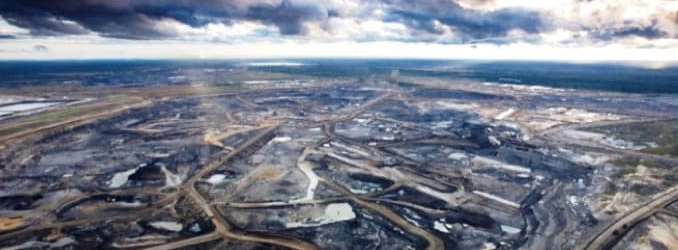
The Canadian oil sands sector continues to present a fascinating paradox for energy investors: a region known for its resource intensity simultaneously demonstrating significant strides in operational efficiency and emissions reduction. Our latest analysis, leveraging proprietary data pipelines, reveals that while production from the oil sands reached new highs in 2024, the growth in absolute greenhouse gas (GHG) emissions remained remarkably contained. This ongoing narrative of “more barrels for similar emissions” challenges conventional perceptions and offers a nuanced perspective for those evaluating long-term investment opportunities in heavy crude.
Oil Sands: Production Growth Meets Emissions Discipline
The latest figures underscore a critical trend for investors monitoring the energy transition: the oil sands are expanding output with a disproportionately smaller environmental footprint. In 2024, Canada’s oil sands production surged by an impressive 150,000 barrels per day (bpd). Yet, over the same period, the increase in absolute greenhouse gas emissions was less than 1%. This translates to a rise of under 1 million metric tons of CO₂ equivalent (MMtCO₂e) for the entire year, a testament to the sector’s intensified focus on operational optimization.
Looking at a broader timeframe, the commitment to efficiency becomes even clearer. Since 2019, absolute emissions have grown by approximately 5 MMtCO₂e, averaging a modest 1% annual increase. This contrasts sharply with the preceding five-year period (2015-2019), which saw emissions climb by nearly 12 MMtCO₂e. During the more recent period, production expanded by nearly 400,000 bpd, demonstrating that the industry is achieving substantial growth primarily through process improvements rather than simply scaling up older, less efficient operations. The average GHG intensity of oil sands production notably fell by 3% in 2024, reaching 57 kilograms of CO₂ equivalent per barrel (kgCO₂e/bbl) – a significant 28% reduction since 2009. This decline is attributed to efficiency gains across both mining and in-situ operations, although an uptick in mined synthetic crude oil (SCO) output did slightly temper overall progress.
Navigating Market Volatility: Efficiency as a Strategic Imperative
The sector’s focus on efficiency and intensity reduction is particularly salient in the current volatile market environment. As of today, Brent Crude trades at $90.38, marking a sharp decline of 9.07% within the day, with a range between $86.08 and $98.97. Similarly, WTI Crude stands at $82.59, down 9.41% for the day, having traded between $78.97 and $90.34. This immediate downturn follows a broader trend; our proprietary data indicates Brent Crude has tumbled from $112.78 on March 30th to its current $90.38 as of April 17th, representing a significant 19.9% drop in just over two weeks.
Such rapid and substantial price corrections underscore why operational efficiency is not just an environmental mandate but a critical strategic imperative for producers. Companies with lower carbon intensity operations often benefit from reduced operating costs and greater resilience during periods of price contraction. For oil sands operators, their ability to extract more barrels with relatively flat emissions growth translates into a more robust financial position, better enabling them to absorb price shocks and maintain profitability. This efficiency also positions them more favorably in a global market increasingly scrutinizing the environmental footprint of energy sources.
Investor Focus: Emissions, Growth, and Future Price Trajectories
Our proprietary reader intent data reveals a clear focus among investors this week on the future trajectory of oil prices and the performance of key industry players. Questions such as “what do you predict the price of oil per barrel will be by end of 2026?” and inquiries about specific companies like Repsol’s performance highlight a desire for clarity amidst uncertainty. For Canadian oil sands producers, their demonstrated ability to grow production while curbing emissions intensity directly addresses concerns about the long-term viability and ESG credentials of heavy oil investments.
Investors are increasingly integrating environmental performance into their valuation models. A sector that can deliver consistent production growth with a contained emissions profile offers a compelling narrative in an era of heightened climate awareness. While global benchmarks like Brent and WTI dictate revenue, a company’s carbon intensity can influence its cost of capital, access to financing, and ultimately, its shareholder appeal. Furthermore, with investors asking about “OPEC+ current production quotas,” it’s clear the market is trying to gauge future supply dynamics. The oil sands’ incremental, efficiency-driven growth provides a steady, reliable supply component that, while not subject to OPEC+ mandates, contributes to the overall global balance and offers a predictable investment avenue.
Ahead on the Calendar: Macro Factors and Oil Sands Outlook
Looking forward, several key market events over the next 14 days will shape the broader energy landscape, indirectly influencing the investment thesis for oil sands. The upcoming OPEC+ Joint Ministerial Monitoring Committee (JMMC) Meeting on April 19th and the subsequent OPEC+ Ministerial Meeting on April 20th are critical for assessing global supply policy. Any decisions regarding production quotas could significantly impact crude prices and, by extension, the revenue streams of Canadian producers.
Closer to home, the API Weekly Crude Inventory reports on April 21st and 28th, followed by the EIA Weekly Petroleum Status Reports on April 22nd and 29th, will offer crucial insights into U.S. supply and demand dynamics. These reports, alongside the Baker Hughes Rig Count on April 24th and May 1st, provide granular data points that can move markets. While the oil sands sector has made remarkable progress in reducing its emissions intensity, analysts caution that continued robust production growth could delay an eventual peak in total oil sands emissions. The interplay between global market signals, driven by OPEC+ decisions and inventory data, and the inherent drive for production expansion in the oil sands will be a key dynamic for investors to monitor closely. The sector’s ability to maintain its efficiency trajectory amidst these macro pressures will be paramount for sustaining investor confidence.


