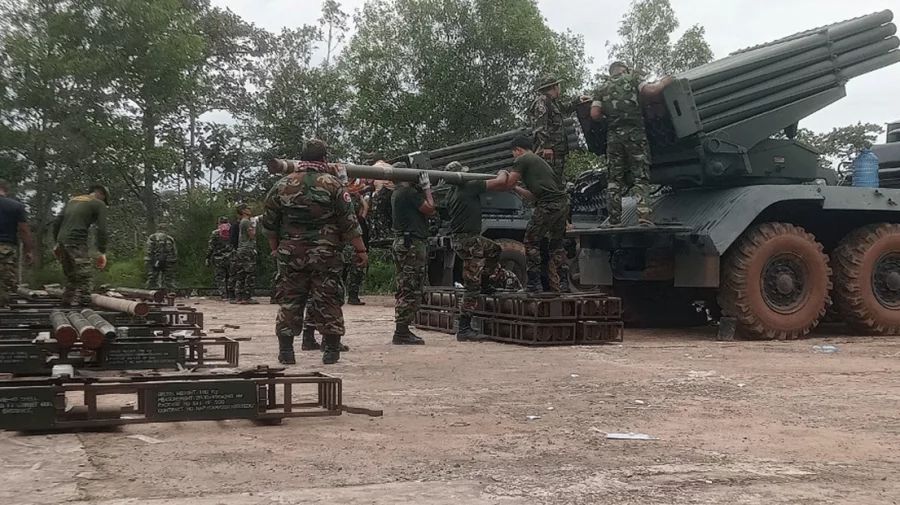
The intensifying conflict between Cambodia and Thailand, which began in May 2025, represents more than a localized border dispute; it signals a significant escalation of geopolitical risk in Southeast Asia with potential implications for global energy markets. While the immediate impact on crude oil production might seem remote, the long-standing historical rivalries, dynastic power struggles, and the region’s critical role in international trade and energy transit lines mean investors cannot afford to overlook this unfolding crisis. For energy sector stakeholders, understanding the deep-seated drivers of this conflict, from centuries of buffer state dynamics to contemporary political and familial feuds, is crucial for assessing regional stability and its potential ripple effects on global supply and demand balances.
Southeast Asia’s Enduring Geopolitical Fault Lines and Energy Exposure
Cambodia’s historical positioning as a buffer state between powerful neighbors like Siam (Thailand) and Annam (Vietnam) has instilled a deep-seated vulnerability, a condition that persists despite modern independence. The current armed conflict, officially triggered by border tensions, is fundamentally rooted in this historical context, exacerbated by the authoritarian and dynastic nature of Hun Sen’s regime. This precarious balance has implications for regional energy security, particularly concerning maritime transit routes and potential resource exploration in contested areas within the Gulf of Thailand.
The current Cambodian regime, dominated by the Hun family for over four decades, stands at the core of this renewed instability. Its governance model, increasingly dynastic and opaque, is being tested by regional transformations. The 19th-century Siamese expedition led by General Bodin serves as a historical reminder of how easily Cambodia’s political authority can fragment under external pressures. While French colonial intervention in 1863 provided a temporary stabilization, the post-1953 independence era under King Norodom Sihanouk merely shifted the dynamics, turning Cambodia into a proxy battleground during the Cold War. Today, navigating between the influences of Vietnam, Thailand, China, and the United States, Cambodia remains a geopolitical weak link. For energy investors, this chronic instability in a strategically important region adds a layer of uncertainty to long-term investment horizons, potentially impacting infrastructure development and resource access agreements.
Market Sentiment and the Geopolitical Risk Premium
Geopolitical tensions, even those seemingly localized, invariably contribute to a broader risk premium in energy markets. As of today, Brent Crude trades at $94.88, reflecting a 0.63% decrease, while WTI Crude stands at $86.53, down 1.02% for the day. This current market snapshot comes after a significant correction, with Brent having declined from $118.35 on March 31st to $94.86 by April 20th – a nearly 20% drop in just 14 days. While this recent downward trend is influenced by a multitude of factors, including global demand outlooks and interest rate expectations, the underlying geopolitical friction in regions like Southeast Asia can quickly reverse sentiment.
Our proprietary reader intent data reveals that investors are keenly observing these dynamics, with frequent queries like “is WTI going up or down?” and “what do you predict the price of oil per barrel will be by end of 2026?” The Cambodia-Thailand conflict, particularly its potential to disrupt regional trade or escalate into broader maritime disputes, introduces an unpredictable element that could fuel price volatility. While not a direct threat to major oil fields yet, the perception of instability in a key Asian shipping corridor can prompt a flight to safety or an increase in hedging activities, thereby supporting prices or hindering further declines. This suggests that even as other market forces push for lower prices, the ongoing geopolitical friction provides a floor of uncertainty.
Dynastic Rivalries and Regional Energy Governance
The current conflict is notably exacerbated by a personal and familial rivalry between the Hun family in Cambodia and the Shinawatra family in Thailand. What was once a close relationship, with Hun Sen famously referring to Thaksin Shinawatra as his “adoptive brother,” has devolved into bitter animosity. Thai Prime Minister Paetongtarn Shinawatra’s public condemnation of Poipet, a Cambodian border town, as a hub for cross-border online scam networks on June 26, 2025, directly targeted the Hun regime. Such high-level, personalized political attacks elevate the risk beyond traditional state-to-state disputes.
This dynastic dimension introduces an unpredictable variable into regional energy governance. The Gulf of Thailand is a significant area for natural gas production, and any heightened tension could impact joint development agreements, exploration licenses, or the security of existing infrastructure. While direct energy assets may not be the immediate target, the erosion of trust between neighboring governments can stall essential cross-border projects, complicate supply routes, and deter foreign direct investment in the region’s energy sector. Investors should consider how such deep-seated personal rivalries, layered over historical grievances, make resolution more challenging and prolong the period of uncertainty, thereby impacting the long-term risk profile of regional energy assets.
Forward Outlook: Navigating Upcoming Catalysts and Sustained Risk
The immediate future for oil and gas markets is crowded with significant events that will interact with and potentially amplify regional geopolitical risks. With the OPEC+ JMMC Meeting scheduled for April 21st, and the EIA Weekly Petroleum Status Reports on April 22nd and 29th, the market is already grappling with critical supply and demand indicators. The Baker Hughes Rig Count on April 24th and May 1st will offer insights into North American production trends, while the EIA Short-Term Energy Outlook on May 2nd will provide crucial forecasts for global balances.
Against this backdrop, the Cambodia-Thailand conflict adds a layer of sustained, localized risk. While these global data points primarily drive short-term price movements, regional instability can influence investment decisions, especially for companies with assets or expansion plans in Southeast Asia. The ongoing tensions could push investors to reassess the political stability premium associated with the region, potentially diverting capital to more secure locales or demanding higher returns for perceived risks. The nature of this conflict, rooted in historical patterns and exacerbated by personal dynastic feuds, suggests it may not be a fleeting event. Therefore, investors must integrate this evolving geopolitical landscape into their long-term strategies, recognizing that regional stability is a critical, though often underestimated, factor in global energy market dynamics.