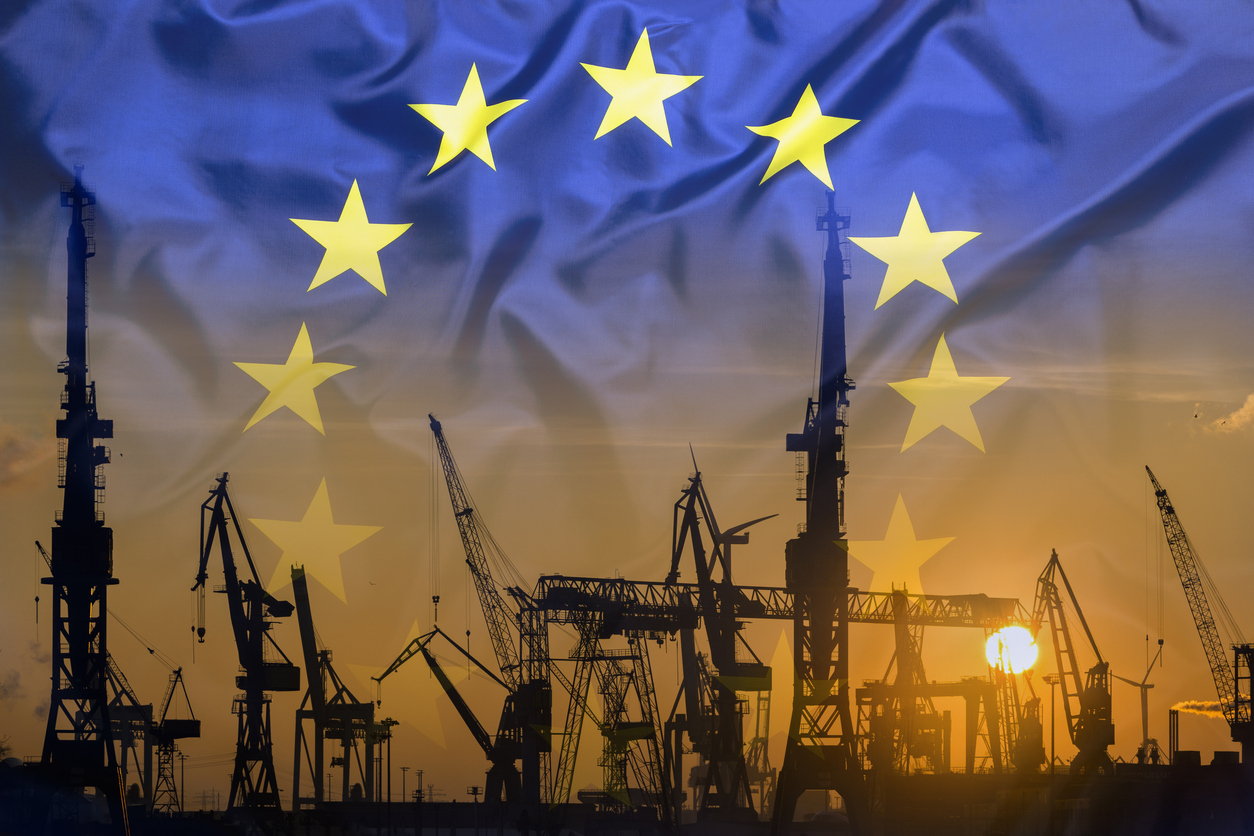
The European industrial landscape finds itself at a critical juncture, with top business leaders issuing a stark warning to the European Union: act decisively on energy prices or risk a significant erosion of global competitiveness. As EU leaders converge for an informal summit, the central theme is how to bolster the bloc’s economic standing against formidable rivals like the United States and China. At the heart of this challenge lies a complex interplay of geopolitical shifts, structural market design, and regulatory frameworks that have driven energy costs for European industries to levels more than double those seen in competing economies. For oil and gas investors, understanding the EU’s response to this crisis is paramount, as it will shape the future demand profile, infrastructure investments, and overall economic health of a major global market.
Europe’s Energy Cost Chasm: A Threat to Industrial Foundation
The core of Europe’s competitiveness dilemma is undeniably its energy pricing structure. Companies across sectors, from specialty chemicals to heavy materials, are vocalizing the severe impact of elevated costs. The abrupt cessation of affordable Russian natural gas imports following the 2022 conflict in Ukraine fundamentally reshaped Europe’s energy matrix, leaving many energy-intensive industries grappling with significantly higher bills. Beyond the immediate supply shock, a confluence of factors exacerbates the situation: aging and congested power grids hinder efficient energy distribution, national taxes add layers of cost, and the EU’s CO2 emissions trading system (ETS) further elevates expenses. The inherent design of the EU’s electricity market, where the marginal plant — often a natural gas facility — sets the price for all power, leaves industries acutely exposed to volatile natural gas prices, which remain substantially higher than in the U.S. This structural disadvantage is not merely an operational headache; it’s prompting strategic shifts, with some major manufacturers already considering or initiating the relocation of investments outside Europe to regions offering more favorable energy economics.
Crude Market Dynamics Amidst European Energy Struggles
While Europe’s immediate challenge often centers on natural gas and electricity, global crude oil prices exert a significant influence on the broader energy complex and industrial input costs. As of today, Brent Crude trades at $92.99, marking a 2.83% increase, with a daily range between $89.11 and $94.68. Similarly, WTI Crude stands at $89.4, up 2.26%, fluctuating between $85.5 and $91.45. This recent upward movement follows a notable period of volatility, with Brent having declined by nearly 19.8% over the past two weeks, falling from $118.35 on March 31st to $94.86 on April 20th. Such fluctuations in global crude prices, while not directly setting European electricity rates, impact the cost of transportation, feedstocks for petrochemical industries, and overall investor sentiment towards energy markets. For European industries already struggling with high domestic energy bills, the added uncertainty and potential for upward pressure from a volatile global crude market only compound their challenges. Investors must keenly observe these global benchmarks, understanding their ripple effect on the profitability and strategic positioning of energy-dependent sectors.
Navigating Policy Pathways and Investor Expectations
In response to the mounting pressure, EU officials are proposing measures aimed at alleviating the energy burden, primarily focusing on improving grid interconnections to facilitate the flow of cheaper, low-carbon energy across the bloc. Initiatives to accelerate permit processes for grid modernization projects are also on the table. However, the suggestion for national governments to reduce energy taxes, a quick win for industrial consumers, has garnered little support, as member states prioritize defense spending and other public funds. This policy inertia creates a climate of uncertainty for investors, who are actively seeking clarity on the future trajectory of energy markets. Our proprietary reader intent data reveals a strong focus on price prediction, with investors asking “is WTI going up or down” and “what do you predict the price of oil per barrel will be by end of 2026?” This highlights the need for transparent and effective policy action. The coming weeks hold several key events that will shape these market dynamics. The OPEC+ JMMC Meeting on April 21st could influence global supply decisions, impacting crude prices. The EIA Weekly Petroleum Status Reports on April 22nd and 29th will offer crucial insights into U.S. inventory levels, while the EIA Short-Term Energy Outlook on May 2nd will provide a forward-looking perspective on supply, demand, and price trends, directly addressing the longer-term price questions posed by investors. How EU leaders integrate these global energy forecasts into their internal policy strategies will be critical for restoring industrial confidence and attracting investment.
Investment Implications and Strategic Outlook
The ongoing struggle for competitive energy prices in Europe presents a complex landscape for oil and gas investors. On one hand, the pressure to transition away from fossil fuels and invest in grid infrastructure and renewables could create significant opportunities in the energy transition sector. On the other, the fundamental economic disadvantage for energy-intensive industries within Europe may lead to capital flight, impacting demand for traditional energy sources over the long term. Investors should monitor for clear policy signals from the EU summit regarding concrete actions, not just rhetoric. A failure to address the structural issues of energy pricing decisively could accelerate de-industrialization in the bloc, shifting investment focus towards more energy-competitive regions globally. For those invested in European industrial equities, the coming months will be pivotal. Success in tackling the energy price challenge could unlock significant value, while continued inaction or fragmented approaches could signal sustained headwinds. The interplay between global crude market movements, like the recent volatility in Brent, and localized European energy policy will define the strategic investment narrative for years to come.