The Strategic Imperative of Battery Recycling: Strengthening CATL’s Future Amidst Market Shifts
The global energy landscape is undergoing a profound transformation, with the accelerating adoption of electric vehicles (EVs) at its core. As investment capital increasingly flows into the electrification revolution, securing critical raw materials has emerged as a paramount challenge for battery manufacturers. Against this backdrop, recent developments from CATL’s subsidiary, Brunp Recycling, mark a significant milestone. Brunp’s demonstrated ability to achieve near-perfect recovery rates for key battery minerals not only de-risks CATL’s supply chain but also sets a new benchmark for sustainable practices in the burgeoning EV sector. For investors navigating the complex transition from fossil fuels to future energy sources, understanding these advancements is crucial for identifying long-term value and resilience in a volatile market.
Brunp’s Breakthrough: De-Risking the EV Supply Chain with Advanced Recovery
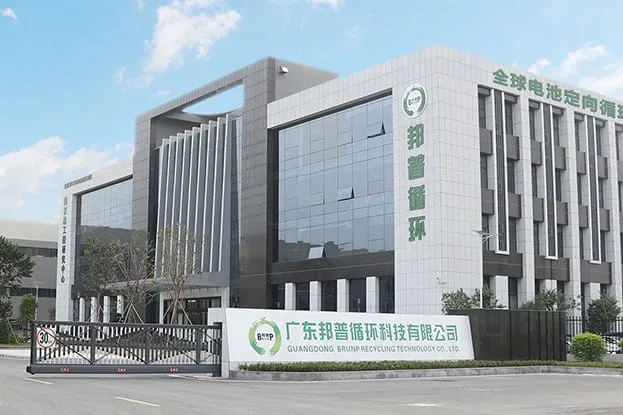
Brunp Recycling, a strategic subsidiary of the world’s largest battery manufacturer, CATL, has unveiled impressive advancements in its material recovery processes. The company now reports achieving almost 100% recovery for vital battery components such as nickel, cobalt, and manganese from used battery scrap. Specifically, Brunp cites a remarkable 99.6% recovery rate for these critical metals, alongside a highly efficient 96.5% for lithium. This exceptional performance is attributed to its proprietary Directional Recycling Technology (DRT), which employs sophisticated methods including intelligent dismantling, hydrometallurgy, and advanced material recovery techniques. In 2024 alone, Brunp processed over 120,000 tonnes of used batteries, yielding an impressive 17,100 tonnes of recycled lithium salts. This scale of operation firmly establishes Brunp, headquartered in Foshan, Guangdong province, as one of the largest battery recycling companies globally, a position it has cultivated since its founding in 2005, with a strategic shift to traction battery recycling in 2011, preceding CATL’s majority acquisition in 2015.
CATL’s foresight in integrating recycling capabilities is evident in its establishment of two major industrial parks dedicated to raw material processing and new battery manufacturing in Yichang and Foshan. This strategic move, articulated by CATL in 2023, positions recycled materials as an “important source of raw materials” for the rapidly expanding New Energy Vehicle (NEV) market. Brunp’s continued expansion, including partnerships with automotive giants like Mercedes and Volkswagen, and its involvement in CATL’s new battery factory in Indonesia, underscores the integral role recycling plays in securing a stable, circular supply chain. For investors, this translates into reduced exposure to volatile raw material markets and enhanced long-term profitability for CATL.
Navigating Volatility: EV Momentum Amidst Oil Market Swings
The energy market remains a dynamic arena, with traditional oil & gas prices reflecting significant volatility even as the energy transition accelerates. As of today, Brent crude trades at $90.38 per barrel, marking a notable daily decline of 9.07% within a day range spanning $86.08 to $98.97. WTI crude has followed a similar trajectory, currently sitting at $82.59, down 9.41% from its previous close, with its daily range between $78.97 and $90.34. This recent market movement represents a continuation of a broader downtrend, with Brent having shed approximately 19.9% from $112.78 on March 30. Gasoline prices also reflect this pressure, trading at $2.93 per gallon, down 5.18% today.
This stark volatility in the fossil fuel market offers a critical contrast to the steady, strategic advancements being made in the EV sector’s upstream. While traditional energy investors grapple with immediate price swings, the developments at Brunp Recycling highlight a fundamental shift in value creation. By ensuring a robust and increasingly self-sufficient supply of critical minerals, CATL is building a more resilient business model, less susceptible to the geopolitical and logistical risks associated with new mineral extraction. This internal hedging against commodity price volatility in lithium, nickel, and cobalt through superior recycling capabilities provides a compelling investment narrative, demonstrating how companies can future-proof their operations in the face of broader market uncertainty.
Addressing Investor Queries: Beyond the Barrel to Long-Term Value Creation
Our proprietary reader intent data reveals a consistent preoccupation among investors with the immediate future of oil prices, with common questions including “what do you predict the price of oil per barrel will be by end of 2026?” and “What are OPEC+ current production quotas?” While these are vital considerations for the traditional energy sector, the story of Brunp Recycling serves as a powerful reminder that the investment landscape is rapidly broadening. The strategic importance of critical mineral recovery, as exemplified by Brunp’s nearly 100% efficiency, offers a crucial counterpoint to the short-term focus on crude prices.
For investors seeking long-term value, understanding the foundational shifts in the energy economy means looking beyond the barrel to the battery. Brunp’s achievements directly address the sustainability and supply security concerns that underpin the entire EV value chain. By reducing reliance on primary raw material mining, CATL not only enhances its environmental credentials but also fortifies its competitive position. This move translates into a more stable earnings outlook for CATL, as the company gains greater control over input costs and mitigates supply chain disruptions. Smart investors are increasingly recognizing that the future of energy investment lies not just in predicting oil prices, but in identifying companies that are strategically building the infrastructure for a decarbonized world, ensuring resilient supply chains for critical technologies like EV batteries.
Upcoming Events and Strategic Positioning in the Evolving Energy Matrix
The next two weeks are packed with significant events that will undoubtedly influence the traditional energy markets. We anticipate the OPEC+ Joint Ministerial Monitoring Committee (JMMC) Meeting on April 19, followed by the full OPEC+ Ministerial Meeting on April 20, where crucial production quotas and market strategies will be deliberated. Further market indicators will emerge with the API Weekly Crude Inventory report on April 21 and April 28, and the EIA Weekly Petroleum Status Report on April 22 and April 29, alongside the Baker Hughes Rig Count on April 24 and May 1. These events will drive immediate market reactions and continue to shape the narrative around global oil supply and demand.
However, while these traditional energy events unfold, the strategic implications of Brunp Recycling’s progress continue to solidify CATL’s long-term position in the new energy economy. Brunp’s enhanced recycling capabilities represent a proactive strategy by CATL to insulate itself from potential geopolitical supply chain disruptions in raw materials, much like nations attempt to manage oil supply through international agreements. The company’s partnerships with global automakers like Mercedes and Volkswagen, and its active involvement in CATL’s new battery factory in Indonesia, are not just about market share; they are about building a sustainable, circular economy for EV batteries. This approach offers a powerful hedge against the very market volatility that often plagues the traditional energy sector. For investors, monitoring these foundational shifts in material science and supply chain resilience, alongside the immediate gyrations of the oil market, is essential for truly understanding where future energy value will be created and sustained.