

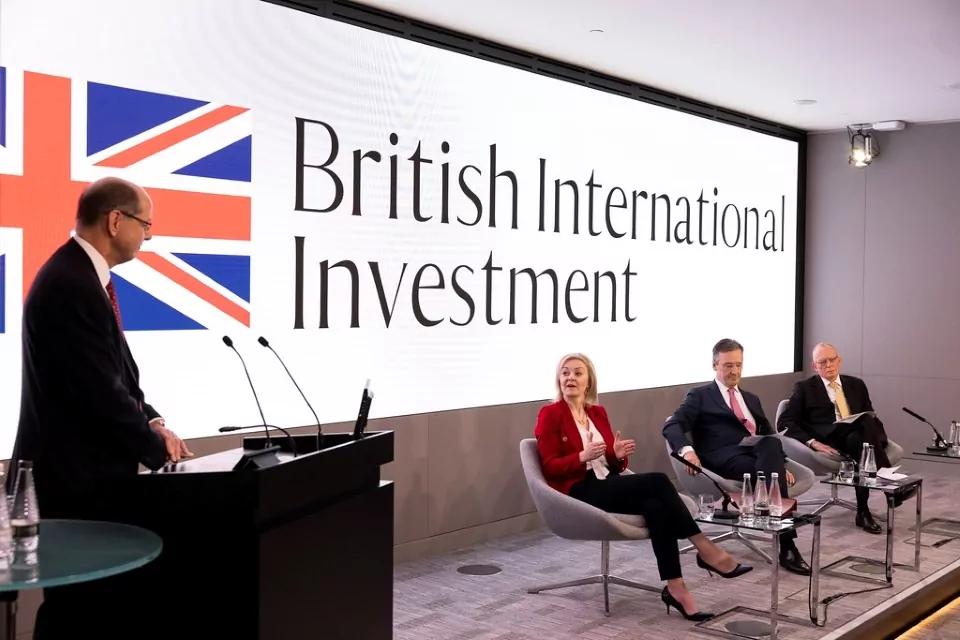
• British International Investment launches its first dedicated energy transition finance facility, providing $150 million to FirstRand.
• Funding targets hard-to-abate sectors across Africa through RMB and FNB, offering transition loans to heavy emitters shifting to lower-carbon technologies.
• South Africa faces an annual climate financing gap exceeding 300 billion rand ($16.7 billion), underscoring the scale of investment required to align with national climate goals.
A New Push for Transition Capital
The UK’s development finance institution, British International Investment, has entered the transition finance arena with a $150 million facility designed to help Africa’s high-emitting companies cut carbon output. Announced on Tuesday, the deal channels funds to South Africa’s FirstRand through its corporate and commercial banking arms, RMB and FNB, in a bid to expand access to capital for firms willing to retool their operations for a lower-carbon economy.
The move reflects a broader shift in development finance priorities as multilateral and government-backed financiers search for ways to support decarbonisation without sidelining industries still central to African economies. Rather than excluding heavy emitters from credit, transition finance aims to fund the difficult, stepwise changes required to reduce their environmental footprint.
“This investment marks a pivotal step in our strategy to accelerate decarbonisation where it matters most,” said Stephen Priestley, BII managing director. His framing speaks directly to the growing consensus among climate financiers: without targeted support for high-impact sectors, emissions trajectories across emerging markets will be slow to bend.

Targeting Hard-to-Abate Sectors
The facility will be used to extend loans to companies with credible plans to adopt cleaner technologies, ranging from more efficient industrial equipment to early-stage pilots for alternative fuels and low-carbon processes. For many African firms, the cost of switching from coal, diesel, or energy-intensive industrial methods remains a major barrier, even where regulatory incentives exist.
By working through RMB and FNB — two of Africa’s most active commercial banks in financing infrastructure and corporate investment — BII is placing early responsibility for transition vetting in the hands of lenders already familiar with local operations, financial risk profiles, and sector exposure.
FirstRand’s networks also give the programme geographic reach beyond South Africa, extending to markets where climate-aligned finance frameworks are less developed but the emissions challenge remains significant.
RELATED ARTICLE: British International Investment Agrees $52 Million Loan to DBL Group for Green Spinning Facility
South Africa’s Expanding Climate Finance Gap
The announcement lands amid growing scrutiny of South Africa’s climate finance gap. According to the 2025 South African Climate Finance Landscape study, the country mobilised an annual average of around 188 billion rand ($10.4 billion) for climate-related projects between 2022 and 2023. The research suggests, however, that meeting South Africa’s climate commitments may require close to 500 billion rand annually.
That gap — well over 300 billion rand by current estimates — highlights the uneven flow of capital into the system. Most funding to date has focused on utility-scale renewables such as solar and wind, contributing meaningfully to grid decarbonisation but leaving adaptation efforts and community-level transitions under-resourced. Only a small fraction of funding is directed toward initiatives that help regions move away from coal or strengthen resilience to climate impacts.
Domestic institutions supplied nearly 60% of the annual climate finance tracked, with commercial banks ranking as the largest private contributors. Yet their lending constraints, including risk-weighting and capital adequacy requirements, limit their ability to fund more experimental or complex transitions.
Why Transition Finance Matters for Executives
For corporate leaders, the FirstRand-BII partnership signals that transition finance is moving from concept to capital deployment in African markets. It offers heavy emitters a route to secure funding for practical, near-term shifts rather than waiting for full-scale technology overhauls that may not yet be commercially viable.
The facility also tests whether local banks can help shape credible transition pathways — a governance challenge increasingly watched by investors who want to see measurable, auditable progress toward emissions reductions.
For policymakers, the deal demonstrates how bilateral development finance can complement domestic banking systems without distorting credit markets. For investors, it is another data point in the evolution of Africa’s energy-transition capital stack, where blended finance and risk-sharing mechanisms are expected to play a larger role.
Broader Implications for Climate Finance in Emerging Markets
If successful, the programme may provide a template for scaling transition finance across other emerging economies where high-emitting sectors remain essential to employment, export revenue, and energy security. With global pressure mounting for more realistic decarbonisation pathways, the facility could influence how climate finance frameworks are shaped ahead of the next round of national climate plan updates.
As South Africa and its neighbours move from broad policy commitments to sector-specific actions, partnerships between international development financiers and domestic banks will be instrumental. BII’s first entry into transition finance adds momentum to that shift, offering capital designed to support emissions cuts in the places where global climate progress depends on it most.
Follow ESG News on LinkedIn
