

Geopolitical Inferno Ignites Oil Prices: Trump’s Bellicose Rhetoric Fuels Volatility in Energy Markets
The global energy landscape finds itself in an increasingly precarious position, with significant geopolitical tensions sending crude oil prices soaring. Investors are closely monitoring developments in the Middle East, particularly as a Liberia-flagged crude oil tanker, the Shenlong Suezmax, successfully navigated the high-risk Strait of Hormuz to dock at Mumbai Port on March 11, 2026. This isolated incident of successful transit underscores the immense challenges and risks currently faced by global oil supply chains amidst an intensifying regional conflict.
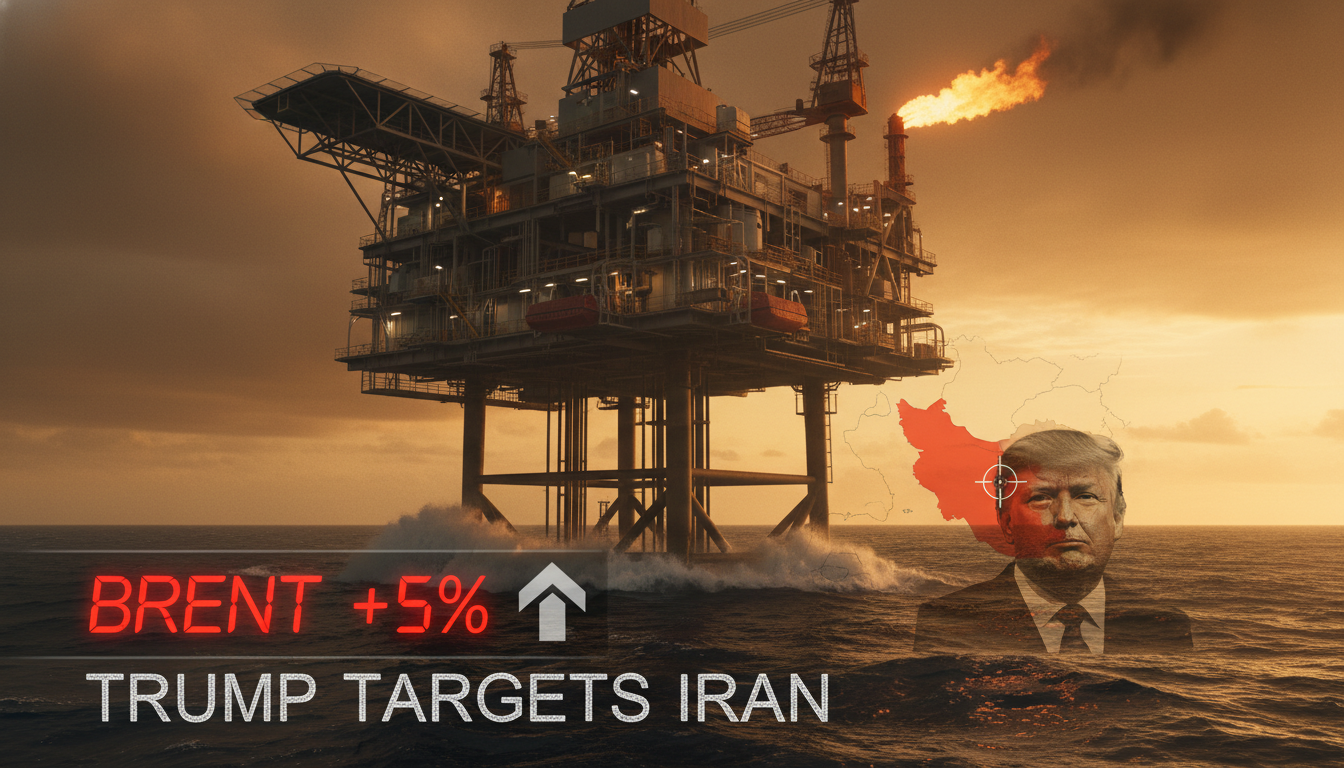
Oil markets reacted sharply, experiencing significant upward movement in volatile trading sessions. U.S. West Texas Intermediate (WTI) crude futures for May delivery surged by 4.1%, closing at $104.21 a barrel as of 9:45 p.m. ET. International benchmark Brent crude futures for June delivery mirrored this ascent, climbing 5% to settle at $106.42 per barrel. This sharp escalation in prices follows a period of heightened uncertainty and is directly attributable to explicit threats of further military action from the U.S. administration against Iran, dampening any lingering hopes for an immediate de-escalation of hostilities.
Trump’s Hardline Stance Propels Crude Higher
The latest rally in crude oil prices was ignited by a forceful national address delivered by U.S. President Donald Trump. On Wednesday, President Trump issued a stark warning, indicating that the United States would “hit” Iran “extremely hard” within the next two to three weeks. His aggressive rhetoric included a declaration that the U.S. intended to “bring them back to the stone ages,” signaling a readiness for severe military confrontation. Such hawkish pronouncements immediately injected a substantial risk premium into oil prices, reflecting investor concerns over potential supply disruptions.
Paradoxically, President Trump also offered a glimmer of potential diplomatic resolution in the same address. He asserted that while the U.S. intended to “finish the job” quickly, discussions with Tehran were “ongoing.” This contradictory messaging, simultaneously threatening extreme force while acknowledging ongoing dialogue, has become a hallmark of the current geopolitical environment, leaving energy investors grappling with a highly unpredictable scenario. The market’s immediate reaction, however, prioritized the aggressive stance, driving up prices as supply security fears dominated sentiment.
The Strait of Hormuz: A Chokepoint Under Siege
At the heart of the current market anxiety is the Strait of Hormuz, a critical maritime chokepoint through which approximately 20% of the world’s oil and natural gas flows. Since the U.S.-Israel war against Iran commenced on February 28, traffic through this vital waterway has been severely constrained, effectively grinding to a halt for many vessels. The implications for global energy supply are immense, making any disruption or uncertainty surrounding the Strait a primary driver of price volatility.
Earlier on Wednesday, President Trump had, in a post on Truth Social, suggested that Iran’s “New Regime President” had requested a ceasefire. This claim briefly sparked optimism among investors, hinting at the possibility of restored oil tanker movement through the Strait of Hormuz. Trump explicitly tied any consideration of a ceasefire to the condition that the Strait of Hormuz must be “open, free, and clear,” otherwise reiterating his threat to “blast Iran into oblivion.”
However, Tehran swiftly and unequivocally denied President Trump’s assertion of a ceasefire request. The Islamic Republic stated that the vital waterway would not be reopened based on what it termed the U.S. leader’s “absurd displays.” Furthermore, Iran emphatically declared that the key transit route remains “decisively and dominantly under the control of the IRGC Navy,” signaling a firm stance against external pressure regarding its strategic maritime domain.
Conflicting Signals and Market Uncertainty
The ongoing conflict has been characterized by a constant stream of contradictory statements from both sides regarding the existence and status of peace negotiations. President Trump, in particular, has frequently sent mixed signals to the market and the international community. Prior reports suggested negotiations were nearing a peace deal, while simultaneously the U.S. indicated it was prepared to escalate fighting by deploying thousands of additional troops to the region. This lack of clarity significantly complicates risk assessment for oil and gas investors.
Such inconsistent messaging previously manifested in notable market shifts. Brent crude, for instance, had dipped below $100 per barrel for the first time in a week just prior to the latest surge. This dip occurred after President Trump had suggested on Tuesday evening that he anticipated U.S. military operations against Iran would wind down within “two or three weeks,” hinting at an impending withdrawal and appearing to declare victory even without a formally negotiated agreement. The current rebound underscores how quickly market sentiment can pivot based on perceived shifts in the geopolitical outlook.
Investor Outlook: Navigating the Geopolitical Premium
For oil and gas investors, the current environment necessitates extreme vigilance. The significant geopolitical premium embedded in crude prices reflects the heightened risk of supply disruptions from the Middle East. While diplomatic avenues remain nominally open, the aggressive rhetoric and conflicting signals from key players indicate a high probability of continued volatility. The effective closure of the Strait of Hormuz, even intermittently, represents an existential threat to global energy security and will continue to be a primary catalyst for market movement.
Investors must factor in the potential for rapid price swings based on daily headlines and presidential pronouncements. The fundamental supply-demand dynamics are currently overshadowed by the geopolitical chessboard, making traditional analyses less predictive. Focus remains on the stability of key transit routes, the integrity of regional infrastructure, and any verifiable progress towards de-escalation that could alleviate the current fear premium in crude oil markets. The recent price surges serve as a stark reminder of the fragile balance underpinning global energy supply.
