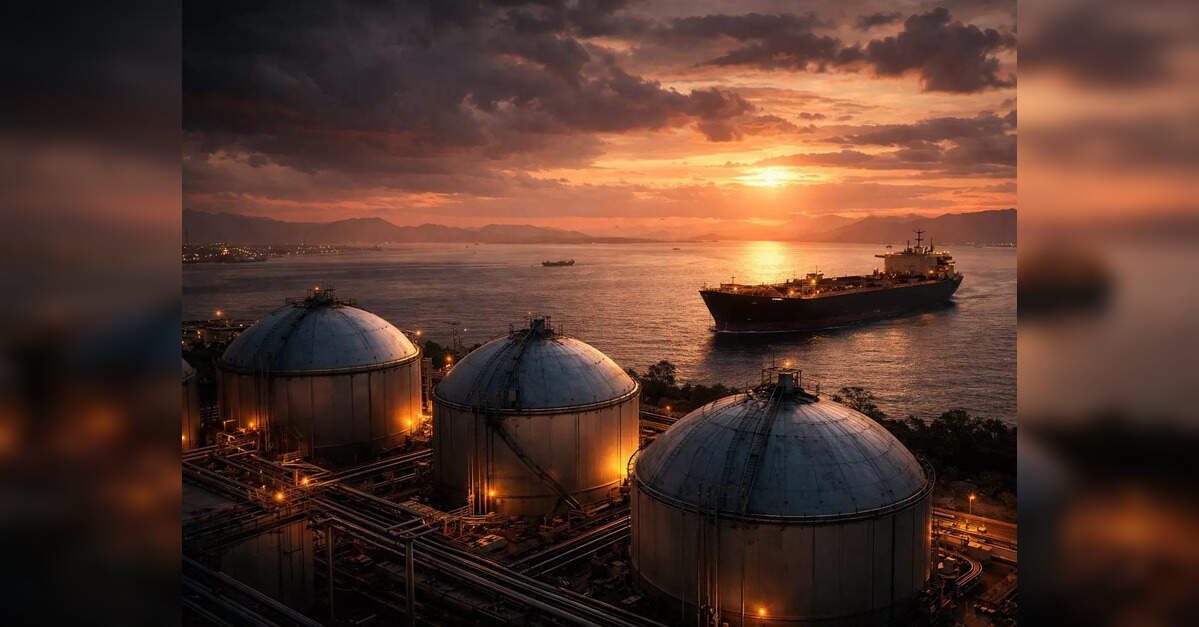
Oil prices surged on Tuesday as the conflict involving Iran disrupted regional supplies and heightened fears over the Strait of Hormuz, a key global energy artery. Brent crude, the international benchmark, jumped more than 8% to $85.12 a barrel, its highest level since July 2024. US West Texas Intermediate rose over 7% to $76.47 a barrel.
The rally reflects growing concern that the fighting could severely disrupt oil flows from the Middle East. About 20% of the world’s oil and liquefied natural gas shipments pass through the Strait of Hormuz. According to a Reuters report, a senior Revolutionary Guards official said the strait had been closed and warned that Iran would fire on any vessel attempting to pass.
Shipping through the waterway has slowed sharply, with tankers and container vessels avoiding the route. Insurers have reportedly withdrawn coverage for ships transiting the area, while global oil and gas freight rates have climbed steeply.
The US and Israeli air campaign widened on Monday, with Israel striking targets in Lebanon and Iran retaliating with attacks on energy infrastructure in Gulf countries and on tankers in the Strait of Hormuz. Saudi Arabia shut its largest domestic oil refinery after a drone strike, adding to supply concerns.
US President Donald Trump said the military campaign, which began on Saturday with a strike that killed Iran’s Supreme Leader Ayatollah Ali Khamenei, was progressing “substantially” ahead of schedule but could continue for more than four weeks. He said the objectives include dismantling Iran’s missile systems, navy and nuclear programme and curbing its regional support networks, though he stopped short of calling for regime change.
The US State Department urged Americans to leave the Middle East from Egypt eastward. Meanwhile, an Iranian Revolutionary Guards general threatened to “burn any ship” navigating the Strait of Hormuz and said oil pipelines would be targeted to block exports from the region. He warned oil prices could reach $200 in the coming days.
Refined product futures have also risen, reflecting risks to fuel supplies and processing capacity in the region. The Middle East is a major supplier of refined fuels, and several facilities are now exposed to potential attacks.
The surge in crude has revived global inflation concerns. Higher energy costs could complicate central banks’ efforts to bring inflation under control while also considering rate cuts to support economic growth.
Brokerage Bernstein on Monday raised its 2026 Brent price assumption to $80 per barrel from $65, but said prices could spike to $120–$150 in an extreme scenario involving prolonged conflict.
Technical analysts at Samco Securities said the rally aligns with earlier expectations. In a prior note, the firm had identified a breakout above $66 as a key trigger for further gains. “The breakout above $66 unfolded swiftly, with prices surging toward $70 and beyond after the US-Israel strike on Iran injected a sharp geopolitical risk premium into energy markets,” Samco said.
The brokerage noted that crude is now nearing a key resistance level around $77.65, which had capped prices in the previous cycle. It cautioned that geopolitical events often result in sharp price spikes that later stabilise once initial panic subsides.
“With crude already reacting sharply to the conflict narrative, the probability of consolidation or cooling off has increased,” Samco said, advising traders not to chase the rally and to wait for pullbacks toward prior breakout levels for better risk-reward positioning.
(Disclaimer: Recommendations, suggestions, views and opinions given by the experts are their own. These do not represent the views of Economic Times)