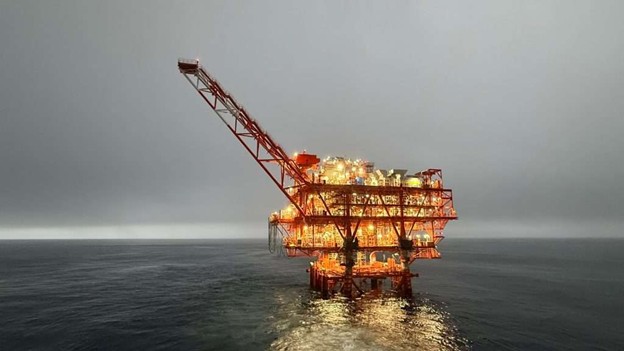
The commencement of gas production from the Quiluma field offshore Angola marks a pivotal moment for both the Angolan energy sector and the strategic portfolios of major international players like bp and Eni. Operated by Azule Energy, a 50:50 joint venture between bp and Eni, this development represents Angola’s first dedicated non-associated gas project, signaling a significant diversification from its traditional oil-centric economy. This initial phase, targeting 150 MMscf/d and ramping up to an impressive 330 MMscf/d by the close of 2026, positions Quiluma as a crucial long-term asset. For investors monitoring the evolving global energy landscape, this project offers a compelling case study in strategic positioning, resource diversification, and the resilience of integrated energy companies in a volatile market.
Angola’s Energy Evolution and Azule Energy’s Strategic Expansion
The Quiluma project is more than just another production start-up; it’s a testament to Angola’s ambition to harness its abundant natural gas reserves for both domestic consumption and export. By supplying gas from the shallow-water Quiluma field to the Angola LNG plant after onshore processing, the project strengthens the nation’s energy security while simultaneously enhancing its position in the global liquefied natural gas market. This move towards non-associated gas development is a critical step in diversifying Angola’s energy mix, reducing reliance on oil revenues, and providing a cleaner-burning fuel for industrial and power generation needs. Azule Energy, holding a substantial 37.4% stake in the New Gas Consortium (NGC) alongside partners Cabinda Gulf Oil Company (31%), Sonangol E&P (19.8%), and TotalEnergies (11.8%), demonstrates a robust collaborative model, overseen by Angola’s national concessionaire ANPG. The venture’s proactive stance is further underscored by its recent upstream activities, including other developments within Angola and notable exploration successes in Namibia’s prolific Orange basin. This regional expansion, particularly in high-potential areas like the Orange basin, suggests a strategic long-term vision for Azule Energy to become a dominant player in Southern Africa’s energy landscape, offering investors exposure to both established production and promising frontier exploration.
Navigating Market Volatility: The Resilience of Gas in a Dynamic Crude Environment
In a market characterized by persistent volatility, the strategic importance of diversified energy assets cannot be overstated. As of today, Brent Crude trades at $92.99, reflecting a marginal dip of 0.27% within a day range of $92.57 to $94.21. Similarly, WTI Crude stands at $89.51, down 0.18% for the day within a range of $88.76 to $90.71. While these movements appear minor on an intraday basis, a broader look at the past two weeks reveals a more significant trend: Brent crude has fallen by approximately 7%, from $101.16 on April 1st to $94.09 on April 21st. This downward pressure on crude prices, alongside gasoline trading at $3.12, highlights the ongoing sensitivity of oil markets to global economic indicators and geopolitical developments. Against this backdrop, the initiation of a major gas project like Quiluma provides a valuable counter-cyclical element for bp and Eni’s portfolios. Natural gas, often less directly susceptible to the immediate swings of the crude market, offers a more stable demand profile, particularly for long-term LNG contracts and domestic power generation. This inherent stability makes gas investments an attractive component for investors seeking to mitigate risk and ensure consistent cash flows amidst broader energy market fluctuations.
Upcoming Catalysts and the Path to Full Production Potential
The ramp-up schedule for Quiluma, reaching 330 MMscf/d by the end of 2026, positions this project as a significant long-term value driver for bp and Eni. This phased increase in production will steadily augment revenue streams, coinciding with a period where the global energy market will continue to evolve rapidly. Investors should keep a close eye on several key upcoming energy events that will provide crucial context for the project’s future performance. The EIA Short-Term Energy Outlook, due on May 2nd, will offer critical insights into projected supply, demand, and price trends for both crude and natural gas, directly influencing the perceived value of new gas projects like Quiluma. Regular updates such as the EIA Weekly Petroleum Status Reports (upcoming on April 22nd, April 29th, and May 6th) and the Baker Hughes Rig Count (April 24th and May 1st) will provide a continuous pulse on the health and direction of the broader energy sector. These reports, tracking inventory levels, refinery activity, and drilling efficiency, will collectively paint a picture of the market conditions into which Quiluma’s increasing gas volumes will be introduced. Understanding these macro trends is vital for forecasting the project’s profitability and its contribution to the partners’ bottom lines as it approaches full operational capacity.
Addressing Investor Outlook: Gas as a Strategic Pillar for Future Energy Prices
A recurring theme among our readers, particularly questions surrounding “what do you predict the price of oil per barrel will be by end of 2026?”, underscores a pervasive investor concern about long-term energy price stability and growth. While the Quiluma project focuses squarely on natural gas, its implications for the broader energy complex, including crude prices, are significant. The successful execution of projects like Quiluma reinforces the role of natural gas as a critical bridge fuel in the energy transition, offering a cleaner alternative to coal and a reliable backup for renewables. For bp and Eni, their investment in Azule Energy and the Quiluma project demonstrates a clear strategy to balance their portfolios with robust gas assets, which are increasingly seen as essential for energy security and climate goals. The predictable, long-term nature of gas production, especially when tied to LNG export facilities, can provide a more stable earnings profile compared to the often-turbulent crude market. As bp’s executive vice president Gordon Birrell highlighted, this project marks an important step for Angola’s energy system and strengthens its energy mix. This strategic pivot towards gas, exemplified by the Quiluma start-up and Azule Energy’s broader exploration successes, answers a key investor need for assets that can deliver sustainable returns and contribute to a resilient energy future, irrespective of daily crude price fluctuations. Investors should view this as a reinforcing signal that diversified energy giants are building foundations for sustained value creation in a decarbonizing yet energy-hungry world.