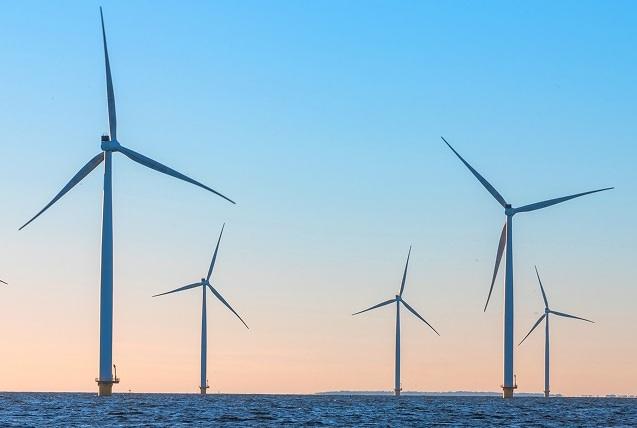
The energy landscape is continually evolving, and few developments underscore this dynamic shift as profoundly as the recent launch of JERA Nex bp. This new equally-owned renewable joint venture, formed by integrated energy major bp and Japan’s largest power generation company, JERA, represents a formidable new player in the global offshore wind arena. Boasting a staggering net potential generating capacity of 13 GW, the venture instantly positions itself as one of the world’s premier offshore wind developers, owners, and operators. For investors closely monitoring the delicate balance between traditional hydrocarbon plays and the accelerating energy transition, this strategic move by bp offers critical insights into how large-cap energy firms are navigating a volatile market while securing long-term growth vectors.
JERA Nex bp: A Strategic Powerhouse in Offshore Wind
The formation of JERA Nex bp is not merely an aggregation of assets; it’s a calculated strategic alignment designed to leverage complementary strengths. The joint venture commences operations with an impressive portfolio spanning nine countries, including 1 GW of already installed net generating capacity. Beyond this operational base, it commands a substantial 7.5 GW development pipeline and an additional 4.5 GW of secured leases, underpinning its ambitious growth trajectory. When the initial plans were unveiled in December 2024, bp and JERA committed to injecting up to $5.8 billion in capital funding into JERA Nex bp by the close of 2030, signaling strong conviction in the venture’s long-term potential.
This collaboration brings together bp’s extensive global footprint and its ongoing offshore wind projects, such as the Morgan and Mona developments in the UK Irish Sea, and the Oceanbeat East and Oceanbeat West projects in Germany’s North Sea, alongside secured leases off Scotland and the east coast of the U.S. JERA, for its part, contributes significant expertise and an established presence in key Asian markets, solidified by its 2023 acquisition of Belgian offshore wind player Parkwind and the subsequent launch of its renewables platform, JERA Nex. This platform already owns and operates wind farms in Belgium, Germany, Japan, and Taiwan, with a development portfolio stretching into Japan, Ireland, and Australia. The establishment of JERA Nex bp Japan further emphasizes a dedicated focus on the rapidly expanding Japanese market, a critical region for offshore wind development.
Market Realities: Balancing Renewables with Oil & Gas Volatility
This significant move into offshore wind by bp unfolds against a backdrop of considerable volatility in the broader energy markets. As of today, Brent crude trades at $94.45 per barrel, reflecting a 1.08% decline within the day, with its range oscillating between $93.98 and $95.69. This recent dip follows a more pronounced trend observed over the past 14 days, where Brent crude has shed nearly 20% of its value, falling from $118.35 on March 31st to $94.86 yesterday. Similarly, WTI crude is currently priced at $86.12, down 1.49% for the day. This pricing environment, coupled with gasoline trading at $3.02 per gallon, highlights the ongoing uncertainty in the global oil and gas sector.
For an integrated energy major like bp, these fluctuating commodity prices directly impact profitability and capital allocation decisions. The formation of JERA Nex bp aligns with bp’s updated strategy, announced in February 2025, which saw the company reallocate capital to increase oil and gas investment while adjusting its low-carbon energy capex allocation to less than 5%. This joint venture structure allows bp to maintain a substantial presence and growth potential in the burgeoning offshore wind sector without bearing the full capital expenditure burden, effectively “decapitalizing” its low-carbon energy portfolio, as noted by bp Executive Vice President William Lin. This pragmatic approach enables bp to continue maximizing value from its core hydrocarbon business while participating strategically in the long-term energy transition, mitigating exposure to the intense capital requirements often associated with large-scale renewable projects.
Investor Focus: Navigating Short-Term Swings and Long-Term Plays
Our proprietary reader intent data reveals a clear and persistent focus among investors on the immediate trajectory of crude oil prices. Questions like “is WTI going up or down” and predictions for “the price of oil per barrel by end of 2026” dominate investor queries, underscoring a deep concern for near-term market direction. This immediate focus on oil price movements provides critical context for understanding investor sentiment toward companies like bp, even as they make significant long-term plays in renewables.
Looking ahead, the energy calendar is replete with events that could significantly influence these short-term market dynamics. The upcoming OPEC+ JMMC Meeting on April 21st is a critical date, as any decisions regarding production quotas could send immediate ripples through the crude market. This will be closely followed by the EIA Weekly Petroleum Status Reports on April 22nd and 29th, and the Baker Hughes Rig Count releases on April 24th and May 1st. These reports offer vital insights into U.S. supply-demand balances and drilling activity, factors that directly impact the daily price fluctuations investors are tracking. While JERA Nex bp represents a strategic long-term investment in renewable power generation, the broader investment thesis for integrated energy majors like bp remains inextricably linked to the near-term volatility driven by these pivotal oil market events. The EIA’s Short-Term Energy Outlook, due on May 2nd, will also provide a macro perspective that investors will be keen to analyze for future price signals.
The Road Ahead: Building Value in a Transitional Energy Landscape
Headquartered in London with offices strategically located across Europe, Asia, the U.S., and Australasia, JERA Nex bp is built for global scale and impact. For investors, the venture represents a compelling avenue for exposure to the rapidly expanding offshore wind sector, particularly as global decarbonization efforts intensify. The ability to pool resources, expertise, and purchasing power from two major energy entities — one with deep Western market experience and the other with unparalleled access and understanding of the burgeoning Asian energy markets — creates a powerful competitive advantage.
This joint venture allows bp to continue its participation in the energy transition with a more capital-efficient model, aligning with its updated strategic focus. By leveraging JERA’s established presence and development capabilities, especially in high-growth regions like Japan and Taiwan, bp can realize value from its low-carbon energy initiatives while prioritizing capital for its traditional oil and gas operations. For investors seeking a balanced portfolio in the energy sector, JERA Nex bp offers a clear signal of how integrated majors are adapting: maintaining a robust core business while strategically investing in future energy systems through collaborative, asset-optimized structures. The long-term value creation potential in offshore wind remains significant, making JERA Nex bp a venture to watch closely as it executes its ambitious development pipeline.


