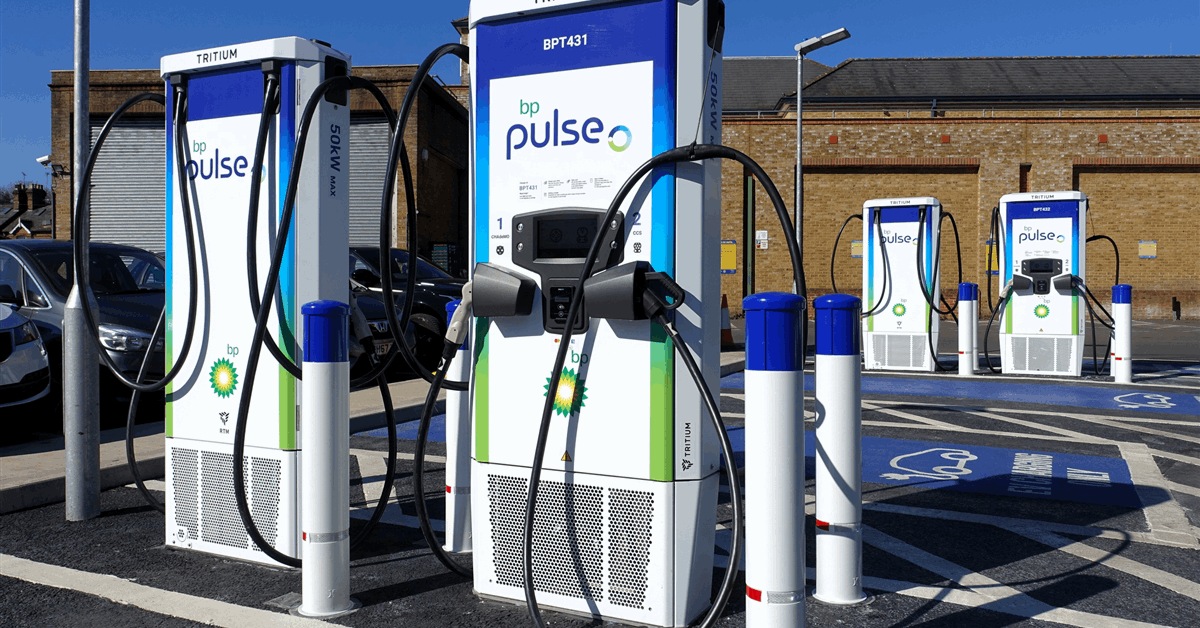
BP’s recent announcement to divest its convenience, mobility, and BP Pulse businesses in the Netherlands to Catom BV marks a significant step in the supermajor’s “reset” strategy. This move, encompassing around 300 retail sites and 23 operational or developing EV charging hubs, is far more than a simple asset sale; it signals a critical re-evaluation of BP’s downstream portfolio and its capital allocation priorities amidst evolving market dynamics. For investors, understanding this strategic pivot is key to assessing BP’s future value proposition and its commitment to a streamlined, focused energy transition.
The “Reset BP” Strategy Takes Shape: A Focused Downstream Approach
The sale of its Dutch retail and EV charging assets is a tangible manifestation of BP’s broader “reset” plan, initially outlined in February. This comprehensive strategy targets $20 billion in divestment proceeds by 2027, with an immediate goal of $3-4 billion in asset sales this year, of which $1.5 billion was already signed or completed in the first quarter. This aggressive divestment program underscores a clear mandate to scale down certain renewable investments, cut costs, and sharpen the company’s focus. The Dutch sale, though undisclosed in price, contributes to this financial target, effectively shedding assets deemed non-core. Emma Delaney, BP’s executive vice president for customers and products, articulated this, stating that while they built a high-quality business in the Netherlands, a new owner is better placed to take it forward as BP focuses its downstream operations. This isn’t an isolated event; BP is simultaneously considering all options for its global lubricants brand Castrol, initiating marketing processes for its Ruhr Oel GmbH-BP Gelsenkirchen refining and petrochemical assets in Germany and the Netherlands, and divesting retail sites and EV infrastructure in Austria. Together, these actions paint a consistent picture of a supermajor actively streamlining its global footprint to concentrate on higher-return, strategically aligned ventures.
Navigating Market Volatility: Divestment in a Fluctuating Crude Environment
BP’s strategic divestments are occurring against a backdrop of notable volatility in the global crude market, a factor that profoundly influences investor sentiment and asset valuations. As of today, Brent crude trades at $94.94 per barrel, a modest increase of 0.16% for the day. However, this stability masks a more significant trend over the past two weeks, where Brent has seen a nearly $9 per barrel decline, falling from $102.22 on March 25th to $93.22 on April 14th. This recent downward pressure, even as WTI hovers around $91.42, highlights the inherent unpredictability that large integrated energy companies must contend with. For investors who are actively seeking to build a base-case Brent price forecast for the next quarter, or trying to grasp the consensus 2026 Brent forecast, BP’s divestment strategy offers a critical data point. Shedding non-core downstream assets, particularly those with a significant retail footprint and EV charging components, allows BP to unlock capital that might otherwise be tied up in lower-margin or slower-growth segments. This redeployment of capital can strengthen the balance sheet, fund share buybacks, or be directed towards more resilient and profitable segments of its upstream or refined products portfolio, providing a buffer against crude price fluctuations and positioning the company for long-term value creation in a dynamic energy landscape.
Unpacking the EV Component: A Nuanced Exit from Dutch Mobility
Perhaps one of the more intriguing aspects of this divestment is the inclusion of BP Pulse EV charging infrastructure. BP has previously championed its push into renewable energy and EV charging as a cornerstone of its energy transition strategy. The sale of 15 operational BP Pulse EV hubs and eight under development, alongside retail sites with on-site EV charging, raises questions about the company’s commitment to direct ownership of such assets in certain markets. This move does not necessarily signal a wholesale retreat from the EV charging sector globally, but rather suggests a more pragmatic, market-specific optimization. BP may be re-evaluating the capital intensity and return profiles of directly owning and operating retail EV charging infrastructure in markets where local players like Catom BV, which will grow its network to over 400 sites and aims to be the number one brand in the Netherlands, possess a stronger competitive advantage or a more efficient operating model. This could indicate a shift towards partnership models, technology development, or focusing BP Pulse investments in regions where the company perceives greater strategic value or higher returns on invested capital. For investors tracking BP’s energy transition progress, this decision underscores a disciplined approach to capital allocation, prioritizing profitability and strategic fit over simply expanding a green footprint at all costs.
Forward Outlook: What Upcoming Events Mean for BP’s Strategic Path
BP’s strategic repositioning will continue to unfold within a macro environment shaped by several critical upcoming energy events. The decisions made at the OPEC+ meetings, with the Joint Ministerial Monitoring Committee (JMMC) convening on April 18th and the Full Ministerial meeting on April 20th, will be paramount. Any shifts in production quotas from these gatherings directly impact global crude supply, influencing prices and the profitability of upstream assets – BP’s core business. For an investor asking about the base-case Brent price forecast for the next quarter, the outcome of these meetings is a primary driver. Furthermore, the weekly API Crude Inventory reports (scheduled for April 21st and April 28th) and the EIA Weekly Petroleum Status Reports (April 22nd and April 29th) will provide crucial insights into demand trends and inventory levels, offering a real-time pulse on market health. These reports are especially vital when considering the ongoing performance of global refining operations, including how Chinese ‘tea-pot’ refineries are running this quarter, a frequent query from our readership. Finally, the Baker Hughes Rig Count on April 17th and April 24th will offer leading indicators of future production activity. The success of BP’s “reset” plan and its ability to achieve its aggressive divestment targets depend heavily on a stable or favorable commodity price environment. These upcoming events will collectively dictate the market backdrop against which BP executes its strategy, influencing asset valuations and investor confidence in its long-term vision.


