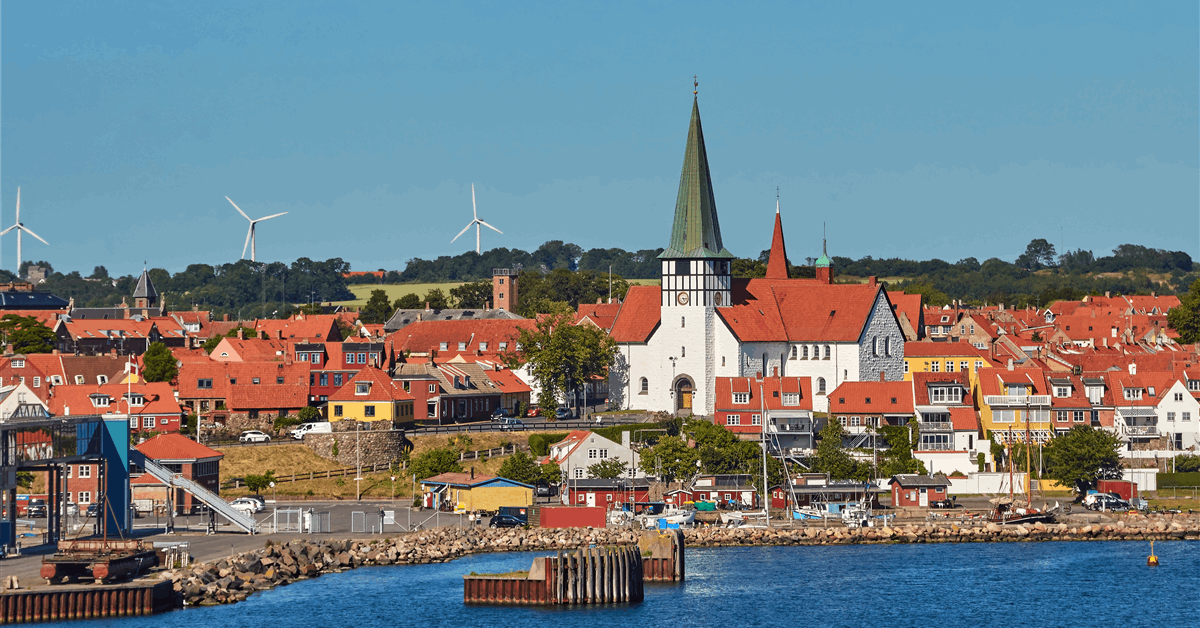
The recent securing of a EUR 645.2 million grant, equivalent to approximately $756.4 million, for the Bornholm Energy Island project marks a pivotal moment in Europe’s ambitious energy transition. This significant injection of funds from the European Union’s Connecting Europe Facility (CEF) for Energy program propels the Danish-German initiative, valued at an estimated EUR 7 billion, from its extensive planning phase into concrete implementation. As the world’s first hybrid direct current interconnector of its kind, the project is set to harness three gigawatts of offshore wind power, delivering clean electricity to millions of homes and businesses across Denmark and Germany. For oil and gas investors navigating a complex and evolving energy landscape, this development is more than just a renewable energy milestone; it signals a critical de-risking of future-proof energy infrastructure and offers insights into the broader capital allocation trends shaping the decades ahead.
Bornholm: A Blueprint for Europe’s Energy Security
The Bornholm Energy Island is not merely another offshore wind farm; it represents a pioneering approach to grid integration and regional energy independence. By establishing an offshore hub on the Danish island of Bornholm in the Baltic Sea, the project will consolidate electricity from multiple wind farms before transmitting it onshore. This innovative hybrid interconnector design, owned by Danish state-owned Energinet and German electricity transmission system operator 50Hertz, has attracted substantial European backing precisely because it addresses complex technical and regulatory challenges inherent in scaling renewable energy. The grant specifically targets the construction of two new converter stations in Bornholm and Zealand, alongside an extensive submarine cable system spanning some 200 kilometers and a 17-kilometer onshore connection. This move from conceptualization to tangible construction, underscored by the recent award of a turnkey converter system contract to Siemens Energy, dramatically reduces project risk and validates the long-term viability of similar large-scale infrastructure plays across the continent.
Navigating Volatility: Renewable Stability Amidst Crude Swings
The substantial investment in Bornholm Energy Island arrives at a time when traditional energy markets continue to demonstrate significant volatility. As of today, Brent crude trades at $98 per barrel, marking a 1.4% decline, while WTI sits at $89.74, down 1.57%. This recent softness extends a trend seen over the past fortnight, with Brent shedding over 12% from its $112.57 peak on March 27th. Such fluctuations in crude prices underscore the long-term investment rationale for diversified energy sources and robust, stable infrastructure like the Bornholm project. While oil and gas investments remain critical for immediate energy demands, the consistent capital flow into large-scale renewables reflects a strategic pivot by European policymakers and state-backed entities towards assets that promise greater energy security and less exposure to geopolitical or supply-side shocks. For investors with a long-term horizon, these infrastructure developments present a compelling alternative or complement to traditional upstream and midstream oil and gas plays, offering predictable returns and alignment with global decarbonization goals.
De-Risking the Future: Overcoming Regulatory and Technical Hurdles
The successful transition of Bornholm Energy Island from planning to implementation was not without significant challenges, providing valuable lessons for future large-scale energy projects. Project owners Energinet and 50Hertz highlighted a six-month pause in the joint project, necessitated by the need for political regulation between Denmark and Germany. Key among these issues was the question of liability in the event of power transmission disruptions. The subsequent amendment of the German Energy Industry Act (Energiewirtschaftsgesetz, EnWG) by the Federal Cabinet, which now facilitates the connection of additional wind farms to the German grid through projects like Ostwind 4, demonstrates a crucial de-risking of the regulatory environment for cross-border energy infrastructure. This legislative clarity, coupled with the EUR 645.2 million grant and the Siemens Energy contract for converter systems and other technical components through the mid-2030s, establishes a precedent for how complex, multi-national renewable energy projects can overcome policy and operational barriers, thereby enhancing their attractiveness to long-term capital.
Investor Focus: Beyond Short-Term Swings to Long-Term Energy Horizons
Our proprietary market intelligence indicates that investors are keenly focused on understanding market fundamentals, with recurring questions about current Brent crude prices and the efficacy of market data. There’s also significant interest in OPEC+ production quotas, reflecting the ongoing influence of traditional energy producers on short-term market dynamics. While these immediate catalysts remain crucial, the Bornholm project signals a deeper, long-term shift in investment priorities within the energy sector. The project’s anticipated completion in the mid-2030s aligns with a strategic investment horizon that transcends daily or weekly price movements. Upcoming energy events, such as the OPEC+ JMMC and Full Ministerial meetings on April 18th and 20th respectively, will undoubtedly influence near-term crude market direction, as will the API and EIA weekly inventory reports on April 21st, 22nd, 28th, and 29th. However, these events, while critical for managing existing oil and gas portfolios, also highlight the inherent volatility of a commodity-driven market. In contrast, the de-risked, multi-billion-dollar investment in Bornholm Energy Island underscores the growing appeal of stable, long-life renewable infrastructure. For sophisticated oil and gas investors, understanding these parallel investment theses—managing short-term commodity exposure while strategically allocating capital to long-term energy transition plays—is paramount to building resilient and future-proof portfolios.


