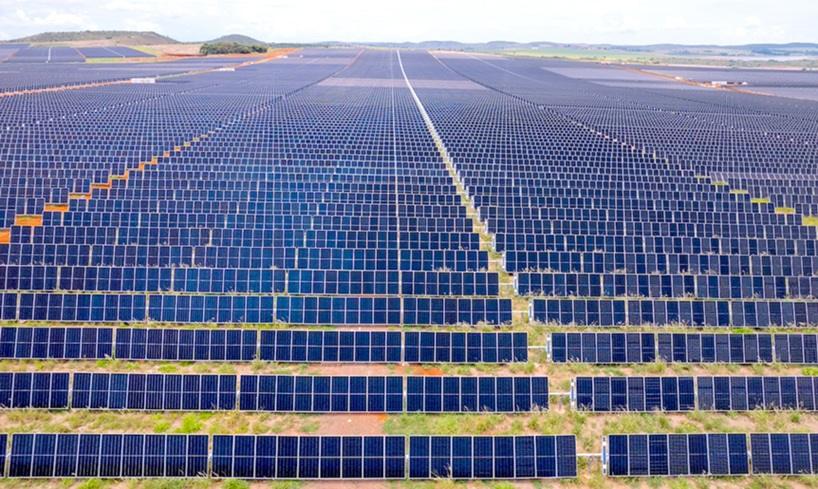
The energy investment landscape continues its dynamic evolution, with significant capital flows increasingly directed towards the rapidly expanding renewable sector. A recent landmark transaction underscores this trend: Atlas Renewable Energy, a major player in Latin American clean energy, has successfully secured $3 billion in refinancing. This move, indirectly backed by investment giant BlackRock through its acquisition of Global Infrastructure Partners (GIP), represents the largest corporate refinancing for non-conventional renewable energy in the region to date. For investors navigating complex global energy markets, this development signals not just the maturation of renewable asset financing but also the strategic reallocation of capital by some of the world’s largest institutional players, offering crucial insights into where the smart money is heading.
LatAm Renewables Attract Major Capital Amidst Energy Transition
Atlas Renewable Energy’s $3 billion refinancing package is a testament to the escalating confidence and stability within the Latin American renewable energy market. Founded in 2017 and specializing in large-scale solar and storage projects, primarily across Chile, Brazil, and Mexico, Atlas has demonstrated a robust growth trajectory. The transaction, led by Global Infrastructure Partners and involving a consortium of prominent banks including BNP Paribas, Goldman Sachs, and Morgan Stanley, is designed to optimize Atlas’s capital structure, unlock more competitive financing costs across its diverse regional portfolio, and fuel its ambitious expansion plans in clean energy infrastructure. The indirect involvement of BlackRock, following its 2024 acquisition of GIP, lends considerable weight to this deal, signaling a strong institutional endorsement of renewable assets as attractive long-term investments with predictable cash flows. This strategic capital deployment highlights a broader theme: the significant financial resources being channeled into projects that align with global decarbonization efforts, offering a compelling alternative or complement to traditional energy investments.
Navigating Volatility: The Macro Energy Landscape for Investors
While the renewable sector attracts substantial long-term capital, the traditional oil and gas markets continue to present a volatile, yet critical, backdrop for investors. As of today, Brent Crude trades at $93.52, experiencing a modest +0.3% uptick within a tight day range of $93.52-$93.72. WTI Crude shows a stronger gain at $90.25, up +0.65% for the day, after trading between $89.71 and $90.3. However, this daily stabilization masks a significant recent downturn; over the past two weeks, Brent has plummeted from $118.35 on March 31st to $94.86 yesterday, representing a steep 19.8% decline. This sharp correction underscores the inherent price sensitivity of crude markets to geopolitical shifts, supply adjustments, and demand signals. For investors, understanding this volatility is paramount. The contrast between the commodity-driven swings of crude and the more project-finance-oriented stability offered by mature renewable assets like those of Atlas Renewable Energy highlights a growing divergence in investment profiles. While traditional energy offers high-beta exposure, renewable infrastructure provides a defensive play, often with contracted revenues and lower operational risk once constructed, making it particularly appealing during periods of commodity price uncertainty.
Upcoming Catalysts: What Energy Investors Must Watch
The immediate horizon is packed with critical events that will undoubtedly shape the short-term trajectory of global energy markets. Tomorrow, April 21st, the OPEC+ Joint Ministerial Monitoring Committee (JMMC) convenes, a meeting that could signal shifts in production policy and significantly influence crude prices. Following closely, the EIA Weekly Petroleum Status Report on April 22nd, and again on April 29th, will provide crucial insights into U.S. crude inventories, refinery utilization, and demand indicators, offering a snapshot of the world’s largest consumer market. Industry participants will also be closely monitoring the Baker Hughes Rig Count on April 24th and May 1st for signs of North American production trends. Further inventory data will arrive with the API Weekly Crude Inventory reports on April 28th and May 5th. Looking slightly further ahead, the EIA Short-Term Energy Outlook on May 2nd will offer a more comprehensive forecast for supply, demand, and prices across various energy commodities. Each of these events serves as a potential catalyst, capable of injecting new volatility or stability into the market, directly impacting the investment decisions of oil and gas players and indirectly influencing the capital flow dynamics even within the renewable sector by shifting overall investor sentiment towards energy assets.
Investor Focus: Capital Allocation and Long-Term Outlook
Our proprietary reader intent data reveals a prevalent investor concern: “Is WTI going up or down?” and “What do you predict the price of oil per barrel will be by the end of 2026?” These questions highlight the fundamental challenge for energy investors today: navigating short-term volatility while positioning for long-term trends. While precise predictions are elusive, the factors influencing oil prices through 2026 are clear: global economic growth, geopolitical stability, OPEC+ discipline, and the accelerating pace of the energy transition. The significant refinancing secured by Atlas Renewable Energy, with the backing of BlackRock, is a tangible demonstration of strategic capital deployment in response to these long-term trends. It shows a clear pivot towards assets that offer growth potential and predictable returns outside the immediate fluctuations of the crude market. For sophisticated investors, the key lies in diversified exposure: balancing tactical plays in the commodity markets with strategic, long-term investments in the rapidly expanding clean energy infrastructure. The increasing availability of competitive financing for large-scale renewable projects, as seen with Atlas, not only enables continued growth in the sector but also underscores its maturing risk profile, making it an increasingly attractive component of a well-rounded energy investment portfolio designed to weather both immediate market shocks and long-term structural shifts.


