Geopolitical Shocks Versus Persistent Bearishness
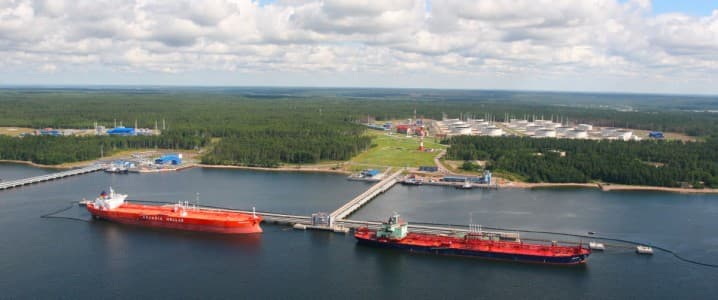
The global oil market continues to exhibit a profound disconnect between acute geopolitical risk and underlying price action. A prime example of this resilience to bullish catalysts was the drone attack on Russia’s key Novorossiysk oil port in the Black Sea last November. This incident, which temporarily suspended significant oil exports, might historically have triggered a sharp price spike. However, OilMarketCap’s proprietary data pipelines indicate that the market’s entrenched bearish sentiment, driven by broader fundamental concerns, largely shrugged off this supply disruption. As of today, Brent Crude trades at $90.38 per barrel, a notable decline of 9.07% within the day’s trading range of $86.08 to $98.97. Similarly, WTI Crude stands at $82.59, down 9.41%. This steep daily drop is not an anomaly; our 14-day Brent trend analysis reveals a precipitous fall from $112.78 on March 30th to today’s $90.38, representing a nearly 20% contraction. This sustained downward pressure, despite a major supply disruption barely five months prior, underscores the market’s conviction that structural oversupply risks are far more potent than isolated geopolitical flare-ups in dictating price direction.
The Looming Oversupply and Agency Revisions
A primary driver of this bearish grip stems from the revised outlooks presented by major energy agencies. While the Novorossiysk incident presented a brief supply concern, the market’s focus quickly returned to the longer-term balance. Reports from late last year, particularly those from the International Energy Agency (IEA) and OPEC, signaled a significant shift towards an oversupplied market in 2026. The IEA, for instance, dramatically lifted its supply growth forecast to 2.5 million barrels per day (b/d) while curbing demand growth to a mere 770,000 b/d. This projected imbalance translates into a staggering 4.1 million b/d surplus for next year, equivalent to approximately 4% of global crude demand. Even OPEC, after months of maintaining a more balanced outlook, acknowledged the growing risk of a supply glut. This consensus among leading forecasters has profoundly shaped investor expectations, making them increasingly skeptical of any sustained rallies sparked by short-term disruptions. The market is effectively pricing in a future where supply outstrips demand, making it difficult for bullish catalysts to gain traction.
Navigating the Future: Upcoming Catalysts and Investor Outlook
As investors look ahead, the immediate focus shifts to key upcoming events that could either reinforce or challenge the current bearish narrative. Our event calendar highlights critical gatherings, including the OPEC+ Joint Ministerial Monitoring Committee (JMMC) Meeting on April 19th and the full OPEC+ Ministerial Meeting on April 20th. These discussions will be crucial in determining the cartel’s production policy response to the looming oversupply and recent price depreciation. Market participants are closely watching for any signals of deeper cuts or extensions of current agreements, which could provide a floor for prices. Following these, the weekly API and EIA inventory reports (April 21st/22nd and April 28th/29th) will offer fresh insights into U.S. crude stock levels, often a bellwether for global supply-demand dynamics. Additionally, the Baker Hughes Rig Count on April 24th and May 1st will indicate North American drilling activity, another key supply-side metric. Many of our readers are asking about the trajectory of WTI and the price of oil per barrel by the end of 2026. The decisions made by OPEC+ in the coming days, combined with ongoing inventory data, will be pivotal in shaping the near-term volatility and influencing the longer-term outlook for crude prices. Without a concerted effort to manage supply, the bearish pressure is likely to persist through 2026.
Strategic Shifts and Investor Focus Areas
Beyond the macro supply-demand picture, investors are actively monitoring a range of strategic shifts and regional developments. For instance, the reported consideration by US private equity firm Carlyle to acquire Lukoil’s foreign assets, valued at $22 billion, signals a potential re-engagement of Western capital with Russian energy interests under specific political conditions. This highlights the complex geopolitical calculus underpinning investment decisions in the sector. Meanwhile, Colombia’s government is proceeding with plans to divest state oil company Ecopetrol’s Permian Basin assets, despite a ramp-up in production to 116,000 boe/d by Q2 2025. This move reflects a broader trend among some national oil companies to re-evaluate their international portfolios, potentially freeing up capital for domestic projects or alternative energy investments. On the exploration front, Greenland Energy’s planned drilling of its first well, OPW-1, in summer 2026, marks an intriguing frontier play in the untapped Jameson Land Basin, believed to hold multi-billion-barrel potential. Such projects, while long-term, offer significant upside for investors willing to take on exploration risk. Furthermore, the US Strategic Petroleum Reserve’s recent purchase of 900,000 barrels of sour crude at an average price of $62 per barrel indicates strategic efforts to replenish reserves, though this volume is modest compared to market scale. These varied developments, from asset sales and new exploration to strategic reserve management, paint a picture of an industry in flux, where opportunities and risks are constantly evolving, demanding sophisticated analysis beyond mere daily price movements.