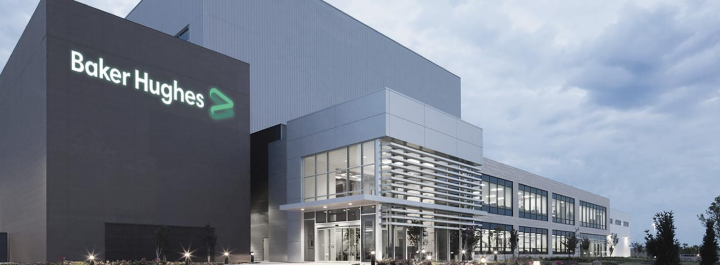
Baker Hughes (BKR) has made a decisive move to redefine its strategic trajectory, announcing a definitive agreement to acquire Chart Industries in an all-cash transaction valued at $13.6 billion. This significant deal signals a clear pivot for Baker Hughes, aiming to bolster its position not only in the burgeoning Liquefied Natural Gas (LNG) sector but also to make substantial inroads into the high-growth data center and New Energy markets. For investors, this acquisition represents a bold play to diversify revenue streams, enhance technological capabilities, and strengthen its footprint in areas critical to the evolving global energy landscape. Our analysis delves into the strategic rationale, financial implications, and forward-looking potential of this transformative transaction.
Strategic Expansion into Diversified Growth Engines
This acquisition is far from a mere consolidation; it’s a strategic realignment for Baker Hughes, pushing it further into segments with strong secular tailwinds. Chart Industries brings a formidable portfolio as a global leader in process technologies and equipment for gas and liquid molecule handling, boasting $4.2 billion in revenue in 2024, supported by 65 manufacturing locations and over 50 service centers worldwide. Baker Hughes’ leadership has explicitly stated the goal of becoming a technology leader, providing engineering expertise for lower-carbon and efficient industrial solutions. The synergy between Baker Hughes’ core competencies in rotating equipment, flow control, and digital technology and Chart’s strengths in heat transfer, air and gas handling, and process technologies is compelling. This combination is designed to accelerate growth in critical areas like LNG infrastructure, which remains essential for global energy security and transition, and crucially, to establish a significant presence in the rapidly expanding data center sector. For investors seeking exposure to the broader energy transition beyond traditional upstream oil and gas, this move offers an increasingly attractive proposition.
Financial Fortification Amidst Market Headwinds
The financial rationale for this acquisition is rooted in creating a more resilient and diversified revenue profile. Baker Hughes anticipates substantial synergies of $325 million, which will be crucial in justifying the $13.6 billion price tag. Beyond cost efficiencies, a key strategic benefit highlighted is a stronger lifecycle revenue mix. Chart’s extensive installed base, combined with its Uptime digital platform, presents a significant opportunity to drive growth in high-value aftermarket products, services, and digital offerings. This shift towards a more service-oriented, recurring revenue model is particularly attractive in the current market environment. As of today, the energy market is experiencing considerable volatility; Brent crude trades at $90.38, marking a significant 9.07% decline within the day and an 18.5% drop over the past two weeks from $112.78 to $91.87. Similarly, WTI crude is down 9.41% to $82.59, and gasoline prices have fallen over 5% to $2.93. This market instability underscores the wisdom of Baker Hughes’ strategy to diversify its revenue streams, making the combined entity less susceptible to the cyclical swings of crude oil prices.
Addressing Investor Concerns and Future Outlook
Our proprietary reader intent data reveals that investors are keenly focused on the future direction of energy markets, with frequent questions about the trajectory of oil prices by the end of 2026 and the stability of the sector. Baker Hughes’ acquisition of Chart Industries directly addresses some of these underlying investor concerns by building a more robust and future-proof business model. By expanding into LNG, which provides a bridge fuel for the energy transition, and into data centers, a sector driven by digital transformation rather than solely energy commodity prices, Baker Hughes aims to de-risk its long-term growth profile. This strategic diversification provides a clearer answer to the question of sustainable growth in a decarbonizing world, offering a pathway to value creation that transcends the immediate fluctuations of the crude market. The company’s increased exposure to industrial gas applications and New Energy solutions positions it to capitalize on global infrastructure development and the ongoing shift towards lower-carbon energy systems, which is a key theme for long-term investors.
Navigating Integration and Leveraging Upcoming Milestones
While the strategic vision is clear, the successful integration of a $13.6 billion acquisition of this scale will be paramount. With Chart’s global footprint of 65 manufacturing locations and 50 service centers, realizing the projected $325 million in synergies will require meticulous execution. Investors will closely monitor how Baker Hughes leverages Chart’s expertise in heat transfer and process technologies alongside its own digital capabilities to enhance customer offerings and drive efficiency. Looking ahead, the broader energy calendar presents key milestones that will shape the market context for this integration. The upcoming OPEC+ Joint Ministerial Monitoring Committee (JMMC) and full Ministerial Meetings on April 18th and 19th, respectively, will be critical in signaling supply-side intentions. Subsequent API and EIA weekly crude inventory reports on April 21st, 22nd, 28th, and 29th, alongside the Baker Hughes Rig Count on April 24th and May 1st, will offer real-time insights into demand and operational activity. While these events primarily impact traditional oil and gas markets, a stable and predictable energy backdrop will certainly facilitate Baker Hughes’ focus on integrating Chart and delivering on its expanded strategic vision. The company’s ability to seamlessly merge operations and technology will ultimately determine the long-term success of this ambitious venture, transforming it into a truly diversified energy and industrial technology leader.