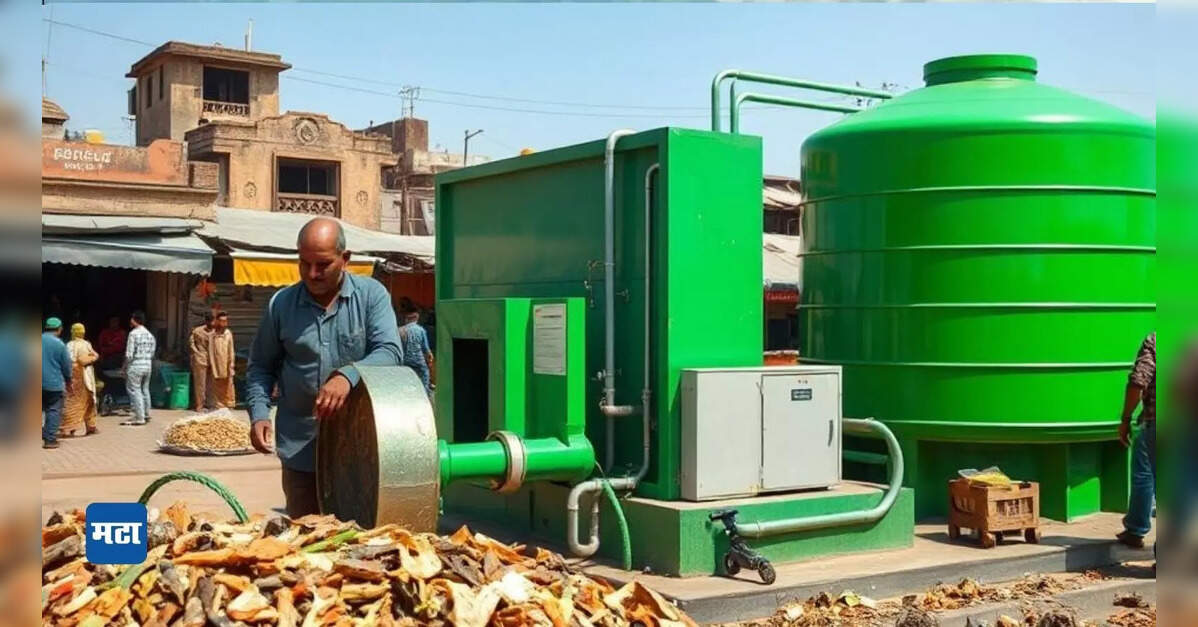
India’s commitment to energy transition and rural development is once again in the spotlight as the Indian Biogas Association (IBA) has put forward a compelling proposal to revitalize the nation’s bioenergy sector. The association advocates for a substantial subsidy of ₹10,000 per unit to reignite activity across 50 lakh existing biogas units. This ambitious scheme, requiring an estimated government outlay of ₹5,000 crore, aims to unlock the vast potential of cleaner fuel adoption, particularly in underserved rural areas. For investors tracking India’s energy landscape, this initiative represents a pivotal moment, signaling robust government intent to foster sustainable energy alternatives and reduce reliance on conventional fossil fuels.
The Strategic Imperative for Biogas Revival
The IBA’s proposal is not merely about subsidies; it’s a strategic move to leverage pre-existing infrastructure. With 50 lakh biogas units already possessing basic setup, the focus is on reactivating and optimizing these assets rather than building from scratch. This approach significantly reduces initial capital expenditure and accelerates deployment, making the ₹10,000 per unit incentive a potent catalyst for mass adoption. The total investment of ₹5,000 crore is envisioned to be recouped within two years, underscoring the economic viability and rapid return potential of such an intervention. Gaurav Kedia, Chairman of the IBA, has emphasized the need for a “bold, forward-looking attempt” akin to a mission-driven initiative, to transform biogas from an underutilized resource into a mainstream household fuel. This push aligns with India’s broader objectives of energy security, rural empowerment, and environmental sustainability, offering a decentralized solution for cooking and power generation.
Biogas as a Hedge in a Volatile Crude Market
The timing of this biogas push is particularly salient given the current dynamics in global energy markets. As of today, Brent crude trades at $94.93, having seen a day range between $91 and $96.89, while WTI crude similarly hovers at $91.39. While these prices represent a modest daily change, the broader trend has shown significant volatility; Brent, for instance, has declined by approximately 8.8%, or $9, from $102.22 on March 25th to $93.22 on April 14th. This recent downward swing, following periods of elevated prices, highlights the inherent unpredictability of international oil markets. Against this backdrop, investors are keenly asking for base-case Brent price forecasts for the next quarter and consensus 2026 outlooks, reflecting a desire for stability and predictability. The Indian biogas initiative offers precisely that: a stable, domestically sourced energy supply less susceptible to geopolitical shocks and global price fluctuations. The proposed scheme, with its rapid payback period, becomes an even more attractive proposition for the government and a stable investment environment for the private sector, mitigating risks associated with imported fossil fuels.
Policy Revolution and Upcoming Market Catalysts
The IBA’s call for a “policy revolution” to make biogas systems not just accessible but “rewarding” suggests a desire for sustained governmental support beyond initial subsidies. This encompasses better maintenance frameworks, long-term incentive structures, and streamlined regulatory processes. While the direct impact of upcoming global energy events on India’s nascent biogas sector may seem indirect, the broader macro environment they create is crucial. With the OPEC+ Joint Ministerial Monitoring Committee (JMMC) meeting scheduled for April 18th, followed by the Full Ministerial meeting on April 20th, global crude supply policies will be set, influencing crude price trajectories. Similarly, weekly indicators like the Baker Hughes Rig Count and API/EIA inventory reports provide continuous insights into supply-demand balances. Any significant shifts from these events could either amplify the economic rationale for domestic energy alternatives or present new challenges. A decisive policy move by the Indian government to back the biogas scheme could itself act as a powerful catalyst, signaling a shift in national energy priorities and potentially attracting significant private and institutional investment into the bioenergy value chain, from feedstock supply to technology deployment and maintenance services.
Investor Focus: Unlocking Value in India’s Bioenergy Sector
For investors monitoring India’s growth story, the biogas subsidy push presents a compelling opportunity, particularly for those focused on sustainable development and rural markets. Our readers frequently inquire about long-term energy trends and diversification strategies, and this initiative directly addresses both. The proposal for 50 lakh units represents a massive potential market for technology providers, equipment manufacturers, and service companies specializing in biogas plant construction, maintenance, and feedstock management. Companies involved in waste-to-energy solutions, agricultural services (for feedstock collection), and rural infrastructure development stand to benefit significantly. Beyond direct financial returns, the project’s strong alignment with environmental, social, and governance (ESG) criteria makes it attractive to a growing cohort of responsible investors. The shift from “potential to performance,” as articulated by the IBA, implies a mature sector ready for scaling, backed by a clear financial incentive from the government. This could unlock substantial value by transforming agricultural waste into a valuable energy resource, simultaneously addressing waste management challenges and providing clean, affordable energy to millions of rural households.


