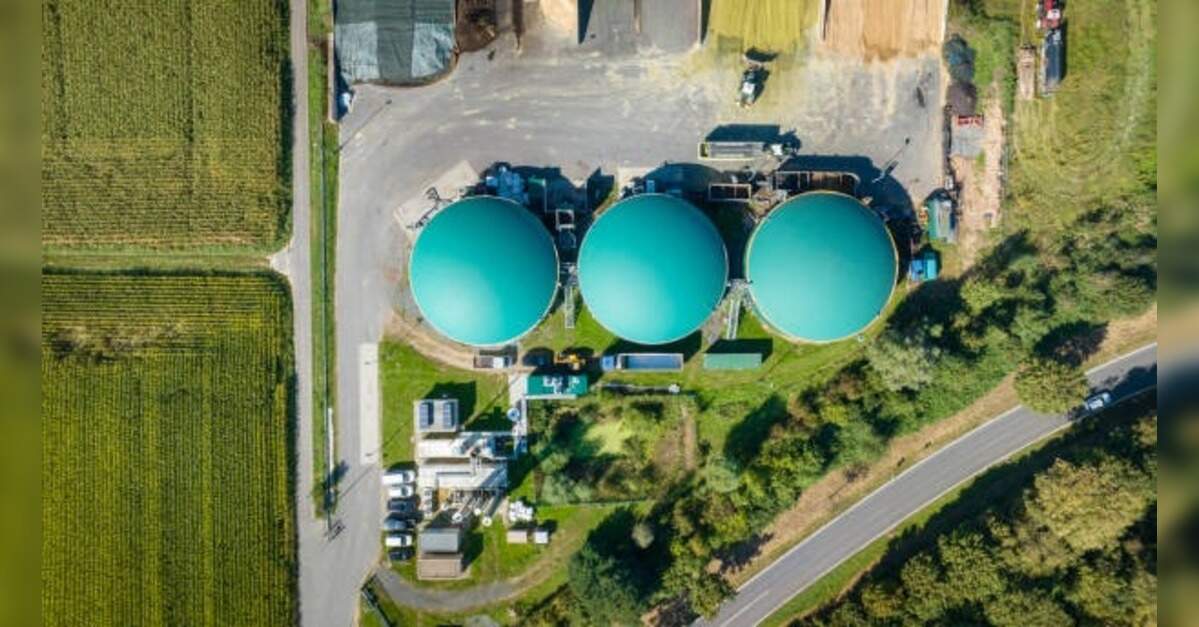
India’s ambitious journey towards its 2070 Net Zero target has just received a significant policy accelerant, potentially unlocking a staggering ₹1 lakh crore (approximately $12 billion USD) in domestic investment. A recent proposal for an excise duty waiver on biogas blended with compressed natural gas (CNG), coupled with a clear, stable policy framework, is poised to reshape the nation’s energy landscape. This move is not merely a fiscal adjustment; it represents a strategic pivot designed to de-risk renewable natural gas projects, enhance energy security, and provide a greener alternative to traditional fossil fuels. For discerning investors, this signals a nascent yet rapidly expanding market ripe with opportunities across the entire biogas value chain.
The ₹1 Lakh Crore Catalyst: De-risking India’s Biogas Future
The core of this transformative potential lies in the proposed excise duty waiver on Compressed Biogas (CBG) when blended into CNG. Historically, CBG, despite its environmental benefits, faced the same tax burden as its fossil fuel counterpart, stifling its economic viability. This waiver fundamentally alters the economics, making CBG instantaneously more cost-effective for city gas distribution (CGD) companies and, by extension, more attractive to consumers through stable or potentially lower prices. For producers, this translates into more secure, bankable revenue streams and significantly improved Internal Rates of Return (IRRs) for typical 4.8-10 TPD plants, particularly those previously deemed marginal.
The quantitative implications are compelling. Industry projections indicate that if CGD networks achieve even a modest 5 percent biogas blending nationwide over the next five years, it would necessitate approximately 2.5-3 million tonnes per annum (MMTPA) of CBG. This alone could stimulate investments ranging from ₹45,000 crore to ₹55,000 crore. Crucially, with a clear and predictable policy environment, this blending level could realistically escalate to 7-8 percent by 2032, effectively doubling the investment potential to nearly ₹1 lakh crore. This policy clarity is the linchpin, promising the stability required for large-scale private capital deployment in a sector vital for India’s energy independence and environmental goals.
Navigating Volatility: Biogas as a Strategic Hedge in a Shifting Global Market
The investment case for domestic biogas gains particular traction when viewed against the backdrop of volatile global energy markets. As of today, Brent crude trades at $93.5 per barrel, reflecting a 3.39% increase on the day, while WTI crude sits at $89.86, up 2.79%. This recent upward movement, however, comes after a period of significant price swings, with Brent having declined nearly 20% from its March 31st high of $118.35 just weeks ago. Our proprietary reader intent data reveals a consistent theme this week: investors are intensely focused on crude price direction, with common queries indicating a keen interest in the future trajectory of WTI and overall oil prices by the end of 2026. This underscores the inherent uncertainty and geopolitical sensitivity surrounding traditional fossil fuels.
In contrast, domestically produced biogas offers a strategic hedge against such volatility. By leveraging a vast and renewable indigenous feedstock potential—estimated at 60 million tonnes per year from sources like paddy straw, press mud, municipal solid waste (MSW), and cattle dung—India can significantly bolster its energy security. The excise waiver on blended biogas makes this domestic resource more competitive with imported natural gas and other fossil fuels, reducing the nation’s exposure to international price shocks and supply chain disruptions. This shift not only supports economic stability but also aligns with a broader macroeconomic strategy of localizing energy production.
Unlocking Growth: Investment Opportunities Across the Biogas Value Chain
The ripple effects of this policy are far-reaching, creating attractive investment opportunities throughout the biogas ecosystem. Foremost among the beneficiaries are CBG producers. With enhanced project IRRs and guaranteed sales channels via CGD networks, companies involved in setting up and operating biogas plants, particularly those processing diverse organic wastes, stand to see significant growth. This also extends to technology providers offering advanced anaerobic digestion solutions, gas purification systems, and waste-to-energy conversion expertise.
City Gas Distribution companies are another key segment. The ability to integrate lower-cost CBG into their supply mix translates to lower weighted-average fuel costs, which can either be passed on to consumers to maintain competitive pricing or retained to improve margins. Furthermore, the push for blending targets will necessitate expansion of CGD infrastructure to accommodate increased biogas injection, creating opportunities for infrastructure development firms. Beyond the direct players, the policy will also stimulate growth in the agricultural and waste management sectors, as demand for feedstock sources like paddy straw and cattle dung increases, creating new revenue streams for rural economies and fostering a circular economy model.
Beyond Profits: Environmental Impact and Future Market Drivers
While the economic incentives are substantial, the environmental benefits of this policy are equally compelling and serve as a powerful long-term market driver. CBG production and utilization significantly cut greenhouse gas emissions by 70-90 percent over its entire life cycle, particularly when derived from agricultural waste. A 10 percent blend of CBG in CNG could lead to a reduction of 12-15 million tons of CO2-equivalent emissions annually, making a tangible contribution to India’s climate goals.
Looking ahead, the energy market landscape will continue to be shaped by critical events. Over the next two weeks, we anticipate key updates such as the OPEC+ JMMC Meeting tomorrow (April 21st) and the EIA Weekly Petroleum Status Reports on April 22nd and 29th, culminating in the EIA Short-Term Energy Outlook on May 2nd. While these events will primarily influence the near-term crude and natural gas outlook, their outcomes will indirectly impact the competitive dynamics for alternative fuels like CBG. Sustained high fossil fuel prices or supply uncertainties stemming from OPEC+ decisions could further accelerate the strategic imperative for domestic, renewable energy sources, thereby strengthening the long-term investment case for biogas. This policy, therefore, is not just about fuel; it’s about fostering rural development, improving air quality, and solidifying India’s commitment to a sustainable, decarbonized energy future.


