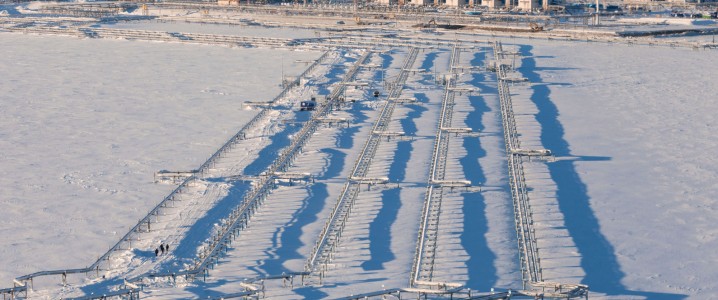
Billionaire Backs Putin’s Last Gas Pipeline
In a move that underscores the complex interplay of geopolitics, energy demand, and opportunistic investing, reports indicate that Paul Singer’s Elliott Management is exploring an acquisition of a stake in the Bulgarian extension of TurkStream. This pipeline represents Russia’s last significant operational natural gas artery into Europe, a critical lifeline for the Kremlin’s energy exports amid widespread sanctions and geopolitical reconfigurations. For investors tracking the often-turbulent energy sector, this potential deal isn’t just about a pipeline; it’s a profound statement on long-term energy security, the resilience of demand, and the willingness of a titan like Singer to bet big on assets others deem too politically toxic.
The Contrarian Play: High Risk, High Reward in a Fragmented Market
Paul Singer and Elliott Management are renowned for their aggressive, value-driven, and often confrontational investment strategies. From sovereign debt disputes with Argentina to recent activist campaigns pushing BP to refocus on core oil production and Phillips 66 to streamline its operations, Elliott thrives on identifying and unlocking value in overlooked or politically charged assets. Their reported interest in the Bulgarian gas pipeline follows this pattern precisely. This isn’t merely an infrastructure play; it’s a calculated bet on the enduring need for natural gas in Europe and the potential for a significant upside if political headwinds abate or are navigated strategically. Our reader intent data shows that investors are keenly focused on fundamental questions like “Build a base-case Brent price forecast for next quarter” and “What is the consensus 2026 Brent forecast?” This underlying demand for long-term price stability and predictability suggests that while many focus on short-term commodity fluctuations, Elliott is looking much further down the line, anticipating a future where secure, diversified energy transit remains a premium asset, irrespective of current political rhetoric.
Market Realities & The Geopolitical Chessboard
The timing of Elliott’s purported interest is particularly salient within the current global energy landscape. As of today, Brent Crude trades at $95.16, marking a modest gain of 0.39% within a day range of $91 to $95.79. This benchmark, which saw a nearly 9% decline from $102.22 on March 25 to $93.22 on April 14, reflects a market grappling with persistent supply concerns, geopolitical risks, and evolving demand dynamics. WTI Crude stands at $91.04, down 0.26% today, within a range of $86.96 to $92.38, further illustrating the delicate balance in global oil markets. These price points, while pertaining to crude, underscore a broader energy market characterized by volatility and a premium on reliable supply. For Bulgaria, the potential American hedge fund stake could offer two key benefits: a much-needed cash injection to bolster its energy infrastructure and a subtle diplomatic signal, perhaps aimed at future U.S. administrations. From Moscow’s perspective, securing an American fund’s backing for its last functional European gas route offers a powerful, albeit symbolic, validation of its enduring energy influence, even as the West seeks to diminish it. The perceived “sanctions protection” that an American investor might offer is a complex calculation, highlighting the high-stakes nature of this potential deal.
Forward-Looking Implications & Upcoming Catalysts
The strategic value of this pipeline investment could be significantly influenced by a series of upcoming industry events. The global energy markets are keenly awaiting the OPEC+ Joint Ministerial Monitoring Committee (JMMC) meeting on April 18th, followed by the Full Ministerial meeting on April 20th. Any decisions regarding production quotas could send ripples across the entire energy complex, impacting crude prices and, by extension, the broader sentiment around long-term energy infrastructure investments. A tightening market, driven by potential production cuts, would likely bolster the case for secure natural gas transit routes. Furthermore, the regular cadence of weekly inventory reports, such as the API Weekly Crude Inventory on April 21st and 28th, and the EIA Weekly Petroleum Status Reports on April 22nd and 29th, will provide crucial insights into demand and supply balances in the U.S., influencing global benchmarks. Similarly, the Baker Hughes Rig Count reports on April 17th and 24th offer a forward-looking indicator of future production trends. While these events primarily focus on crude, they collectively contribute to the macro environment that either validates or challenges the long-term investment thesis for a major gas pipeline, particularly one with such significant geopolitical overtones.
Investor Takeaway: The Long Game in a Fragmented Market
Elliott Management’s reported interest in the TurkStream extension serves as a potent reminder that despite the prevailing political narratives and calls for energy transition, significant value remains in essential, albeit controversial, energy infrastructure. While many investors are closely tracking immediate market movers like “How are Chinese tea-pot refineries running this quarter?” or analyzing “What’s driving Asian LNG spot prices this week?”, Elliott’s play demonstrates a focus on the fundamental, long-term need for energy transit. This move highlights a core tenet of contrarian investing: finding attractive risk-adjusted returns by acquiring assets that others are too wary to touch. For investors seeking opportunities in the oil and gas sector, this situation underscores the importance of a deep understanding of geopolitical dynamics, regulatory frameworks, and the unwavering demand for energy that continues to power global economies. The long-term viability and profitability of such an asset will depend not only on market prices but also on the intricate dance between sovereign interests, commercial pragmatism, and the evolving energy map of Europe.


