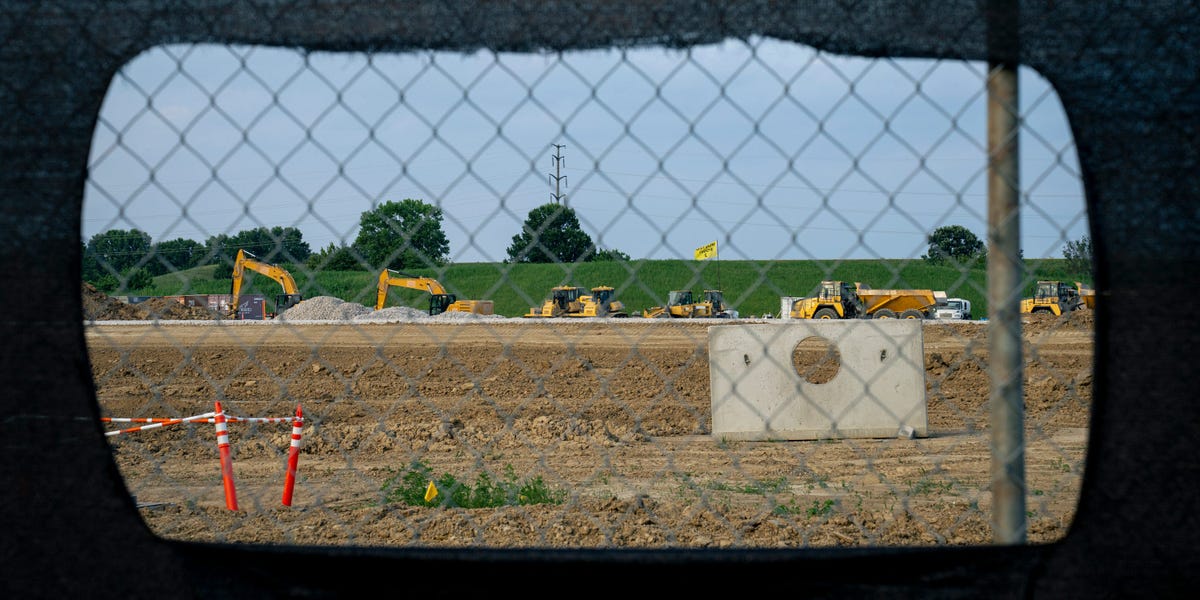
The relentless pursuit of Artificial Intelligence by Big Tech giants is setting the stage for a profound shift in global energy demand, creating a compelling long-term bullish narrative for oil and gas investors. Far from merely a technological arms race, the massive capital expenditures announced by industry titans like Google, Microsoft, and Meta represent a tangible commitment to building an infrastructure backbone that will require unprecedented amounts of power. This escalating demand for energy, primarily electricity, will inevitably translate into increased consumption of natural gas for power generation, and a broader footprint for crude oil across the supply chain, from manufacturing advanced chips to constructing sprawling data centers. While the market grapples with short-term volatility, the structural tailwind from AI promises to be a defining factor for energy markets for years to come, urging investors to recalibrate their long-term outlooks.
The AI Infrastructure Gold Rush: A Glimpse into Future Energy Needs
Big Tech’s latest earnings calls underscored a clear message: the investment in AI infrastructure is not slowing down; it’s accelerating. Google, for instance, has significantly raised its capital expenditure guidance for the current year to between $91 billion and $93 billion, a substantial increase from its prior estimates. This commitment, articulated by CEO Sundar Pichai, is driven by a need to meet surging customer demand and capitalize on expanding opportunities. Microsoft similarly reported a quarterly capital expenditure of $34.9 billion, a notable jump from the previous quarter, with CFO Amy Hood highlighting that demand for cloud computing capacity consistently outstripped supply. Meta also boosted its 2025 capex guidance to $70 billion to $72 billion, with CFO Susan Li indicating even higher spending in 2026, primarily for infrastructure. These hundreds of billions of dollars are not merely abstract figures; they translate directly into the construction and operation of vast data centers, the manufacturing of power-hungry GPUs and CPUs, and the expansion of the underlying energy grid. Each new data center, with its rows of servers and cooling systems, represents a significant new load on power grids, largely fueled by natural gas in many key regions, thereby solidifying its indispensable role in the energy transition.
Market Dynamics: AI Demand Meets Current Price Volatility
Against the backdrop of this burgeoning AI-driven demand, the crude oil market exhibits a degree of short-term uncertainty. As of today, Brent Crude trades at $90.38 per barrel, marking a 9.07% decline within a day range of $86.08 to $98.97. Similarly, WTI Crude stands at $82.59, down 9.41% within its day range of $78.97 to $90.34. This recent dip, which sees Brent down nearly 20% from its March 30th peak of $112.78, might prompt some investors to question the broader energy outlook. However, it’s crucial for seasoned investors to distinguish between transient market corrections and fundamental, structural shifts. The relentless build-out of AI infrastructure represents a new, persistent layer of demand that will buffer against traditional cyclical fluctuations. While factors like macroeconomic sentiment or geopolitical developments can cause immediate price swings, the underlying energy requirements for data centers and chip fabrication facilities continue to grow exponentially, providing a robust floor for long-term energy prices. This new demand driver is a critical piece of the puzzle for investors attempting to predict crude oil prices for the end of 2026 and beyond, a question frequently posed by our readers.
Navigating Supply and Demand: Upcoming Events and Investor Focus
The interplay between this escalating demand from AI and the traditional supply-side dynamics will be critical for energy markets. Investors are keenly watching for signals from key upcoming events that could shape the near-term supply landscape. For example, the OPEC+ JMMC Meeting on April 19th and the subsequent OPEC+ Ministerial Meeting on April 20th will be pivotal. These gatherings will provide clarity on future production quotas, a topic consistently on the minds of investors seeking to understand the global supply balance. Any decisions by OPEC+ to adjust production levels will directly impact crude availability, setting the stage for how the market responds to the growing energy requirements of Big Tech. Furthermore, the API and EIA Weekly Crude Inventory reports, scheduled for April 21st, 22nd, 28th, and 29th, will offer essential insights into immediate supply and demand balances within the U.S. These weekly snapshots, alongside the Baker Hughes Rig Count on April 24th and May 1st, will reveal the pace of domestic production and inventory draws, providing short-term indicators that must be weighed against the powerful, long-term demand curve being driven by AI. Investors are actively seeking to understand how these supply-side management efforts will contend with the evolving demand profile, including the new energy requirements of the AI revolution.
Investment Implications: Identifying Resilient Players in the AI-Powered Energy Landscape
For investors positioning themselves for the next decade, the AI-driven surge in energy demand presents compelling opportunities within the oil and gas sector. The most direct beneficiaries will likely be natural gas producers and infrastructure providers, as natural gas remains a primary fuel for electricity generation across much of the globe, especially for reliable, on-demand power needed by data centers. Companies involved in LNG export and pipeline infrastructure will also see sustained demand as global energy needs grow. Furthermore, the broader supply chain for AI infrastructure, from raw materials extraction to the manufacturing and transportation of components, relies heavily on crude oil derivatives. This means integrated energy companies with diversified portfolios, capable of supplying both natural gas for power and petroleum products for industrial uses, are particularly well-placed. When investors ponder the performance of specific companies, such as how a player like Repsol might fare by the end of April 2026, it becomes essential to evaluate their exposure to these evolving demand trends. Firms with robust natural gas assets, strong refining capabilities, and a strategic footprint in regions poised for data center expansion stand to outperform. The AI boom is not just a tech story; it’s an energy story, creating a new imperative for investors to identify those oil and gas companies that are best equipped to power the future.


