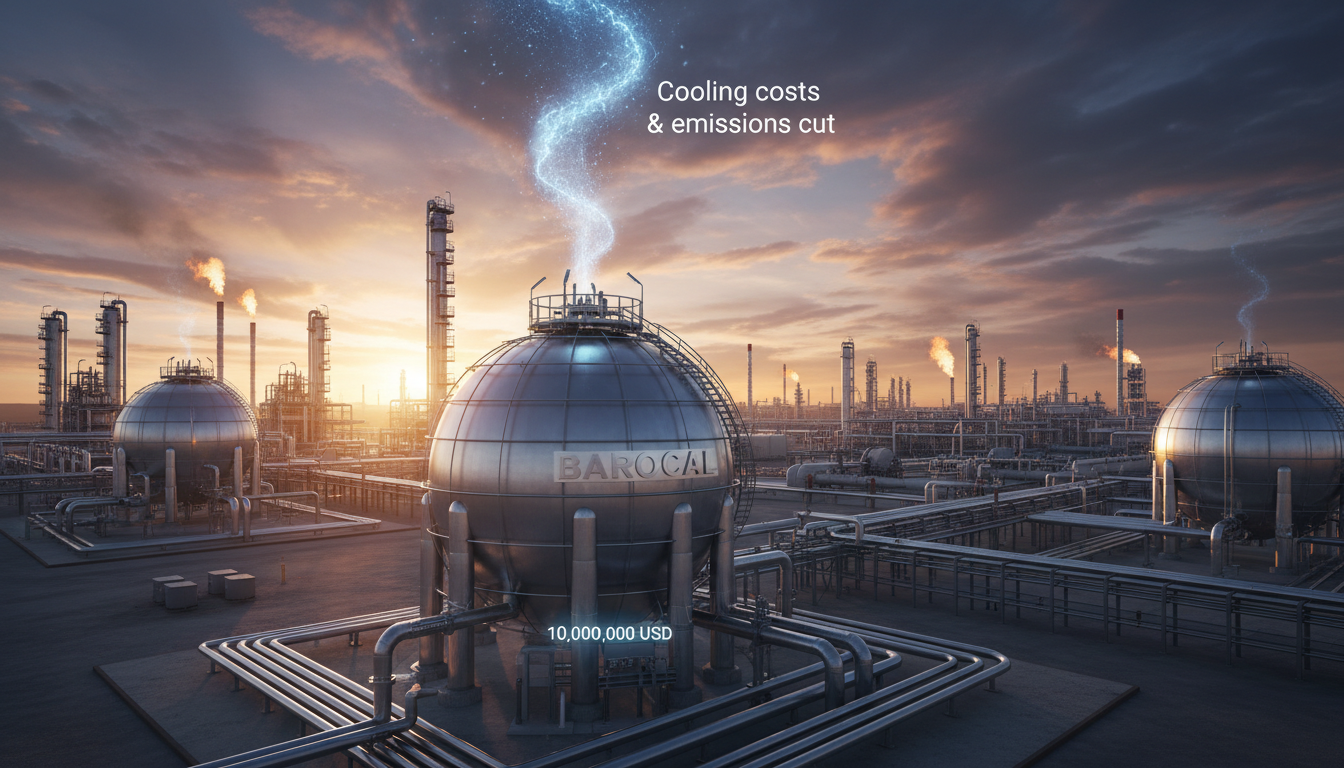
The global energy landscape is constantly evolving, driven by the dual pressures of burgeoning demand and an urgent imperative for decarbonization. Against this backdrop, innovative solutions targeting energy efficiency and emissions reduction are attracting significant investment. Leading this charge is Barocal, a materials science innovator, which recently closed a substantial $10 million Seed funding round. This capital infusion is strategically earmarked to accelerate the commercial deployment of its groundbreaking solid-state cooling and heating platform, a technology poised to disrupt an industry segment critical to global energy consumption and greenhouse gas emissions.
The financing, drawing commitments from prominent investors including World Fund, Breakthrough Energy Discovery, Cambridge Enterprise Ventures, and IP Group, underscores a growing confidence in next-generation climate technologies. These backers recognize the immense market potential and environmental urgency associated with transforming how the world manages temperature control in both commercial and industrial settings.
Addressing an Overlooked Emissions Giant
The heating and cooling sector represents a significant, often underappreciated, contributor to global greenhouse gas emissions. Annually, these systems are responsible for approximately 15% of worldwide greenhouse gas output. Specifically, cooling operations alone accounted for over 4 gigatons of CO₂ equivalent emissions in 2022. Projections paint an even starker picture, anticipating a tripling of global cooling demand by the middle of this century. This trajectory presents a monumental challenge for achieving global climate targets and places increasing strain on existing energy grids, which often rely heavily on fossil fuels for power generation.
For investors focused on the energy transition, this segment offers a compelling narrative of both risk and opportunity. The risk lies in the sector’s escalating environmental footprint; the opportunity resides in pioneering technologies that can mitigate this impact while delivering superior performance and economic value. Barocal’s solid-state platform emerges as a potentially transformative investment, promising to address this critical environmental and energy challenge head-on.
Revolutionizing Temperature Management with Solid-State Technology
Emerging from Cambridge University in 2019, under the leadership of materials researcher Professor Xavier Moya, Barocal has developed and patented a proprietary solid-state cooling and heating technology. This innovative platform is engineered to directly replace conventional vapor-compression systems, which have dominated the market for decades. Crucially, Barocal aims to achieve this at cost parity, making its environmentally superior solution economically viable for widespread adoption. The primary advantage, however, lies in its capacity to significantly reduce operational emissions, offering a pathway to greener temperature control across various applications.
The implications for global energy demand are profound. A more efficient, lower-emission heating and cooling infrastructure could alleviate pressure on energy generation capacity, indirectly impacting demand for traditional fuels. This shift aligns perfectly with the broader objectives of sustainable investing and decarbonization efforts across the energy sector.
Tapping into a Multi-Billion Dollar Market
Barocal is strategically targeting high-growth segments for its initial commercial rollout. Key among these are data center cooling and commercial refrigeration, sectors characterized by their intensive energy consumption and increasing demand for efficient, reliable temperature management. The global HVAC (Heating, Ventilation, and Air Conditioning) market, which encompasses these applications, is currently valued at approximately $450 billion. Analysts project a robust expansion, with the market expected to surge to an estimated $577 billion by 2033. This substantial and expanding market provides a fertile ground for Barocal’s disruptive technology to gain significant traction.
The move towards solid-state systems represents a paradigm shift, moving beyond the limitations and environmental concerns associated with refrigerants used in vapor-compression technologies. For investors, this signifies not just an incremental improvement but a fundamental re-imagining of a critical industrial process with massive market potential.
Leadership Vision and Investor Validation
Professor Xavier Moya, Barocal’s founder, articulates the scale of the challenge and the ambition of his company. He emphasizes that heating and cooling emissions have long been a major, often overlooked, impediment to achieving global climate goals. He firmly believes that Barocal’s materials innovation possesses the power to reshape history, asserting that solving the emissions problem in this sector could contribute substantially to the roughly 50% emissions reduction required to meet the critical 1.5-degree global warming target. Such a bold vision, backed by tangible technological breakthroughs, strongly resonates with investors seeking impactful climate solutions.
The investor community’s endorsement further solidifies Barocal’s position. Mark Windeknecht, Principal at World Fund, highlighted the significance of Barocal’s achievement, noting that the company has succeeded where many scientists have struggled for decades. He points to the delivery of solid-state materials that finally enable new cooling and heating platform technology capable of competing effectively with established vapor-based incumbents. This validation from a respected venture fund specializing in climate tech speaks volumes about the perceived readiness and disruptive potential of Barocal’s innovation.
Investment Outlook: A Catalyst for Energy Transition
Barocal’s successful funding round and advanced technology position it as a compelling investment opportunity within the burgeoning climate tech space. For oil and gas investors diversifying their portfolios or seeking exposure to the broader energy transition, Barocal represents an indirect yet powerful play. By offering a viable, cost-effective solution to drastically reduce energy consumption and emissions in a vital sector, the company contributes directly to the global push for decarbonization, influencing overall energy demand patterns and the long-term viability of various energy sources.
The ability to deliver cost-competitive, emission-reducing technology in high-growth markets like data centers and commercial refrigeration suggests a strong growth trajectory. As regulatory pressures intensify and corporate ESG commitments become more stringent, demand for Barocal’s platform is likely to accelerate. This investment signifies more than just funding a startup; it represents a strategic bet on a future where energy efficiency and sustainable temperature management are not just desirable but absolutely essential components of the global energy economy.


