

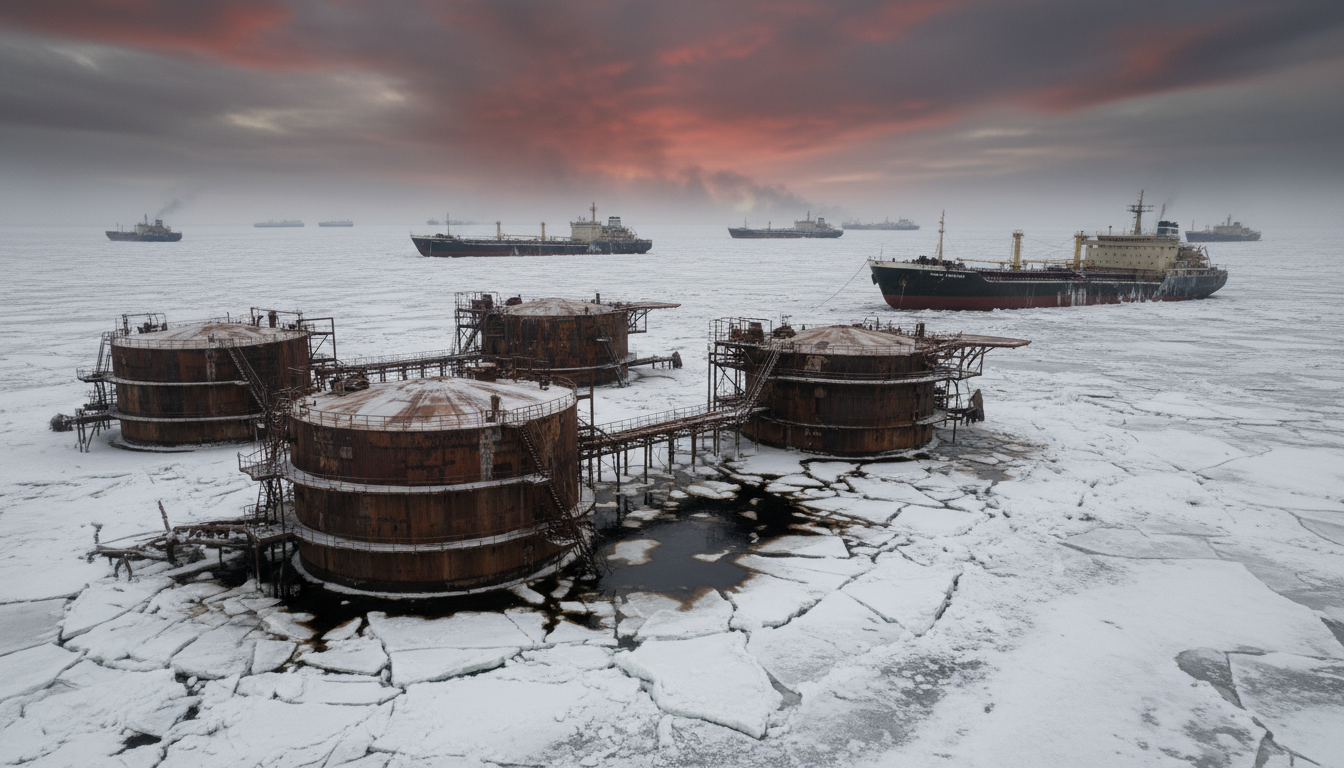
The geopolitical landscape for global energy markets has dramatically intensified this week, as critical Russian oil export infrastructure along the Baltic Sea has once again fallen victim to sustained drone assaults. Investors are closely monitoring the fallout from a major fire that erupted at the Ust-Luga oil port in Russia’s Leningrad region on March 25, directly following a large-scale Ukrainian drone attack. This incident marks the second time in a single week that a vital Baltic Sea export hub has been set ablaze, with the nearby Primorsk port experiencing a similar strike just days prior.
The Ust-Luga facility, a cornerstone of Russia’s multifaceted Baltic Sea export network, possesses a substantial capacity to handle approximately 700,000 barrels of oil per day. Following the recent drone-led conflagration, multiple oil storage reservoirs were engulfed, necessitating the complete sealing off of the port. The Russian Defense Ministry reported intercepting a significant number of Ukrainian drones across the country overnight, with at least 56 identified over the Leningrad region alone, underscoring the scale of the coordinated assault.
Baltic Export Hubs Under Siege: Primorsk and Ust-Luga Impacts
The latest attack on Ust-Luga follows closely on the heels of a Monday incident where drone strikes ignited fuel storage tanks at the Primorsk port. During that same barrage, Ust-Luga temporarily suspended its operations, though it subsequently managed to partially resume loadings. This pattern of disruption strikes at the heart of Russia’s oil flow to international markets, creating considerable ripple effects at a juncture when global supply chains are already grappling with heightened instability emanating from the Middle East.
Primorsk stands as a pivotal component within Russia’s energy export architecture. It serves as a primary conduit for shipping Urals crude and low-sulfur diesel to global buyers, including those volumes transacted through the so-called “shadow fleet” – an armada of tankers utilized to circumvent Western sanctions. Industry analysts estimate Primorsk’s capacity at roughly 1 million barrels per day, with its annual throughput reaching tens of millions of tons. The sustained targeting of these facilities, therefore, represents a direct challenge to Russia’s ability to monetize its hydrocarbon resources and maintain consistent supply to its customers.
Compounding Global Supply Tensions
Collectively, the Ust-Luga and Primorsk ports manage an estimated 60% of Russia’s total maritime oil flow, making their operational integrity paramount to global energy stability. The repeated disruptions at these critical points have undoubtedly fueled global supply anxieties, contributing to the recent upward trajectory in crude oil prices. This vulnerability is further exacerbated by concurrent geopolitical tensions in the Middle East, which continue to constrain available supply and inject volatility into futures markets.
These recent strikes are not isolated events but rather integral to an ongoing, calculated Ukrainian strategy specifically designed to target Russia’s extensive energy export infrastructure. The campaign has systematically aimed at refineries, storage depots, and crucial export terminals across Russia. Previous attacks have already caused significant disturbances, notably impacting flows from the Novorossiysk terminal on the Black Sea and severely reducing loading capacity at Primorsk for extended periods last year. The cumulative effect of these persistent strikes creates a challenging environment for Russian exports and introduces an unpredictable element into the global energy equation.
Investor Outlook: Navigating Heightened Volatility
For energy investors, the current environment presents a complex matrix of risks and opportunities. With Russia’s vital Baltic export capabilities now under considerable strain and Middle Eastern supply routes remaining a persistent concern, markets are being forced to absorb supply shocks from two geographically distinct yet equally critical fronts. This dual pressure tightens the availability of physical barrels on the global market, inevitably driving renewed volatility across both crude oil benchmarks and refined petroleum product prices.
The strategic targeting of these ports highlights the vulnerability of extensive energy supply chains to geopolitical conflict. While Russia possesses significant crude production capabilities, its ability to reliably export that crude is increasingly being tested. Investors must factor in this elevated geopolitical risk premium when evaluating energy sector equities, commodity futures, and related derivatives. The long-term implications of these attacks could lead to re-evaluations of supply security, potentially accelerating diversification efforts and impacting the future trajectory of global energy trade flows. Monitoring the resilience of Russian export infrastructure and the broader geopolitical landscape will remain critical for informed investment decisions in the months ahead.
