

Geothermal Energy Powers Up: A New Frontier for Investor Returns in the Energy Transition
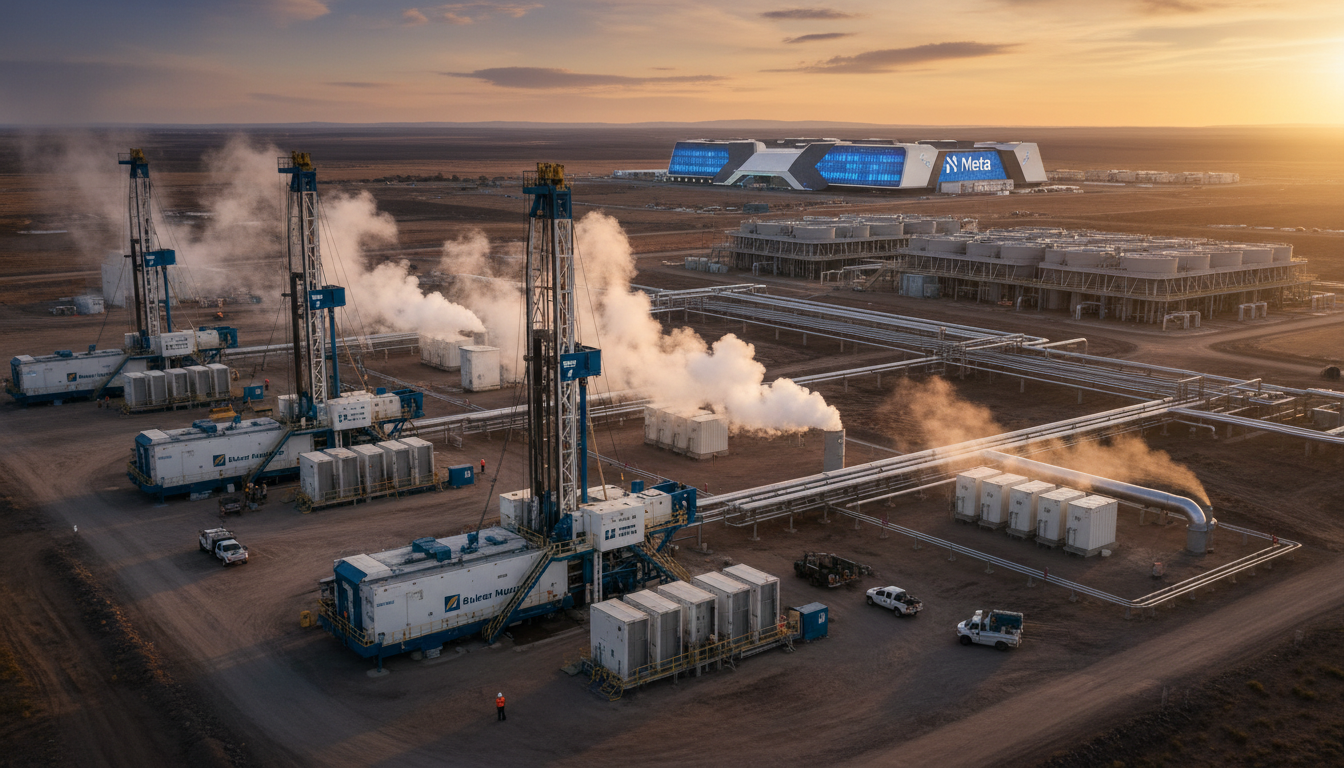
The energy landscape is undergoing a profound transformation, with next-generation geothermal emerging as a pivotal player, attracting significant capital and strategic partnerships. A prime example is XGS Energy’s ambitious 150-megawatt (MW) geothermal project slated for New Mexico. This development is not just another renewable energy venture; it’s a critical component of Meta Platforms’ aggressive decarbonization strategy, aiming to power its rapidly expanding data center infrastructure with firm, carbon-free energy.
The project, planned for full operational status by 2030 through a two-phase rollout, underscores a growing corporate imperative for stable, clean power. Unlike intermittent sources such as solar and wind, geothermal provides continuous, baseload electricity—a non-negotiable requirement for hyperscale data centers that exert immense, constant strain on regional power grids. This reliability makes geothermal a compelling asset in the quest for sustainable energy solutions.
Strategic Alliances Drive Geothermal Scalability
A significant de-risking factor for this pioneering initiative is the strategic collaboration between XGS Energy and Baker Hughes. This partnership marries XGS’s innovative geothermal technology with Baker Hughes’ extensive experience in large-scale energy infrastructure deployment. For investors, the involvement of a global energy technology leader like Baker Hughes signals robust execution capabilities and a commitment to industrial-scale development.
As Martin Craighead, a director at XGS, highlighted, the transition from a promising concept to a tangible, operational asset hinges on superior field execution. This sentiment is precisely what the alliance aims to deliver, by surrounding XGS’s technological advancements with decades of proven experience in complex energy projects. Baker Hughes will lend its expertise across critical areas including well construction, completion, and production systems, ensuring rigorous engineering support from the outset.
Early-stage coordination between the two firms is designed to mitigate development risks and expedite the validation of underground reservoirs—historically a significant hurdle for large-scale geothermal projects. Maria Claudia Borras, Chief Growth and Experience Officer at Baker Hughes, emphasized that this early integration will streamline exploration efforts and bolster confidence in the project’s long-term performance and output. Such partnerships are vital for accelerating the commercial viability and widespread adoption of new energy technologies.
Water-Independent Technology Unlocks Vast Geothermal Potential
At the core of XGS Energy’s offering is its proprietary closed-loop geothermal system. This groundbreaking design is revolutionary because it operates without reliance on water or naturally permeable rock formations, which have historically constrained the geographical deployment of geothermal energy. For investors, this innovation represents a significant expansion of the addressable market for geothermal power generation.
The company demonstrated the commercial viability of this technology in 2025, operating a system for over 3,000 hours in a previously idle well in California. These compelling results have significantly boosted confidence among investors and corporate entities regarding geothermal’s potential as a scalable, reliable clean energy source. In regions grappling with water scarcity or complex geological conditions, such as the US Southwest where this New Mexico project is located, this water-independent approach fundamentally alters the economic and environmental calculus of geothermal development.
Meta’s Deeper Commitment to Firm Clean Energy
Meta Platforms’ strategic investment in geothermal energy underscores a broader shift in corporate clean energy procurement. Geothermal is rapidly becoming a cornerstone of the tech giant’s strategy to meet its ambitious 2030 net-zero target. This isn’t Meta’s first foray into geothermal; the company inked an initial 150 MW agreement in 2024 with Sage Geosystems, targeting data centers east of the Rockies, with the first phase anticipated online by 2027.
The urgency driving Meta’s investment is directly linked to its emissions profile. The construction and operational demands of its vast data center network constitute a substantial portion of the company’s Scope 3 emissions. With the accelerating growth of AI-driven workloads pushing global energy demand to unprecedented levels, securing firm, clean power sources is not just an environmental mandate but an operational imperative. As Meta’s Head of Net Zero Strategy, Devon Lake, highlighted earlier this year, the company is intensely focused on broadening its renewable energy portfolio to address its comprehensive value chain emissions.
What This Means for Energy Markets and Investors
The XGS-Baker Hughes partnership, spearheaded by Meta’s demand, reflects a profound evolution in corporate energy procurement strategies. Leading technology companies are moving beyond merely balancing their energy consumption with intermittent renewables and carbon offsets. Instead, they are actively seeking dispatchable, firm clean power solutions that can seamlessly match the high operational intensity and 24/7 demands of their critical infrastructure.
From an ESG (Environmental, Social, and Governance) perspective, this deal directly aligns with increasingly stringent corporate climate commitments and the heightened scrutiny around Scope 3 emissions. For the astute financial investor, it signals a burgeoning appetite for geothermal as a legitimate and robust asset class, especially when backed by strong industrial partners capable of delivering projects at scale. This development suggests a maturation of the geothermal sector, transitioning from niche technology to a mainstream investment opportunity within the broader energy transition.
If the New Mexico project successfully validates the commercial scalability and operational efficiency of XGS’s technology, it could establish a crucial precedent. Such a success could pave the way for replicable geothermal deployments across other high-demand regions globally, fundamentally reshaping how corporations secure their clean energy supply in an increasingly carbon-constrained world. Investors monitoring the energy transition should recognize this as a key trend, offering potential for significant long-term growth and stable returns in a crucial sector of the future energy mix.
