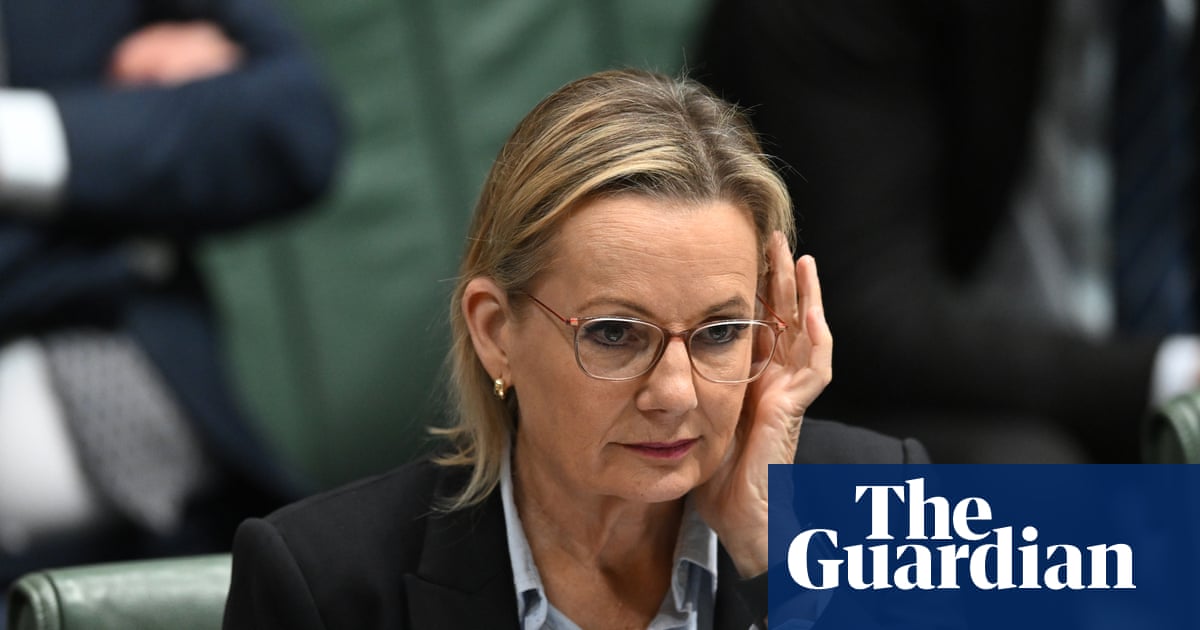
Australia’s energy landscape is at a critical juncture, navigating the complex interplay between global market dynamics and an accelerating domestic push for decarbonization. Recent insights from our proprietary data pipelines, combined with signals from the Australian political sphere, reveal a growing imperative for clarity on climate policy that will profoundly shape investment decisions in the coming years. Investors eyeing opportunities in the Asia-Pacific region must understand the nuanced political shifts and public sentiment driving Australia’s energy transition, especially as the global oil market faces significant volatility.
Australia’s Net Zero Ambitions Gain Public and Political Momentum
The commitment to net zero emissions, initially agreed upon by the Morrison government in 2021, is becoming an increasingly entrenched expectation across the Australian electorate. Recent polling data indicates a substantial appetite for more progressive climate policies, with 44% of voters explicitly supporting net zero targets, compared to just 27% who oppose them. Crucially, this sentiment extends into the Liberal and National parties’ own voter base, where 35% of their supporters back net zero, challenging internal resistance to the targets. This strong public mandate for climate action suggests that any political party seeking to form an alternative government will need to align with, rather than resist, the net zero agenda. The internal debates currently unfolding within the Liberal and National parties regarding the future of their climate commitments are therefore not just ideological skirmishes; they are direct indicators of future policy direction and, by extension, the regulatory environment for energy and resource projects across the continent. For investors, this translates into an accelerating shift away from carbon-intensive projects and towards renewable energy, green hydrogen, and critical minerals, where Australia holds immense potential.
Global Oil Headwinds Intensify Focus on Australian Energy Transition
The urgency of Australia’s net zero debate is underscored by a turbulent global oil market, which continues to present both challenges and opportunities for energy investors. As of today, Brent Crude trades at $90.38, marking a significant 9.07% decline within the day, with prices fluctuating between $86.08 and $98.97. Similarly, WTI Crude has seen a sharp drop, currently at $82.59, down 9.41%. This volatility is not an isolated event; our 14-day Brent trend analysis shows a pronounced downward trajectory, plummeting from $112.78 on March 30th to today’s $90.38, a substantial 19.9% decrease. Such price swings inject considerable uncertainty into the long-term viability and profitability of new upstream oil and gas investments, making the investment case for traditional fossil fuels more precarious. In this environment, countries like Australia, with strong renewable energy resources and a public mandate for decarbonization, are increasingly attractive for capital deployment into green technologies. The declining gasoline price, currently at $2.93, further reflects shifting demand dynamics and a broader market recalibration that favors cleaner energy sources over the long term.
Investor Sentiment: Navigating Uncertainty in Energy Futures
Our proprietary reader intent data highlights a clear focus among investors on forecasting and risk assessment in the current volatile market. Questions such as “What do you predict the price of oil per barrel will be by end of 2026?” and “How well do you think Repsol will end in April 2026?” underscore a pervasive desire for clarity amidst the uncertainty. For Australia, this means investors are closely watching how the nation’s political leaders will translate public support for net zero into concrete policies. An unambiguous policy framework, offering stable incentives for renewables and clear pathways for the phased reduction of fossil fuel dependency, will be crucial for attracting the necessary capital. Conversely, continued internal political wrangling and policy indecision will deter investment, especially given the global oversupply of capital seeking stable, ESG-aligned opportunities. Companies with significant Australian exposure, particularly those in the LNG sector, will face increasing scrutiny regarding their decarbonization strategies and alignment with evolving national targets. Investors are demanding not just growth, but sustainable growth that minimizes regulatory and climate transition risks.
Upcoming Events to Shape Australian Energy Investment Outlook
The coming weeks are pivotal for global energy markets, and their outcomes will undoubtedly reverberate through Australia’s domestic energy policy and investment landscape. The OPEC+ Joint Ministerial Monitoring Committee (JMMC) meeting on April 19th, followed by the full OPEC+ Ministerial Meeting on April 20th, are critical events. Any decisions on production quotas will directly impact global crude supply and prices, influencing the economic viability of Australian oil and gas projects, particularly LNG exports, which are sensitive to international pricing. Should OPEC+ opt to maintain or even increase production, potentially driving prices lower, the economic justification for new fossil fuel investments in Australia would further diminish, accelerating the pivot towards renewables. Furthermore, the regular API and EIA weekly crude inventory reports on April 21st, 22nd, 28th, and 29th, alongside the Baker Hughes Rig Count reports on April 24th and May 1st, will provide fresh insights into supply-demand dynamics and drilling activity in the U.S. These global supply-side signals, coupled with Australia’s internal policy shifts, create a dynamic environment. Investors must monitor these events closely, as they will directly inform the risk-reward calculus for capital allocation across Australia’s evolving energy sector, from the declining oil and gas frontier to the burgeoning opportunities in green energy and critical minerals extraction.


