

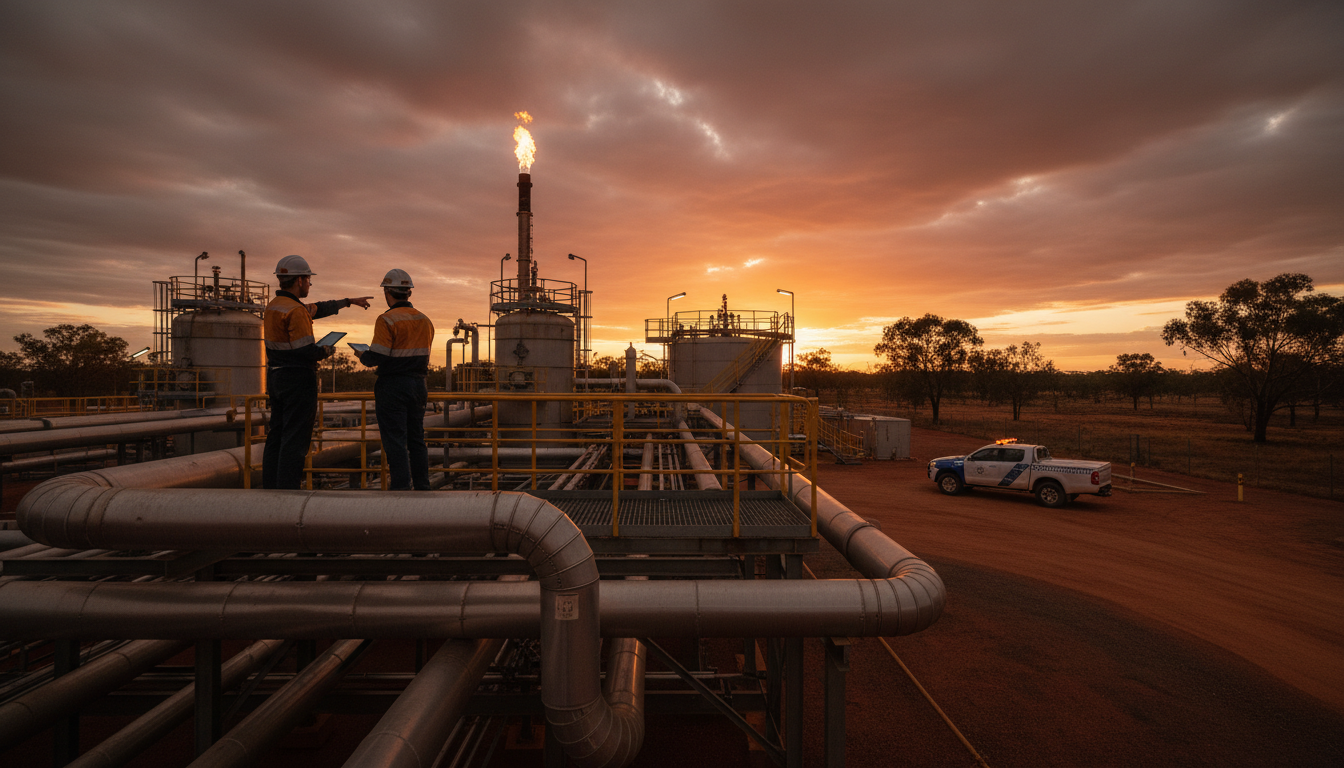
Australia’s Gas Security Initiative: Navigating Domestic Needs Amid Global Energy Volatility
Investors closely monitoring the global energy landscape are turning their attention to Australia, a pivotal player in the international liquefied natural gas (LNG) market. The Australian government is signaling its readiness to invoke emergency powers to safeguard domestic natural gas supplies, specifically targeting a potential shortfall on its eastern seaboard during the third quarter of 2026. This proactive stance underscores a commitment to national energy security, particularly as geopolitical tensions, notably the conflict in the Middle East, continue to ripple through global energy markets.
The Albanese Government’s strategy to fortify domestic gas provisions for Australian households and industries is crystallizing around the Australian Domestic Gas Security Mechanism (ADGSM). Madeleine King, the Minister for Resources, has formally issued a notice of intent to consider activating these powers. This measure aims to protect the nation’s energy interests should a significant gas deficit materialize on the east coast during the cooler winter months of 2026. The move initiates a crucial 30-day consultation period with major gas producers, during which discussions will focus on supply commitments to the domestic market. A definitive decision on whether to deploy the ADGSM is anticipated by mid-May, offering clarity to both producers and the broader market.
The ADGSM: A Precautionary Maneuver for Gas Market Stability
Minister King emphasized that this notice serves as a precautionary measure, granting the government essential flexibility to intervene if Australia faces an imminent energy shortfall. Crucially, the minister clarified that this action does not currently impose any restrictions on gas exports, reinforcing Australia’s commitment as a dependable supplier to its international partners. “Currently, Australia’s domestic market is well supplied with Australian gas,” King stated, aiming to reassure stakeholders while simultaneously preparing for future contingencies. However, she affirmed that if a domestic supply deficit appears likely, the energy needs of Australians will take precedence, a position that could have long-term implications for the nation’s export-oriented gas industry.
This strategic readiness comes on the heels of a critical assessment by the Australian Competition and Consumer Commission (ACCC). The regulatory body recently projected a tight wholesale gas supply outlook for Australia’s east coast. Their analysis indicates that substantial volumes of gas, likely drawn from storage facilities, will be necessary to meet anticipated demand during the third quarter of 2026. This forecast provides the underpinning for the government’s precautionary stance, highlighting a potential imbalance that could impact industrial consumers and residential users alike without timely intervention.
Navigating the East Coast Gas Dynamics for Investors
For investors with exposure to Australian gas assets, particularly those involved in LNG export projects on the east coast, the government’s actions warrant close observation. While the immediate impact on export contracts is stated to be minimal, the precedent of considering ADGSM activation introduces a layer of policy risk. Companies with integrated operations, supplying both domestic and international markets, may face future pressure to rebalance their allocations. This delicate balance between securing domestic supply and upholding international commitments is a recurring theme in major resource-exporting nations and presents both challenges and opportunities for shrewd investors.
The east coast gas market in Australia is distinct, characterized by its reliance on significant volumes of unconventional gas from Queensland, much of which is earmarked for LNG export terminals. This dynamic creates an inherent tension between domestic demand and the lucrative export market. The ADGSM acts as a critical mechanism to ensure that foundational domestic needs are met, even as Australia cements its position as one of the world’s largest LNG exporters. Investors should evaluate the potential for increased domestic reservation policies or pricing caps that could emerge from these discussions, which might influence project economics and investment horizons.
Broader Energy Security Measures and Investor Outlook
Beyond natural gas, Australia has demonstrated a broader commitment to shielding its consumers from escalating energy costs. Earlier this week, the government implemented a temporary reduction in the fuel excise on gasoline and diesel, halving the tax for three months. This measure was designed to alleviate the financial burden on households and businesses grappling with surging fuel prices, reflecting a comprehensive approach to national energy affordability and security.
Looking ahead, the next few months will be critical for understanding the trajectory of Australia’s energy policy. The outcome of the 30-day consultation period and Minister King’s ultimate decision in mid-May will provide significant insights into the government’s willingness to directly intervene in market operations. For global energy investors, Australia’s evolving approach to domestic gas security offers a case study in balancing national interests with international trade obligations. Monitoring these developments will be essential for assessing long-term investment viability and risk profiles within Australia’s vital oil and gas sector.
