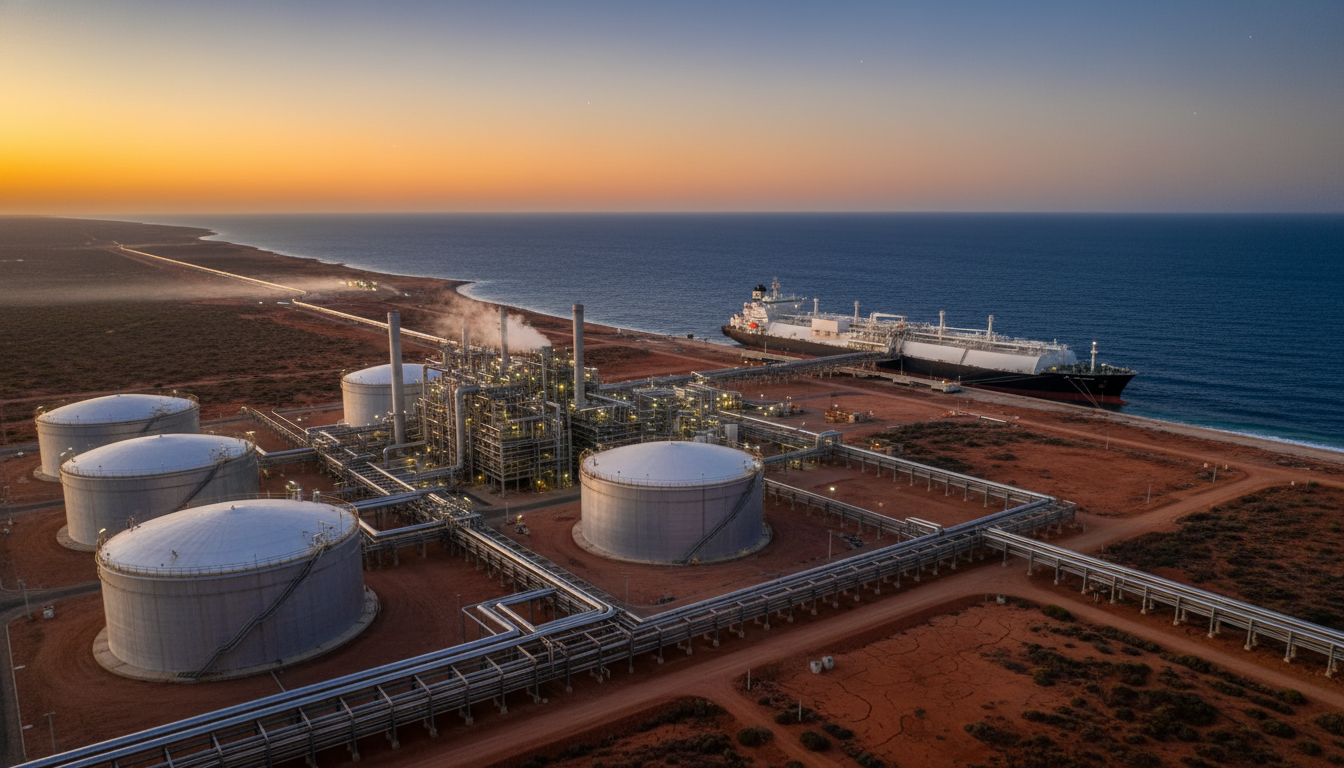
Australia’s Gas Market: A Short-Term Reprieve Amidst Long-Term Capital Demands
The Australian natural gas market is signaling a critical, albeit temporary, easing of supply anxieties, offering a crucial window for strategic investment and planning. Recent assessments from the Australian Energy Market Operator (AEMO) indicate a notable improvement in the nation’s near-term gas supply outlook, pushing back the anticipated onset of extreme peak-day shortfalls in southern Australia to 2030, a full year later than previous projections. This revised forecast provides a valuable opportunity for investors to re-evaluate positions and identify emerging opportunities within a dynamic energy landscape. While the immediate picture brightens, the underlying imperative for sustained capital injection into new projects remains paramount to avert future deficits and ensure long-term energy security for the continent.
Evolving Demand and Policy Bolster Near-Term Supply Stability
The revised short-term outlook is underpinned by a confluence of factors, painting a more robust supply environment in the immediate future. AEMO’s analysis highlights increased peak-day gas supply capacity, the successful commissioning of new infrastructure projects, and a downward adjustment in overall gas consumption forecasts. A significant driver behind these reduced consumption projections is the accelerating trend of electrification across Australia. As residential, commercial, and industrial sectors increasingly pivot towards electricity, fueled by renewable energy growth and efficiency gains, reliance on natural gas is systematically decreasing, fundamentally reshaping demand profiles. This transition, while positive for emissions reduction, requires careful management to ensure grid stability and reliability. Further bolstering domestic supply, the federal government late last year unveiled plans to mandate gas exporters to reserve a substantial portion of their production for the Australian market. From 2027 onwards, a new policy framework will require exporters to allocate between 15% and 25% of their gas output to meet domestic demand, a move designed to safeguard national energy security and stabilize local gas prices amidst global market volatility. This regulatory certainty provides a clearer supply trajectory for Australian industries and households, potentially de-risking domestic gas-focused investments.
The Looming Long-Term Supply Challenge: A Call for Strategic Investment
Despite the current near-term improvements, AEMO’s outlook is far from complacent, underscoring significant long-term cautionary notes for the industry. The operator explicitly stated that sustained investment is critical for Australia’s future energy landscape. A substantial challenge looms as gas production from legacy fields in the southern states is forecast to slump by a considerable 46% over the next five years. This impending decline creates an urgent need for new exploration, development, and crucial infrastructure projects to avert future supply deficits and maintain grid stability. For astute investors, this presents a clear signal: while short-term market dynamics offer some breathing room, the structural deficit on the horizon necessitates significant capital deployment in upstream gas exploration, midstream processing, and transportation infrastructure. Companies positioned to bring new supply online or develop innovative solutions for gas storage and distribution are likely to capture substantial value in the coming years, making the long-term outlook for Australian gas a compelling proposition despite the near-term easing.
Global Crude Dynamics and Investor Sentiment in a Shifting Energy Landscape
While Australia’s gas market navigates its unique challenges, the broader energy sector remains heavily influenced by global crude dynamics. As of today, Brent crude trades at $92.95, reflecting a 0.31% dip from its opening, having ranged between $91.39 and $94.21. Similarly, WTI crude stands at $89.14, down 0.59% today, with a daily range of $87.64 to $90.71. These figures come against a backdrop of recent volatility, with Brent having declined by approximately 7% over the last 14 days, falling from $101.16 on April 1st to $94.09 on April 21st. This broader market softening naturally influences investor sentiment across the entire energy complex, including natural gas. Our proprietary reader intent data reveals a strong focus on price direction, with investors keenly asking “is wti going up or down” and “what do you predict the price of oil per barrel will be by end of 2026?” This highlights a pervasive uncertainty regarding crude oil’s trajectory, which can impact the availability and cost of capital for all energy projects, including those in the Australian gas sector. While local factors are crucial, global oil prices dictate the overall risk appetite and investment flows into energy commodities.
Navigating Future Volatility: Key Data Points for Savvy Energy Investors
The coming weeks are packed with crucial data releases that will significantly shape near-term market sentiment and provide further clarity for energy investors. For those tracking the broader oil and gas markets, the EIA Weekly Petroleum Status Reports on April 22nd, April 29th, and May 6th will offer critical insights into U.S. crude oil and product inventories, refinery activity, and demand indicators. These reports often trigger immediate price reactions and are essential for understanding supply-demand balances. Complementing this, the Baker Hughes Rig Count, scheduled for April 24th and May 1st, provides a snapshot of North American drilling activity, signaling future supply trends. Furthermore, the API Weekly Crude Inventory reports on April 28th and May 5th will offer a preliminary look at U.S. stock levels. Perhaps most impactful for forward-looking analysis, the EIA Short-Term Energy Outlook on May 2nd will deliver updated projections for global and domestic energy markets, including revised price forecasts for crude oil and natural gas. Investors should closely monitor these events, as their outcomes will provide crucial context for evaluating the attractiveness of Australian gas investments against the backdrop of global energy supply and demand dynamics, influencing both commodity prices and the broader capital environment for energy projects.


