

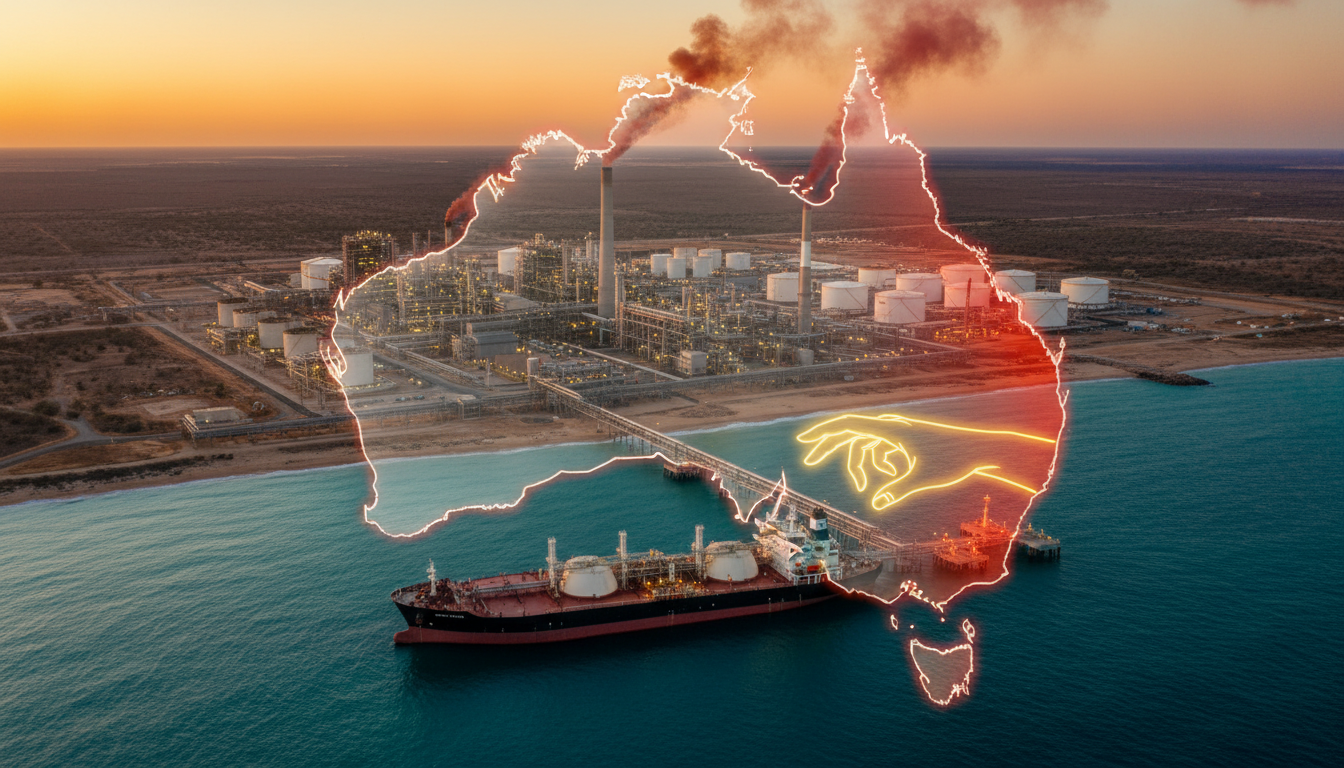
Australia Moves to Fortify East Coast Gas Supply Ahead of 2026 Winter
Australia’s federal government is signaling its readiness to invoke emergency powers to safeguard domestic natural gas supplies on the east coast, a critical move as forecasts point to potential shortfalls in the third quarter of 2026. This pre-emptive action underscores a heightened focus on national energy security, particularly in a global market increasingly fractured by geopolitical tensions, notably the ongoing conflict in the Middle East.
Investors in the Australian energy sector should take note of the Albanese Government’s proactive stance. The government’s intent to consider activating mechanisms under the Australian Domestic Gas Security Mechanism (ADGSM) reflects a strategic pivot towards prioritizing local energy needs, even as Australia maintains its position as a significant liquefied natural gas (LNG) exporter.
Proactive Measures Amidst Global Volatility
Minister for Resources, Madeleine King, has formally announced her intention to evaluate the application of ADGSM powers. This move aims to prevent a projected domestic gas deficit on the east coast during Australia’s winter months in Q3 2026. The ADGSM serves as a crucial regulatory instrument, empowering the government to intervene and redirect gas designated for export back into the domestic market should a supply shortfall be identified.
A 30-day consultation period has commenced, during which the Minister will engage directly with major gas producers to assess their supply commitments to the domestic market. A definitive decision on whether to activate the ADGSM will be made by mid-May. This timeframe provides a critical window for producers to demonstrate their capacity and willingness to meet anticipated local demand, potentially influencing future investment decisions and operational strategies.
Minister King emphasized the precautionary nature of this announcement. “My decision to issue a notice of intent is a precautionary measure that gives me the flexibility to intervene if Australia is at risk of facing an energy shortfall,” she stated. Crucially, she clarified that “The notice does not place any limits on gas exports. Currently, Australia’s domestic market is well supplied with Australian gas.” This nuanced position seeks to reassure international partners while clearly asserting domestic priority if circumstances change.
The government’s message is clear: while Australia remains a dependable supplier to its international energy partners, the welfare of Australian households and industries will take precedence in the event of a significant domestic supply disruption. This prioritization is framed within the context of global market instability exacerbated by the Middle East conflict, highlighting the increasing importance of national energy independence.
The East Coast Supply Forecast: A Deeper Dive
Adding weight to the government’s cautionary approach, the Australian Competition and Consumer Commission (ACCC) recently released its assessment, indicating that wholesale gas supply on Australia’s east coast is indeed expected to be tight. The regulator’s findings suggest that meeting demand in the third quarter of 2026 will likely necessitate drawing large volumes of gas from existing storage facilities. This projection underscores a structural challenge in the east coast market, where a significant portion of production is geared towards lucrative export contracts.
The forecast tightness is a concern for industrial users, who rely on a consistent and affordable gas supply for their operations, as well as for residential consumers. The demand surge during winter months, coupled with ongoing industrial requirements, places significant pressure on the supply network. For investors, this scenario flags potential regulatory risks and the ongoing tension between export commitments and domestic obligations for gas producers operating in the region.
The reliance on storage to bridge a supply gap, while a viable short-term solution, is not a long-term strategy and could signal underlying vulnerabilities in the market’s ability to self-regulate against future demand spikes or unforeseen disruptions. This outlook necessitates careful consideration by market participants planning capital deployment or assessing existing asset portfolios in the Australian gas sector.
Investor Implications and Market Dynamics
For investors, this development introduces a layer of regulatory scrutiny and potential intervention risk. While the immediate impact on export contracts is stated to be minimal, the very existence of an ADGSM notice signals a government prepared to act. This could influence investment decisions in new upstream projects, particularly those targeting the east coast, as developers weigh the potential for future domestic supply obligations against export market premiums.
Major gas producers, including large LNG exporters, will be central to the upcoming consultation. Their strategies for managing domestic supply commitments alongside their international sales portfolios will be under intense observation. The outcome could set precedents for how future gas reserves are allocated and developed in Australia, potentially favoring projects that can more readily direct supply to the domestic market.
The balancing act between maintaining Australia’s reputation as a reliable international energy supplier and ensuring affordable, secure domestic energy for its citizens is complex. Investors should monitor this delicate equilibrium closely, as shifts could impact earnings potential and regulatory frameworks for gas producers.
Broader Energy Security Landscape
Beyond natural gas, the Australian government has demonstrated a broader commitment to mitigating energy price pressures for consumers. Earlier this week, it implemented a three-month reduction in the fuel excise on gasoline and diesel, effectively halving the tax burden. This measure aims to alleviate financial strain caused by escalating fuel prices, mirroring the proactive approach taken with gas supply. Both actions highlight a comprehensive government strategy to shield consumers and industries from volatile global energy markets.
These policy decisions collectively underscore Australia’s growing emphasis on national energy resilience. For energy investors, understanding this evolving policy landscape is paramount. The long-term implications for resource development, infrastructure investment, and market pricing dynamics in Australia’s energy sector will be shaped by these ongoing governmental interventions and the global energy transitions they seek to navigate.
