The global liquefied natural gas (LNG) market is undergoing a significant rebalancing, driven by shifting demand dynamics and strategic maneuvers from major exporters. Australia, a pivotal player in the global LNG trade, is actively diversifying its export destinations amidst a noticeable softening of demand from its traditional North Asian customer base. This strategic pivot, marked by unprecedented long-haul shipments to new markets, signals a complex interplay of supply, demand, and pricing pressures that astute energy investors must closely monitor. Our proprietary data reveals a nuanced picture, with tumbling spot LNG prices contrasting with volatility in crude markets, all against a backdrop of critical upcoming energy events that could further shape investment trajectories.
Global LNG Demand Rebalance: A Tale of Two Hemispheres
The core of Australia’s current export strategy lies in a significant downturn in Asian LNG demand, particularly from China. For the current month, China’s LNG imports are projected to reach 3.38 million tons, marking the lowest level recorded since April 2018. This represents a palpable decline from recent monthly averages, which saw imports as high as 4.47 million tons. This softer demand has consequently freed up Australian spot cargoes, prompting exporters to seek opportunities beyond their traditional North Asian partners. The impact on spot LNG prices in Asia has been immediate and pronounced, with significant declines since the start of the year as current loadings are designated for April deliveries, a period when winter demand has waned and summer demand has yet to fully materialize.
This dynamic stands in stark contrast to the robust demand observed across the Atlantic. Europe continues to absorb LNG at a record pace, on track to register another all-time high in import volumes for February. This insatiable European appetite has been significantly aided by the very same weak Chinese demand that has pressured Asian spot prices, making the fuel considerably more affordable for European buyers. Interestingly, while LNG spot prices have tumbled, the broader energy complex shows a different intraday trend. As of today, Brent crude trades at $93.86, showing a 3.79% increase, with WTI crude reaching $90.22, up 3.2%. However, our proprietary 14-day trend analysis reveals a deeper context: Brent crude experienced a substantial 19.8% decline from $118.35 on March 31st to $94.86 just yesterday, April 20th. This divergence between recent crude downturns and today’s bounce, alongside the pronounced weakness in spot LNG, underscores a highly complex and volatile energy market landscape that demands careful analysis from investors.
Australia’s Strategic Pivot: Addressing Investor Concerns on Market Direction
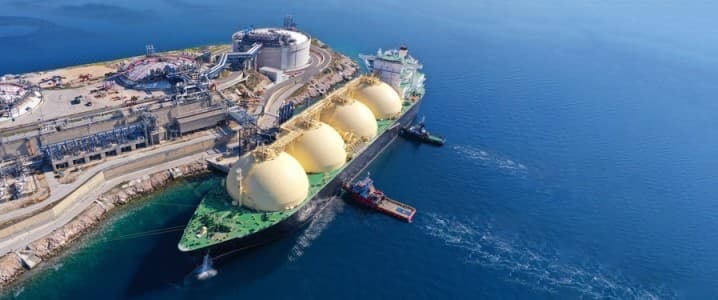
In response to these shifting demand patterns, Australian LNG exporters are demonstrating remarkable agility in their market diversification efforts. A standout example is the unprecedented shipment of an LNG cargo to East Canada, a journey spanning an extraordinary 16,000 miles. The LNG carrier Maran Gas Hector, having departed Australia over a month ago and traversed the southern tip of South America, is slated to arrive in East Canada on Thursday, April 24th. This marks the first time Australian LNG has reached this destination, according to our comprehensive vessel-tracking data dating back to 2008. Furthermore, Australia recently dispatched an LNG cargo to Turkey, the first such delivery since at least 2017.
These long-haul voyages and new market entries are not merely logistical feats; they are a direct response to a fundamental market rebalancing, as China, a former demand anchor, is even re-selling flexible destination cargoes. For investors, this raises critical questions about the future profitability and strategic positioning of major LNG producers. Many of our readers are actively seeking clarity on market direction, asking questions like, “Is WTI going up or down?” or expressing interest in specific company performance, such as “How well do you think Repsol will end in April 2026?” These Australian developments offer a lens into the pressures and opportunities facing global energy firms. While such diversification mitigates reliance on a single region, the economics of 16,000-mile journeys for spot cargoes highlight the current oversupply in the Asian market and the lengths exporters will go to find buyers. Investors must assess whether these new routes offer sustainable margins or are merely temporary solutions for excess supply. The ability of companies to secure long-term contracts in these emerging markets, or to dynamically adjust their portfolios, will be key to their financial performance in this evolving landscape.
Navigating the Future: Key Catalysts and the Long-Term Outlook
The immediate future for LNG markets will be shaped by several critical upcoming events and seasonal demand shifts. With the Asian winter demand having concluded and summer demand yet to fully pick up, the current period represents a lull that contributes to softer spot prices. However, investors must look beyond the immediate to understand the longer-term trajectory, especially with common inquiries such as, “What do you predict the price of oil per barrel will be by end of 2026?”
Our proprietary event calendar highlights several key dates that will offer crucial insights into the broader energy market, indirectly influencing LNG dynamics. Tomorrow, April 21st, the OPEC+ JMMC Meeting could signal shifts in crude production policy, potentially impacting global energy prices and investor sentiment across the sector. Throughout the coming weeks, the EIA Weekly Petroleum Status Reports (April 22nd, April 29th) and API Weekly Crude Inventory reports (April 28th, May 5th) will provide vital data on U.S. demand and inventory levels, which are critical indicators for WTI and Brent crude, serving as benchmarks for overall energy health. Furthermore, the Baker Hughes Rig Count on April 24th and May 1st will offer forward-looking signals on North American production trends, a significant factor given the region’s growing role as an LNG exporter.
Perhaps most importantly for those seeking a longer-term view, the EIA Short-Term Energy Outlook (STEO) on May 2nd will deliver comprehensive projections for crude oil, natural gas, and potentially LNG, extending through 2027. This report will be indispensable for investors attempting to forecast commodity prices and strategize their positions for the remainder of the year and beyond. The STEO’s assessment of future Asian demand recovery, European consumption, and new supply coming online will dictate whether Australia’s current diversification is a temporary market adjustment or a preview of a structurally altered global LNG trade. Companies with flexible portfolios and robust market intelligence will be best positioned to capitalize on these evolving trends.


