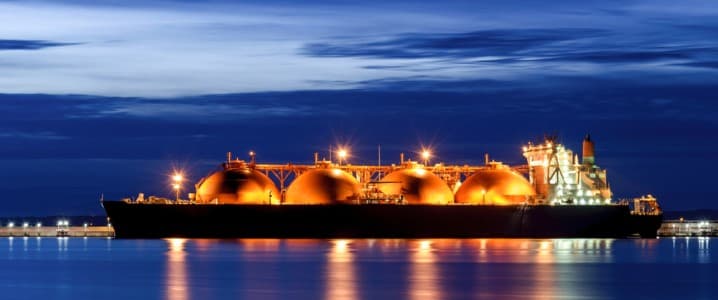
The global liquefied natural gas (LNG) market is currently undergoing a significant rebalancing, driven by an acute surge in demand across Northeast Asia. This shift is not merely seasonal; it represents a structural pull on global LNG volumes, forcing a critical diversion of cargoes away from traditional European buyers. For investors, this dynamic underscores the increasing interconnectedness and fragility of global energy supply chains, demanding a re-evaluation of energy security premiums and commodity price forecasts. As summer heat intensifies cooling needs in Asia, the resulting strain on European supply is creating a complex investment landscape characterized by heightened geopolitical risk and potential for significant spot price volatility, particularly as the continent looks ahead to colder months.
Asia’s Thirst Redraws Global LNG Map and Spot Price Dynamics
Northeast Asia is experiencing an extraordinary period of peak summer heat, compelling a substantial increase in gas-fired power generation to meet surging cooling demand. This demand isn’t just robust; it’s actively rerouting LNG cargoes that would typically flow to Europe. The economic incentives are clear: higher spot prices in the Asian market are proving irresistible for traders. Our proprietary reader intent data confirms this investor focus, with a significant uptick in queries asking “What’s driving Asian LNG spot prices this week?” The answer is unequivocally the intense competition for available supply fueled by this weather-induced demand. While U.S. LNG exports have demonstrated record capacity this year, limitations in terminal infrastructure and the inherent complexities of long-haul shipping mean that Europe is receiving smaller cargo allocations during this critical high-demand period. This bottleneck is fundamentally altering established trade routes and creating a scramble for flexible volumes, pushing Asian spot premiums to levels that distort global allocation.
Europe’s Energy Security Tightrope: A Divergent Price Picture Emerges
The redirection of LNG has left European utilities in a precarious position, increasingly reliant on pipeline gas, including volumes from Russia. This reliance complicates the European Union’s broader energy strategy and introduces significant geopolitical vulnerability, risking higher energy costs as winter approaches. As of today, April 15th, Brent crude trades at $94.93, largely flat on the day within a range of $91-$96.89, while WTI crude sits at $91.39. This relatively stable crude environment, however, belies the underlying pressure in European natural gas markets, pointing to a significant divergence in energy commodity dynamics. Over the past two weeks, Brent has actually seen a decline of nearly 9% from its March 25th high of $102.22 to $93.22 on April 14th, suggesting a broader crude market grappling with its own demand signals. Yet, in contrast to this crude market trend, the tightening LNG supply to Europe signifies a distinct and acute challenge within the gas sector, where the “double squeeze” of reduced LNG inflows during summer heat could lead to a substantial spike in spot LNG prices if storage tanks are not adequately replenished before winter.
Washington’s Policy Lever: A Long-Term Fix for Immediate Pressure?
Amidst this global energy rebalancing, attention has naturally turned to Washington and its potential role in mitigating supply pressures. Market observers indicate that the current administration is closely monitoring the situation, with the possibility of executive authority being used to incentivize supply. Such measures could include fast-tracking approvals for new U.S. LNG export infrastructure – a critical long-term play for global supply stability. In the shorter term, adjustments to tariff and shipping regimes might be considered to enhance flow flexibility during peak seasons. For investors, the implications are clear: policy shifts could unlock significant capital expenditure in the U.S. LNG sector, offering new opportunities for infrastructure development and export capacity expansion. However, traders caution that the timing of such interventions may be too late to significantly influence the immediate pressures of this summer’s demand peak, meaning European markets must brace for near-term volatility regardless of future policy initiatives.
Navigating the Upcoming Energy Calendar and Investor Outlook
For discerning investors, the next two weeks present several critical data points and events that will shape the broader energy outlook, even as the LNG market grapples with its immediate challenges. The upcoming OPEC+ meetings, with the Joint Ministerial Monitoring Committee (JMMC) convening on April 18th and the Full Ministerial meeting on April 20th, are paramount. While these discussions center on crude oil production quotas, their decisions will inevitably influence overall energy market sentiment and investment flows. A stable or cautious OPEC+ stance on output could provide a degree of predictability to the crude market, potentially freeing up capital or strategic focus for gas-related investments, or conversely, amplifying concerns about overall energy supply. Furthermore, the Baker Hughes Rig Count reports on April 17th and 24th, alongside the API and EIA weekly crude inventory reports on April 21st/22nd and April 28th/29th, will offer a vital pulse on North American upstream activity and inventory levels. These indicators are crucial for investors asking about “consensus 2026 Brent forecasts” and “base-case Brent price forecasts for next quarter,” as they inform the supply side of the equation. While the immediate LNG squeeze is a potent force, these broader calendar events provide essential context for understanding the full scope of energy market dynamics and positioning portfolios strategically for the coming quarters.


