

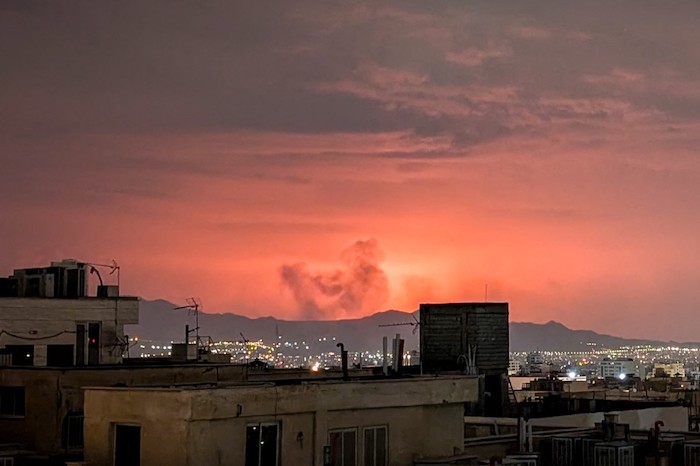
Asian markets were mostly down again on Friday, with no sign of the war in the Middle East ending, while oil prices rose further after the Asian trading day closed.
After a torrid week on trading floors, investors were limping into the weekend wondering when the US-Israel war on Iran, and Tehran’s attacks across the Gulf region, will come to an end.
Equities across the world have been battered by the crisis, which has sent crude prices soaring by about a fifth since February 27 – the day before the attacks started – and fanned fears of a fresh spike in inflation that could hit the global economy.
ALSO SEE: China’s Lowest Growth Target Since 1991: A ‘Priority Shift’?
While there was a midweek bounce, analysts warned that the longer the conflict goes on, the worse it will be for markets to absorb.
“It is too soon to suggest that stocks have bottomed,” wrote IG chief market analyst Chris Beauchamp.
“Unless the war ends soon – and if anything a more intense conflict seems more likely – markets will struggle. Volatility remains elevated, which means we should expect plenty of two-way price action, but a continued decline for the moment seems likely, even with short-term bounces along the way.”
And the battle looks set to be drawn out, with Iranian Foreign Minister Abbas Araghchi warning on Thursday that the Islamic republic was neither asking for a ceasefire nor negotiations with the United States.
After a fresh sell-off on Wall Street, Asia largely followed suit.
Sydney, Wellington, Taipei, Manila, Mumbai, Bangkok and Jakarta all reiterated while Singapore was flat.
Seoul, which was pummelled almost 19% over Tuesday and Wednesday before bouncing more than 9% on Thursday, ended flat after recovering from an early drop.
Hong Kong’s Hang Seng Index was up 1.7%, while the Nikkei edged up 0.6%.
Later, London, Paris and Frankfurt all opened slightly higher.
Worry over oil prices
Investors were growing increasingly worried that the spike in crude prices will push inflation back up and force central banks to re-evaluate plans to cut interest rates, with some analysts warning that they could even contemplate hikes.
While Iran has not officially shut off the Strait of Hormuz, shipping through the waterway has all but dried up.
Still, there was some reprieve on the oil front as both main contracts eased – though they later pared the early losses – after US Interior Secretary Doug Burgum said officials were looking at plans to temper the price gains.
He said “everything is being considered”, with options including tapping the country’s reserves, possibly in tandem with other nations.
With that in mind, the White House on Thursday temporarily eased sanctions against Russia to allow its oil currently stranded at sea to be sold to India until April 3.
Treasury Secretary Scott Bessent said the waiver was issued “to enable oil to keep flowing into the global market.”
Earlier this week US President Donald Trump pledged to protect ships through the Strait of Hormuz, through which a fifth of the world’s crude supplies and a substantial amount of gas run.
Other countries have also moved to address the issue, with China asking its largest oil refiners to suspend exports of diesel and gasoline, according to Bloomberg News.
However, prices remain elevated. Brent at one point rose around 19% since Friday, while WTI had spiked more than 22%, having topped $80 a barrel for the first time since January last year.
Chris Weston at Pepperstone added that investors were trading with an eye on possible developments over the weekend.
“With volatility at elevated levels, traders face the possibility of a significant gap move in either direction when markets reopen on Monday,” he wrote.
After the Asian trading day was over, Brent crude futures added 4.5% to trade at $89.23 a barrel, which was a new 52-week high and a level not seen in close to two years. And West Texas Intermediate crude futures were 6.3% higher at $86.06, their highest since April 2024.
Key figures at around 0815 GMT
Seoul – Kospi: FLAT at 5,584.87 (close)
Tokyo – Nikkei 225: UP 0.6% at 55,620.84 (close)
Hong Kong – Hang Seng Index: UP 1.7% at 25,775.29 (close)
London – FTSE 100: UP 0.2% at 10,430.44
Shanghai – Composite: UP 0.4% at 4,124.19 (close)
Dollar/yen: UP at 157.57 yen from 157.55 yen
New York – DOW: DOWN 1.6% at 47,954.74 (close)
AFP with additional input and editing by Jim Pollard
NOTE: The headline and text of this report was amended on March 6, 2025 to note the rise in oil price futures.
ALSO SEE:
War in Iran Could Hit Some of Asia’s Biggest Economies Hard
Vietnam Fast Out of the Box to Pass First AI Law in Southeast Asia
China ‘Weaponising Chokepoints’ With Export Curbs on Key Rare Earths
China’s Xiaomi to Set up Safety Panel After Fatal EV Accidents
Germany’s Merz Lands in Beijing, Seeking Closer Ties With China
Panama Hands Canal Port Terminals to Maersk, MSC – CNBC
Tariff Ruling Leaves Huge Cloud of Doubt Over US Trade Deals
China Using Trump ‘Uncertainty’ to Dominate Global Trade: Report

