

India’s Northeast Embraces Biogas: A Microcosm of Energy Transition and Investment Opportunities
As the global energy landscape navigates a complex transition, astute investors are keenly observing shifts in demand and supply dynamics, even at the granular level. In a telling move that underscores India’s commitment to energy diversification and self-reliance, Arunachal Pradesh has recently inaugurated a state-of-the-art biogas plant. This development, while localized, offers a compelling glimpse into the burgeoning potential of decentralized renewable energy solutions and their tangible impact on conventional fossil fuel markets, particularly liquefied petroleum gas (LPG).
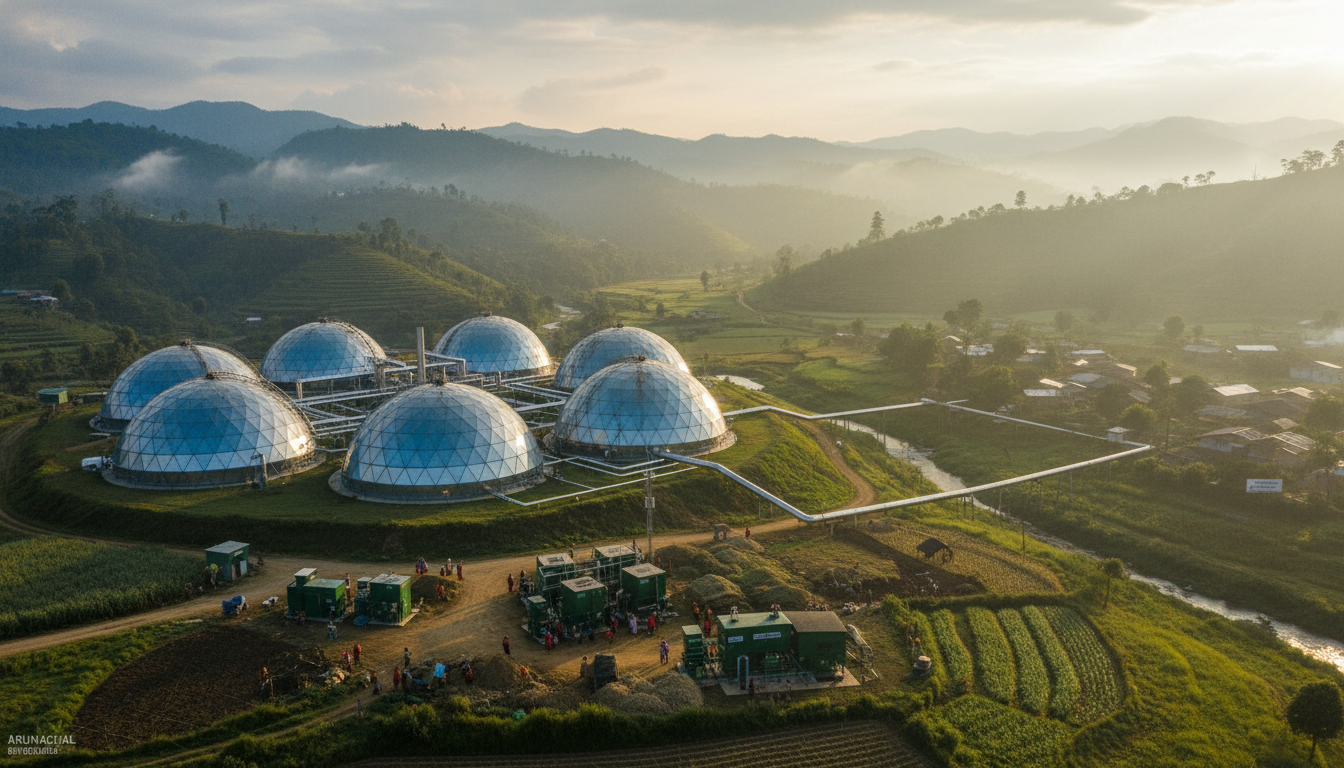
Commissioned on a recent Friday, the new facility at the Central Cattle Breeding Farm (CCBF) in Nirjuli, near Itanagar, represents a strategic pivot towards harnessing local resources for sustainable energy generation. This 30 cubic meter (CuM) plant, ingeniously structured as two interconnected 15 CuM units, directly addresses the twin challenges of escalating LPG costs and supply chain vulnerabilities that frequently burden households. For investors tracking emerging market trends, this initiative highlights government-backed efforts to de-risk energy access and foster economic resilience through domestic resource utilization.
The project, spearheaded by the state’s Department of Animal Husbandry, Veterinary and Dairy Development under the directive of Minister Gabriel D Wangsu, saw successful execution in collaboration with the Arunachal Pradesh Energy Development Agency. Its design capitalizes on an abundant, readily available feedstock: cow dung. The CCBF at Nirjuli maintains a substantial herd of approximately 150 cattle, collectively producing an impressive 5 to 6 quintals of raw cow dung daily. Previously, this organic waste was primarily air-dried and repurposed as traditional manure, a practice with limited value addition.
However, the new biogas plant fundamentally transforms this waste stream into a dual-purpose asset. Project lead Taba Heli explains, “The cow dung is now efficiently converted into clean biogas, serving as a direct replacement for traditional cooking and lighting fuels. Concurrently, the process yields a nutrient-rich slurry, significantly enhancing soil fertility and offering a superior organic fertilizer alternative.” This closed-loop system not only mitigates environmental concerns associated with methane emissions from raw dung but also creates a valuable agricultural input, bolstering the farm’s overall economic and ecological footprint.
The immediate beneficiaries of this forward-thinking initiative are the more than a dozen families residing within the CCBF’s residential quarters. Their kitchens, now directly connected to the biogas output, experience a dramatic reduction in reliance on grid-supplied LPG. This tangible shift translates into direct cost savings for these households and provides a stable, predictable energy source, insulating them from volatile LPG price fluctuations and potential supply disruptions. For investors, this demonstrates the direct economic impact and social value proposition of such decentralized energy projects, which can significantly improve quality of life and reduce operational overheads in rural settings.
From an investor’s perspective, these smaller-scale, waste-to-energy projects in India offer an intriguing proposition. They align perfectly with growing Environmental, Social, and Governance (ESG) mandates and India’s broader national energy security objectives. By transforming organic waste into valuable resources, such initiatives promote sustainable living, curtail greenhouse gas emissions, and lessen the nation’s import dependency on fossil fuels. While the financial scale of individual projects like the Nirjuli plant might seem modest compared to large-cap oil and gas ventures, their aggregated potential across India’s vast agricultural landscape is substantial.
The successful commissioning in Arunachal Pradesh signals a wider trend of states actively pursuing localized energy independence. This approach helps stabilize energy costs for citizens and contributes to a more diversified national energy mix, reducing macro-economic vulnerabilities associated with global oil and gas price volatility. Investors eyeing the long-term energy transition in emerging markets should recognize these grassroots efforts as crucial building blocks. They lay the groundwork for a distributed energy infrastructure that complements centralized grids, creating opportunities in technology, project development, and sustainable finance.
Ultimately, the biogas plant in Nirjuli is more than just an environmental endeavor; it is an economic statement. It illustrates how innovation in resource management can directly impact energy expenditure, enhance agricultural productivity, and empower communities. For energy market participants and investors, these developments underscore the evolving nature of energy demand and the compelling investment avenues emerging within the sustainable and decentralized energy sectors, hinting at a future where localized energy solutions play an increasingly vital role in global energy security and financial sustainability.
