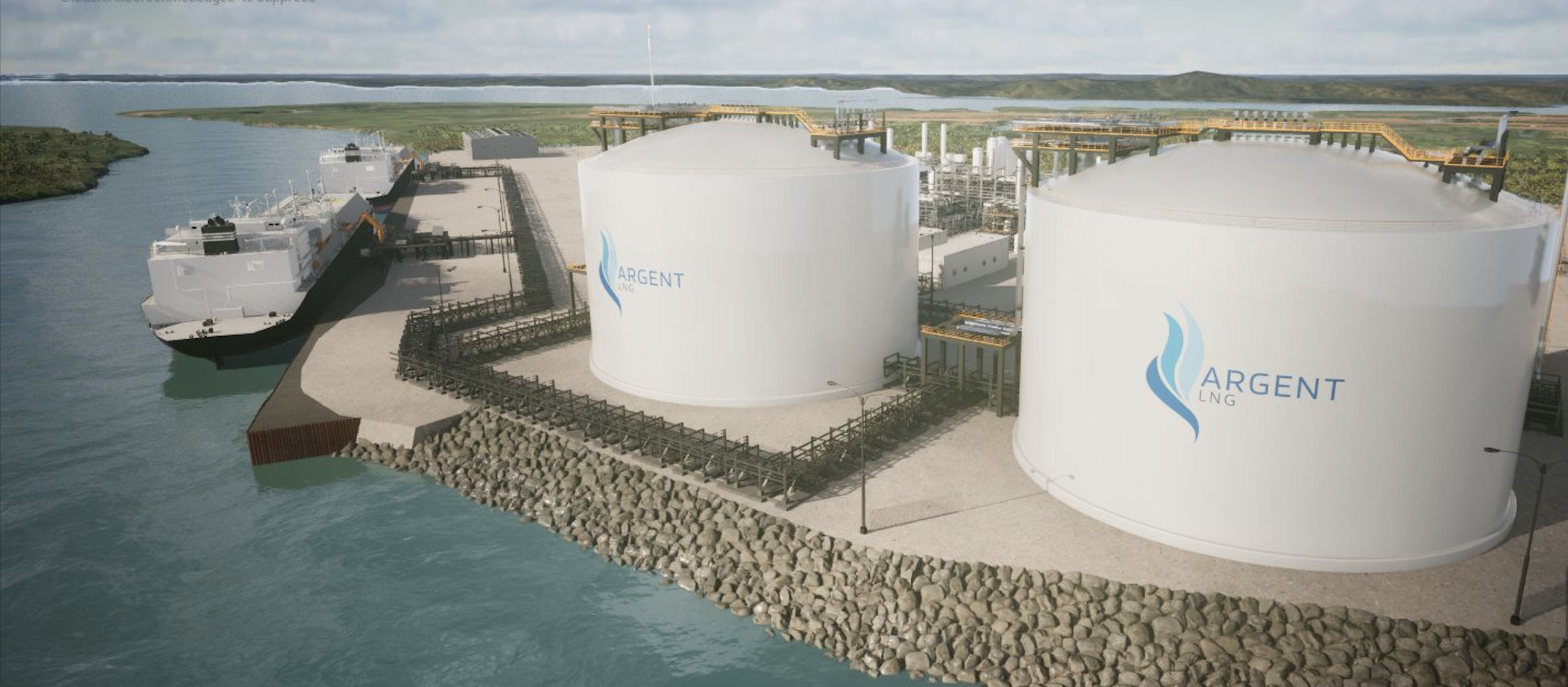
Argent LNG has taken a significant stride forward for its flagship liquefied natural gas (LNG) export terminal in Port Fourchon, Louisiana, formally submitting its Letter of Intent (LOI) and Preliminary Waterway Suitability Assessment (PWSA) to the U.S. Coast Guard. This pivotal regulatory engagement, coupled with direct meetings with senior Coast Guard officials, underscores the project’s momentum and its strategic positioning in the evolving global energy landscape. For investors tracking the robust expansion of U.S. LNG export capacity, this development is a clear signal of progress for a facility poised to deliver 25 million tonnes per annum (MMtpa) at full capacity, solidifying America’s role as a critical energy supplier.
Project Milestones and Strategic Positioning
The submission of the LOI and PWSA marks a crucial pre-filing regulatory milestone, initiating the formal review process with key authorities. This early and proactive engagement with the U.S. Coast Guard, including detailed presentations on project specifics and safety protocols, highlights Argent LNG’s commitment to a safe and efficient integration into Port Fourchon’s established energy infrastructure. The project’s unique selling proposition centers on its design as one of the most competitive modular LNG facilities along the U.S. Gulf Coast. Situated on a substantial 900-acre site, secured by a 90-year lease, the terminal benefits from direct access to abundant low-nitrogen feed gas pipelines. Critically, its location also offers uncongested deepwater shipping lanes, a logistical advantage that can significantly enhance operational efficiency and reduce transportation costs for future off-takers. Furthermore, the collaboration with industry leaders such as Baker Hughes, Honeywell UOP, ABB, and GTT de-risks the project’s technical execution and brings world-class expertise to its development, reinforcing confidence in its long-term viability and operational excellence.
Navigating Market Dynamics and Investor Focus
In the broader energy market, investors are keenly observing commodity price movements and the factors driving them. As of today, Brent crude trades at $98.38 per barrel, reflecting a 1.02% decrease within a daily range of $98.11 to $98.38. Similarly, WTI crude is at $89.96, down 1.33% for the day. This current softness follows a more pronounced trend; Brent crude has seen a notable decline of $13.43, or 12.4%, from $108.01 on March 26th to $94.58 on April 15th. Despite these fluctuations in crude, the long-term outlook for natural gas and LNG remains robust, driven by global demand for cleaner-burning fuels and energy security imperatives. Our proprietary reader intent data reveals a consistent investor focus on fundamental supply-side dynamics, with frequent inquiries such as “What are OPEC+ current production quotas?” and “What is the current Brent crude price and what model powers this response?”. This indicates a strong interest in understanding the factors influencing global supply and benchmark prices. Against this backdrop of short-term crude market volatility, the steady progression of major LNG infrastructure projects like Argent LNG offers a compelling long-term investment narrative, emphasizing reliable supply and export capacity rather than immediate inventory swings. It represents a strategic play for investors seeking exposure to the structural growth in global gas demand.
Upcoming Catalysts and Regulatory Pathways
The immediate next step for Argent LNG involves entering the FERC pre-filing process, a comprehensive regulatory review that will shape the project’s development timeline. This process is critical for obtaining the necessary federal authorizations and will involve extensive environmental and engineering assessments. While Argent LNG navigates this crucial regulatory path, the broader energy calendar presents several upcoming events that will influence the overarching investment climate. Investors are looking forward to the Baker Hughes Rig Count reports on April 17th and April 24th, which provide a vital pulse check on drilling activity and future production trends in North America. Furthermore, the OPEC+ JMMC meeting on April 18th, followed by the Full Ministerial meeting on April 20th, will be closely watched for any shifts in production policy that could impact global crude supply and, by extension, general energy market sentiment. Closer to home, the API Weekly Crude Inventory report on April 21st and the EIA Weekly Petroleum Status Report on April 22nd, along with their subsequent releases on April 28th and April 29th, will offer crucial insights into U.S. crude and product balances. While these events directly impact the oil market, they indirectly shape the investment landscape for all energy commodities, including LNG. Successful navigation of the FERC process by Argent LNG, alongside positive signals from these broader market events, could significantly enhance investor confidence in the project’s long-term value proposition.
Investment Outlook and Global Impact
The Argent LNG project, with its planned 25 MMtpa capacity, is not merely another export terminal; it represents a significant expansion of U.S. capabilities to meet growing international demand for natural gas. Port Fourchon, historically a cornerstone of America’s offshore energy industry, is poised to evolve into an even more critical global energy hub with this investment. The project promises to create substantial opportunities for the local community and expand the port’s capabilities, reinforcing its strategic importance. For investors, exposure to a project of this scale, backed by a robust regulatory pathway and strategic industry partnerships, offers a compelling avenue to participate in the global energy transition and the increasing importance of U.S. energy security. The long-term nature of LNG contracts and the sustained global demand for reliable energy sources position Argent LNG as a key player in the coming decades, offering a stable growth profile amidst the dynamic energy markets.