

Global Weather Extremes Signal Heightened Risks and Opportunities for Energy Investors
The global energy landscape faces increasing volatility as unprecedented climatic shifts manifest across the planet. A recent alarming development saw Arctic sea ice levels register their lowest winter maximum on record, tying previous lows, even as Earth’s continental landmasses simultaneously endured a barrage of record-shattering temperatures. For oil and gas investors, these evolving climate patterns are not mere environmental footnotes; they represent critical drivers of geopolitical shifts, infrastructure challenges, and market dynamics that demand close scrutiny.
The critical role of Arctic ice in global climate regulation cannot be overstated. Functioning as Earth’s primary reflective surface, this vast expanse of white ice deflects solar radiation, preventing the oceans from absorbing excessive heat. A diminished ice cover accelerates warming trends, a phenomenon with far-reaching implications for global shipping routes, resource accessibility, and international relations. Places like Greenland, once on the periphery of strategic interest, now attract increased attention due to the opening of new maritime passages and potential resource frontiers, inherently reshaping geopolitical risk calculations for energy companies operating in these sensitive zones.
This concerning reduction in Arctic ice coincides with an extraordinary wave of heat records sweeping the globe. March witnessed temperatures soar to historic highs across the United States, Mexico, Australia, Northern Africa, and parts of Northern Europe. Weather historian Maximiliano Herrera characterized this period as “by far the most extreme heat event in world climatic history,” indicating further intensification. In the U.S., a remarkable sixteen states broke monthly temperature records in a single week, with twenty-seven locations, including major hubs like St. Louis, recording temperatures on par with or exceeding their historical April highs. Mexico experienced thousands of shattered records, some even surpassing typical May temperatures. Asia, however, bore the brunt of this extreme heat, with “dozens of thousands of monthly records” falling by margins of 30 to 35 degrees Fahrenheit (17 to 19 degrees Celsius). Such widespread and intense heat waves impact energy demand profiles, stress grid infrastructure, and disrupt logistics for the entire oil and gas supply chain, necessitating robust risk management strategies for investors.
Adding a stark contrast to the Arctic’s melting narrative, Antarctica recently recorded the coldest March day globally, plummeting to minus 105.5 degrees Fahrenheit (minus 76.4 degrees Celsius). This dichotomy highlights the complex and localized nature of climate phenomena, yet it underscores a pattern of extreme variability that presents distinct challenges for long-term investment planning in energy markets.
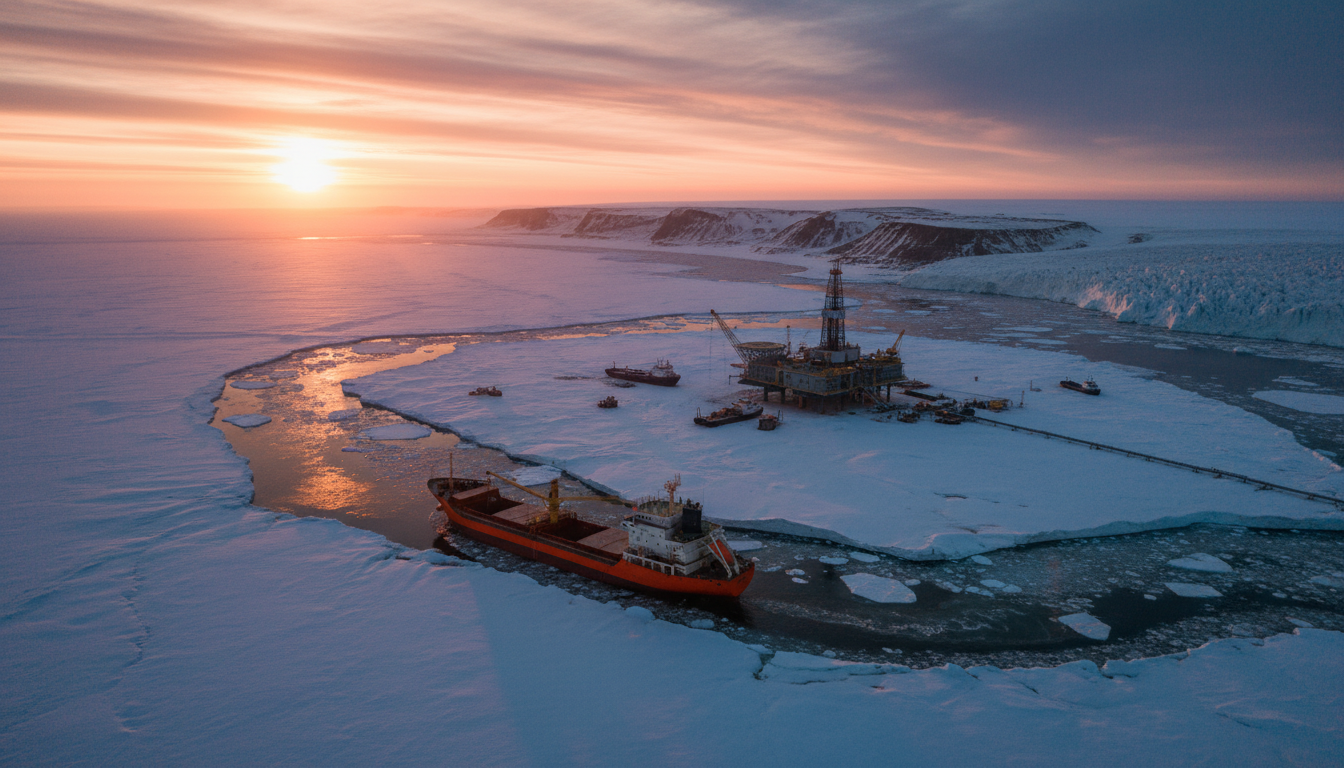
The National Snow and Ice Data Center (NSIDC) confirmed that the Arctic’s winter sea ice growth peaked at just 5.52 million square miles (14.29 million square kilometers), virtually tying last year’s low of 5.53 million square miles (14.31 million square kilometers). This figure stands approximately 525,000 square miles (1.36 million square kilometers) below the 1981-2010 winter average, an area roughly twice the size of Texas. Walt Meier, a senior scientist at NSIDC, notes this trend as a “steady decline,” providing an earlier start to the summer melt season from an already reduced baseline. For oil and gas operations, this means increasingly challenging and unpredictable conditions in Arctic drilling and shipping lanes, impacting operational costs and project timelines.
Meier emphasizes that the summer melt season, culminating in the September Arctic sea ice minimum, is “really the critical time.” Less reflective white ice means greater absorption of solar heat by the ocean, leading to regional warming. A leading, albeit still debated, theory suggests these Arctic atmospheric changes can alter the jet stream’s path and shape, potentially fueling extreme weather events further south. While melting sea ice does not directly contribute to sea level rise, its role in influencing global weather patterns carries significant implications for energy infrastructure resilience and agricultural productivity, both of which indirectly affect energy demand and supply. The winter maximum, while not a definitive predictor for summer melt, serves as a clear “climate change global warming signal,” urging energy investors to factor these trends into their long-term portfolio strategies.
In summary, the latest data on Arctic sea ice and global temperatures underscores a rapidly evolving climate landscape. For oil and gas investors, understanding these shifts is paramount, as they influence everything from new shipping routes and resource access in the Arctic to increased demand volatility and infrastructure vulnerability in temperate zones. Companies with robust climate risk assessments, adaptive operational strategies, and diversified energy transition investments will be best positioned to navigate these complex challenges and capitalize on emerging opportunities in a warming, yet increasingly extreme, world.
Source
