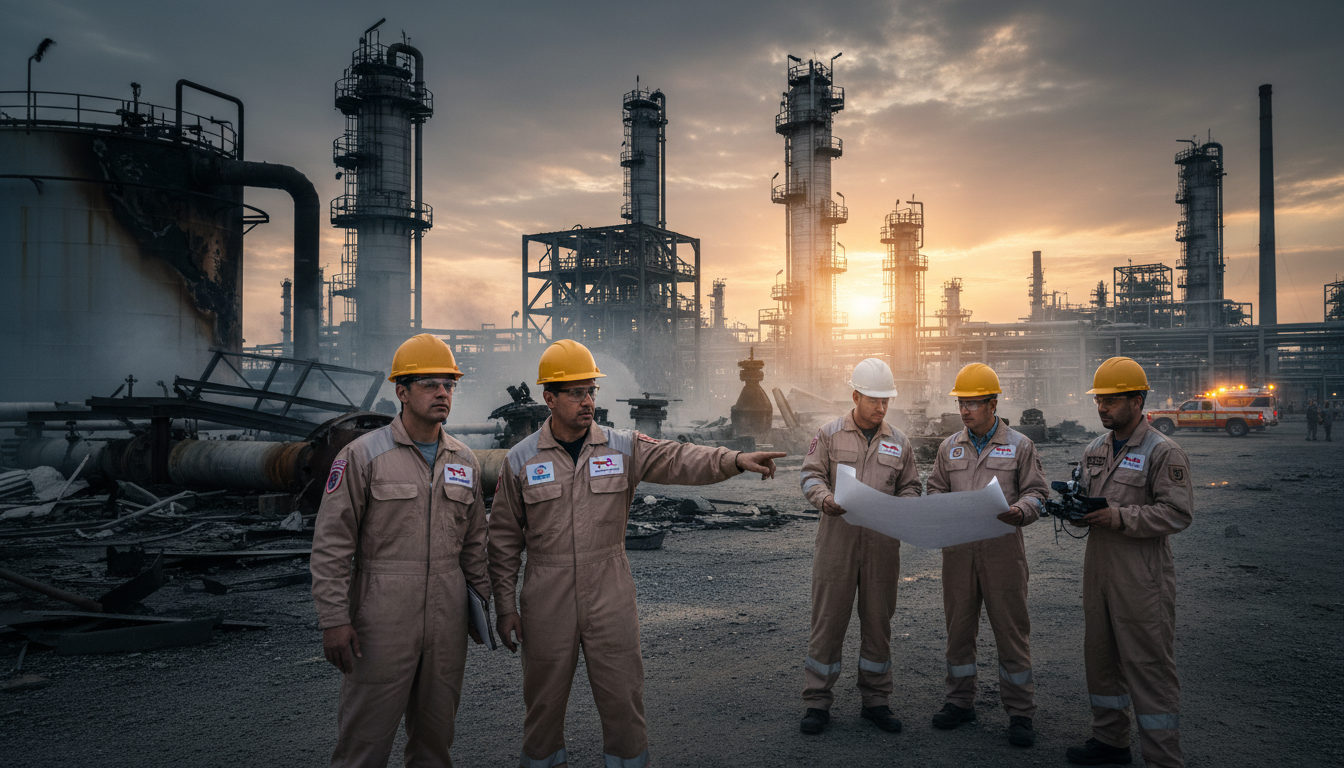
The global energy sector is once again grappling with heightened geopolitical risk, as an incident at the SATORP refinery in Saudi Arabia sends ripples through refined product markets. This critical joint venture between Saudi Aramco and TotalEnergies experienced material damage during the night of April 7th-8th, leading to the immediate shutdown of one of its two processing trains. While thankfully no personnel were harmed, the operational disruption underscores the persistent vulnerability of key energy infrastructure to regional tensions. For investors, this incident demands a re-evaluation of downstream asset stability, potential supply chain impacts, and the resilience of energy giants operating in volatile regions.
Geopolitical Flashpoint and Downstream Vulnerability
The SATORP facility, formally known as the Saudi Aramco Total Refining and Petrochemical Company, plays a pivotal role in Saudi Arabia’s sophisticated downstream capabilities and regional product supply. The recent incident, occurring between April 7th and 8th, resulted in significant damage, necessitating the precautionary offline status of one of its two crucial processing trains. This immediate operational setback highlights the direct consequences of geopolitical instability on physical energy assets. Saudi Aramco, holding a 62.5% majority stake, and TotalEnergies, with its 37.5% share, are now actively assessing the full extent of the damage. This evaluation is critical not only for determining repair scope but, more importantly for shareholders, for projecting the timeline until the affected capacity can be restored. Any prolonged outage at SATORP will directly impact the joint venture’s refining throughput, potentially affecting revenue streams for both parent companies and necessitating unforeseen capital expenditure for repairs. Given SATORP’s strategic importance for supplying various fuels and petrochemical feedstocks across the region, its disruption creates a tangible risk to the stability of regional product markets.
Market Snapshot: Geopolitical Risk Reignites Oil Prices
Against a backdrop of recent price volatility, the SATORP incident has contributed to a notable rebound in crude oil and refined product prices. Investors, keen to understand price direction, have seen significant shifts. As of today, Brent Crude trades at $95.83, marking a robust 6.03% increase for the day, having moved within a range of $92.77-$97.81. Similarly, WTI Crude has surged to $87.94, up 6.48% today, trading between $85.45 and $89.6. This sharp daily rise follows a period of significant decline, where Brent crude had fallen from $112.78 on March 30th to $90.38 by April 17th, representing a substantial 19.9% decrease over 14 days. The SATORP disruption, coupled with broader regional tensions, appears to have injected a fresh risk premium back into the market, reversing some of that downward trend. Refined products are also feeling the impact, with Gasoline prices currently at $3.06, up 4.44% today, trading between $2.99 and $3.08. The question of whether WTI is “going up or down,” a common query among our readers, is clearly being answered in the affirmative for the upside in the immediate term, driven by supply concerns and heightened geopolitical risk appetite.
Investor Outlook: Navigating Uncertainty and Upcoming Catalysts
The ongoing damage assessment at SATORP introduces a period of uncertainty, with the specific duration for restarting the affected processing train yet to be disclosed. For investors, this creates a critical blind spot regarding potential impacts on supply and profitability for Saudi Aramco and TotalEnergies. However, market participants are not without forward-looking indicators. The upcoming energy calendar is packed with events that could influence crude prices and broader market sentiment in the wake of this incident. This Monday, April 20th, marks the OPEC+ JMMC Meeting, followed shortly by the full OPEC+ Ministerial Meeting on Saturday, April 25th. These gatherings are crucial for assessing the group’s production policy, and any commentary on market stability or supply adjustments will be closely scrutinized, especially with a major refinery train offline. Furthermore, investors will be monitoring the API Weekly Crude Inventory (April 21st, 28th) and EIA Weekly Petroleum Status Reports (April 22nd, 29th) for insights into U.S. supply and demand dynamics, which could either exacerbate or alleviate market concerns. The Baker Hughes Rig Count reports (April 24th, May 1st) will provide further indications of future supply potential. These upcoming catalysts will be vital in shaping investor predictions for oil prices not just in the short term, but also for the broader outlook towards the end of 2026, as the market balances geopolitical risk with fundamental supply-demand shifts.
Strategic Implications for Energy Majors and Regional Supply
The SATORP incident highlights the strategic importance of integrated downstream assets for major energy companies like Saudi Aramco and TotalEnergies. For Saudi Aramco, SATORP represents a core component of its national energy infrastructure and its drive to increase value addition within the Kingdom. A prolonged outage would not only impact its share of refining revenue but could also necessitate significant capital expenditure for repairs, potentially diverting funds from other strategic projects. For TotalEnergies, the 37.5% stake in SATORP is a substantial international downstream asset, contributing to its global refining footprint and product supply capabilities. The financial implications for both companies will depend on the duration of the outage and the cost of repairs, which could be substantial given the nature of refining infrastructure. Beyond the direct financial hit, the disruption has broader implications for regional product markets. SATORP’s substantial capacity is critical for meeting demand for gasoline, diesel, and jet fuel across the Middle East. Any sustained reduction in output could tighten regional supply, potentially leading to price increases for these refined products and impacting consumers and industries reliant on them. This incident serves as a stark reminder for investors of the intrinsic links between geopolitical stability, critical infrastructure resilience, and the profitability of global energy majors.


