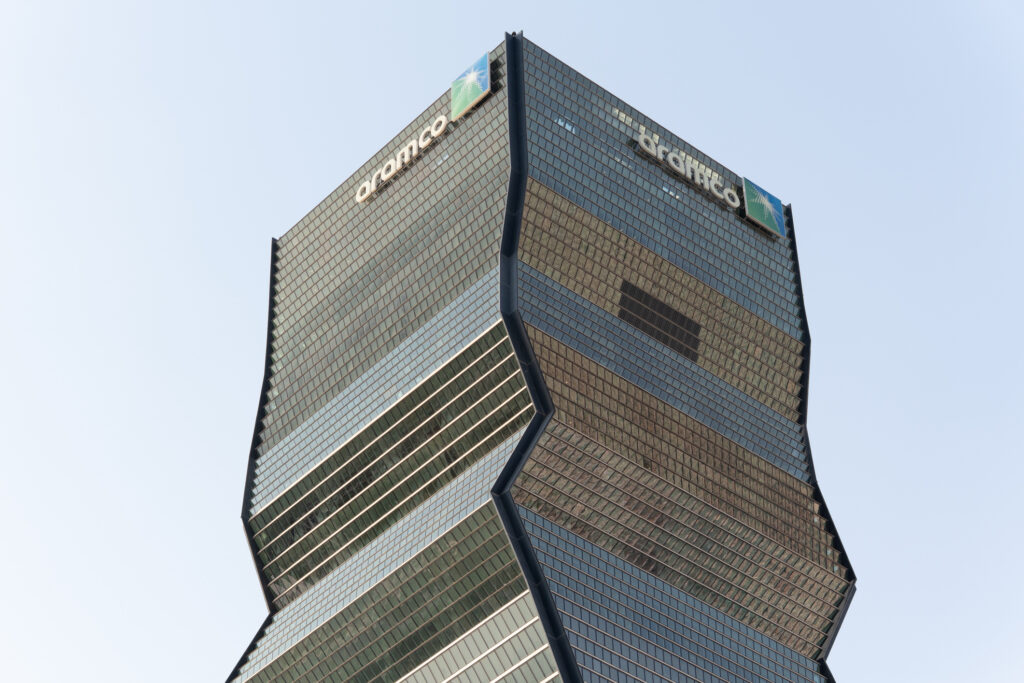
The global oil market remains on edge, with geopolitical tensions in the Middle East once again proving to be the dominant force driving sentiment and valuations. Following a week of escalating conflict, Saudi Aramco, the world’s largest oil producer, experienced a significant surge in its share price, climbing as much as 4.9% before settling with a 4.1% gain on Sunday. This robust performance, the strongest since April 2023, underscores how investors are recalibrating their portfolios to account for heightened supply risk and the potential for sustained elevated crude prices. Our proprietary data pipelines confirm that market participants are intensely focused on identifying resilient assets amidst this volatility, and Aramco’s strategic importance positions it at the forefront of this re-evaluation.
Geopolitical Flashpoints Redefine Supply Risk
The recent escalation of hostilities has fundamentally shifted the perceived risk profile of global oil supply. With the conflict now entering its second week, critical chokepoints like the Strait of Hormuz, through which approximately one-fifth of the world’s energy exports pass, face unprecedented threats. Reports of reduced oil production from key OPEC+ members like the United Arab Emirates and Kuwait, directly linked to the regional instability, highlight the immediate impact on global energy availability. These supply interruptions are not merely theoretical; they are prompting tangible shifts in operational strategies for major producers. Aramco, for instance, has actively redirected oil cargoes to its Red Sea facilities on Saudi Arabia’s west coast, bypassing the Strait of Hormuz. Tanker-tracking data indicates that eight supertankers have already loaded from this alternative route this month, putting shipments on course for a record, demonstrating the company’s logistical agility in crisis.
Further compounding the supply concerns are direct attacks on Saudi oil infrastructure. The weekend saw drone interceptions at the Shaybah field near the Abu Dhabi border and minor damage at the Berri site. These two fields collectively boast a capacity of approximately 1.5 million barrels per day (MMbpd). Additionally, the Ras Tanura refinery, Saudi Arabia’s largest, was forced to halt operations last week following a drone strike. In response to these developments and the broader market tightness, Aramco proactively raised the price of its main oil grade for Asian buyers for April, marking the largest increase since August 2022. This move signals a confident stance on future demand and pricing power, even as the region grapples with an unpredictable security landscape.
Current Market Snapshot and Forward Price Dynamics
As of today, Brent crude trades at $92.89 per barrel, showing a marginal decrease of 0.38% within a daily range of $92.57-$94.21. WTI crude similarly recorded a slight dip of 0.18% to $89.51, fluctuating between $88.76 and $90.71. While these figures represent minor daily pullbacks, it is crucial for investors to contextualize them against the backdrop of recent market movements and elevated geopolitical risk. Our 14-day Brent trend analysis reveals a journey from $101.16 on April 1st to $94.09 on April 21st, reflecting a 7% decline from a recent peak. This illustrates the inherent volatility in a market driven by rapidly evolving news cycles, yet the current price point remains significantly elevated and indicative of a risk premium. Prior to the weekend’s events, several traders had warned that oil prices could swiftly reach $100 per barrel if hostilities persisted or Strait of Hormuz constraints tightened. The current levels, while not at that peak, demonstrate that the market remains highly susceptible to such price spikes should the situation further deteriorate without de-escalation.
The robust performance of Aramco shares, even with daily crude price fluctuations, highlights an investor belief in the company’s fundamental resilience and its critical role in global energy supply. In an environment where supply disruptions are a tangible threat, major integrated producers with vast reserves and established infrastructure become indispensable. The market is pricing in not just the immediate impact of tensions but also the potential for prolonged instability, which could underpin higher oil prices for an extended period. This long-term perspective is vital for investors looking beyond daily trading noise.
Addressing Investor Concerns: Navigating Volatility and Long-Term Outlook
Our proprietary reader intent data reveals that investors are grappling with fundamental questions in this volatile environment. Common queries like “is WTI going up or down” and “what do you predict the price of oil per barrel will be by end of 2026” underscore a deep desire for directional clarity and long-term price forecasts. While precise predictions are challenging amidst the current geopolitical flux, our analysis suggests a sustained bullish tilt for crude prices as long as Middle East tensions remain high. The ability of a producer like Aramco to reroute shipments and maintain its export capacity is a significant de-risking factor for investors, but the broader market remains vulnerable to widespread supply disruptions. The current environment reinforces the investment thesis for companies with strong operational control and strategic importance.
Investors are seeking assurances that major players can navigate these challenges. Aramco’s proactive measures, such as redirecting cargo and adjusting pricing, demonstrate its capacity to adapt. The company’s vast scale and integration provide a hedge against localized disruptions, making it a potentially attractive holding for those betting on continued high oil prices due to persistent geopolitical risk. The focus shifts from short-term speculative plays to investing in the fundamental strength and strategic value of the world’s most critical energy suppliers.
Upcoming Catalysts and Key Dates for Energy Investors
For investors monitoring the energy sector, several key dates in the coming weeks will offer crucial insights into market fundamentals and future price direction. The EIA Weekly Petroleum Status Reports, scheduled for April 22nd, April 29th, and May 6th, will provide critical data on U.S. crude oil, gasoline, and distillate inventories, offering real-time indicators of supply-demand balances. Complementing these, the API Weekly Crude Inventory reports on April 28th and May 5th will offer an additional perspective on inventory levels. On the supply side, the Baker Hughes Rig Count on April 24th and May 1st will shed light on North American drilling activity, influencing future production outlooks.
Perhaps one of the most significant forward-looking events is the EIA Short-Term Energy Outlook (STEO) on May 2nd. This comprehensive report will offer updated official projections for crude oil and natural gas production, consumption, and prices, incorporating the latest geopolitical developments. Investors are also keenly awaiting insight from Aramco’s management following their recent earnings report on March 10th, particularly concerning any updated guidance on production, export strategies, and capital allocation in this volatile environment. These upcoming events, combined with the continuous monitoring of geopolitical developments, will be instrumental in shaping investment strategies for the remainder of the year and into 2027.