

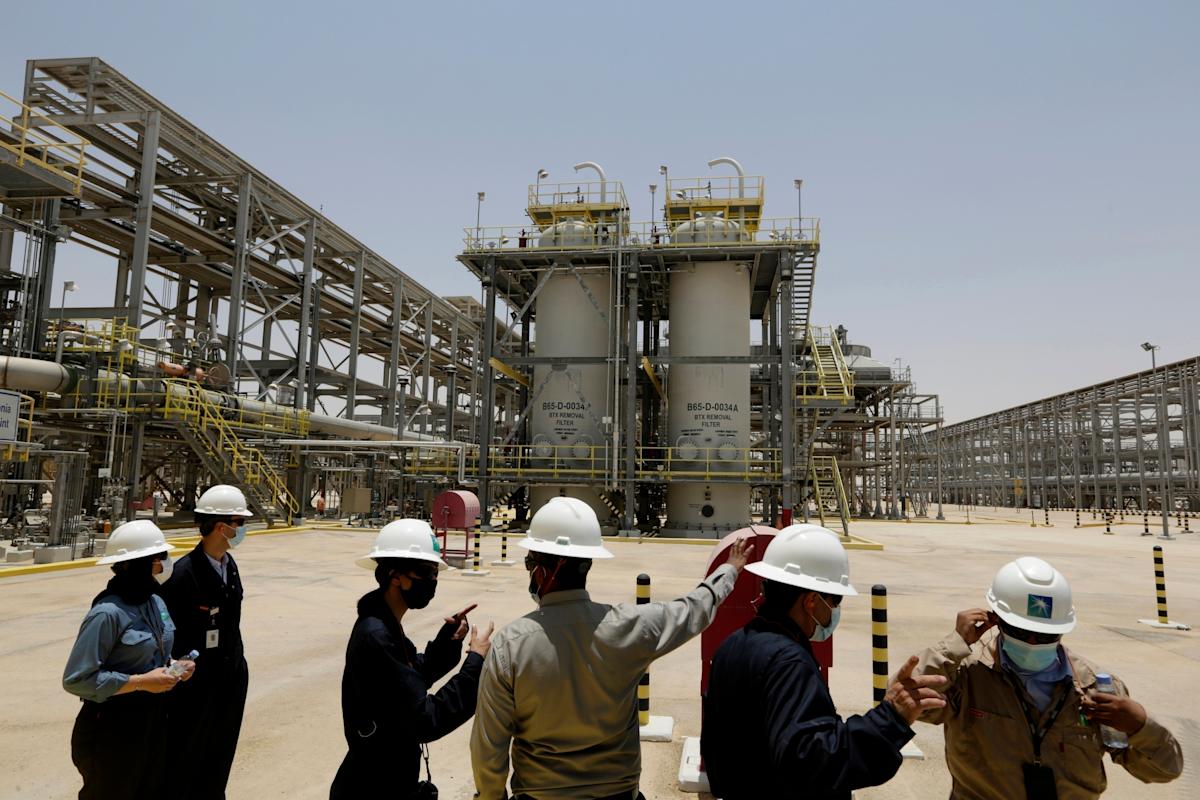
Saudi Aramco, the world’s preeminent energy producer, reported first-quarter profits of $26 billion, marking a 4.6% decline from the previous year’s performance. This dip in profitability underscores the pervasive impact of softening global crude oil prices, which are now challenging the ambitious multi-trillion-dollar development objectives spearheaded by the Kingdom of Saudi Arabia.
The Riyadh-listed oil giant, officially known as the Saudi Arabian Oil Co., disclosed revenues totaling $108.1 billion for the quarter. This figure contrasts with revenues of $107.2 billion and a more robust profit of $27.2 billion recorded during the same period last year. The marginal increase in revenue amidst a decline in profit highlights the pressure on margins within the current commodity price environment.
Macroeconomic Headwinds and Oil Price Volatility
Amin H. Nasser, Aramco’s President and CEO, acknowledged the prevailing market conditions in a recent statement, noting, “Global trade dynamics affected energy markets in the first quarter of 2025, with economic uncertainty impacting oil prices.” This sentiment is directly reflected in the trajectory of benchmark crude prices. Brent crude, a key international benchmark, recently traded above $63 a barrel, a notable retreat from highs exceeding $80 per barrel observed over the past year. Such price depreciation presents a direct challenge to the financial health of oil-exporting nations and their state-owned enterprises.
Investors closely monitor Aramco’s financial health as it serves as a critical bellwether for the broader global oil market. The company’s sheer scale and its intimate connection to Saudi Arabia’s fiscal policy make its performance an essential indicator for energy sector analysis and investment strategies.
Saudi Arabia’s Ambitious Vision and Funding Imperatives
The financial results arrive at a pivotal moment for Saudi Arabia, which is concurrently pursuing an expansive national transformation agenda. Crown Prince Mohammed bin Salman champions several mega-projects, most notably Neom, a futuristic urban development planned along the Red Sea coast, projected to cost an staggering $500 billion. Furthermore, the Kingdom is preparing to host the FIFA World Cup in 2034, an undertaking that will necessitate tens of billions of dollars in new stadiums and critical infrastructure development.
Beyond domestic ambitions, Saudi Arabia has also articulated significant international investment commitments. The Kingdom previously pledged to inject $600 billion into the U.S. economy during President Donald Trump’s term. With the prospect of President Trump having recently retaken the Oval Office and reportedly seeking to further elevate this commitment to approximately $1 trillion, the financial demands on Saudi Arabia’s treasury become even more pronounced.
The confluence of lower oil revenues and escalating spending commitments implies that Saudi Arabia may increasingly need to tap into its substantial reserve funds or resort to external borrowing to maintain the momentum of its ambitious development initiatives.
OPEC+ Dynamics and Market Supply
Adding another layer of complexity to the market landscape, the OPEC+ alliance has signaled an intent to increase crude oil production. The cartel has agreed to boost output by 411,000 barrels per day starting next month. This decision comes amidst heightened uncertainty permeating Middle Eastern markets, partly driven by U.S. tariffs. While an increase in supply could help stabilize global energy markets in the face of demand shifts, it also places additional downward pressure on prices if demand growth fails to keep pace, further challenging the revenue streams of producers like Aramco.
Aramco’s Market Standing and Investment Profile
Despite the recent profit contraction, Aramco remains a titan in the corporate world, boasting a market capitalization exceeding $1.6 trillion. This valuation places it among the elite global companies, ranking as the sixth richest firm worldwide, behind technology giants such as Microsoft, Apple, NVIDIA, Amazon, and Alphabet (Google’s parent company). This robust market value underscores its strategic importance and its role as a cornerstone for global energy investment.
A minority stake in Aramco is publicly traded on Riyadh’s Tadawul stock exchange, with the vast majority of the company remaining under the direct ownership of the Saudi Arabian government. This unique ownership structure ensures that Aramco’s financial performance directly underpins the Kingdom’s national budget, funding public expenditures and contributing significantly to the wealth of the Al Saud royal family. This direct linkage means that Aramco’s profitability is not merely a corporate metric but a geopolitical and economic barometer for Saudi Arabia’s capacity to execute its long-term vision.
Aramco’s stock, which traded above $6 a share recently, has experienced a decline from its peak of approximately $8 last year, mirroring the general trajectory of oil prices over the past twelve months. Investors are keenly observing how Aramco navigates the current market volatility and its implications for both the company’s dividend policy and Saudi Arabia’s broader economic diversification efforts.
