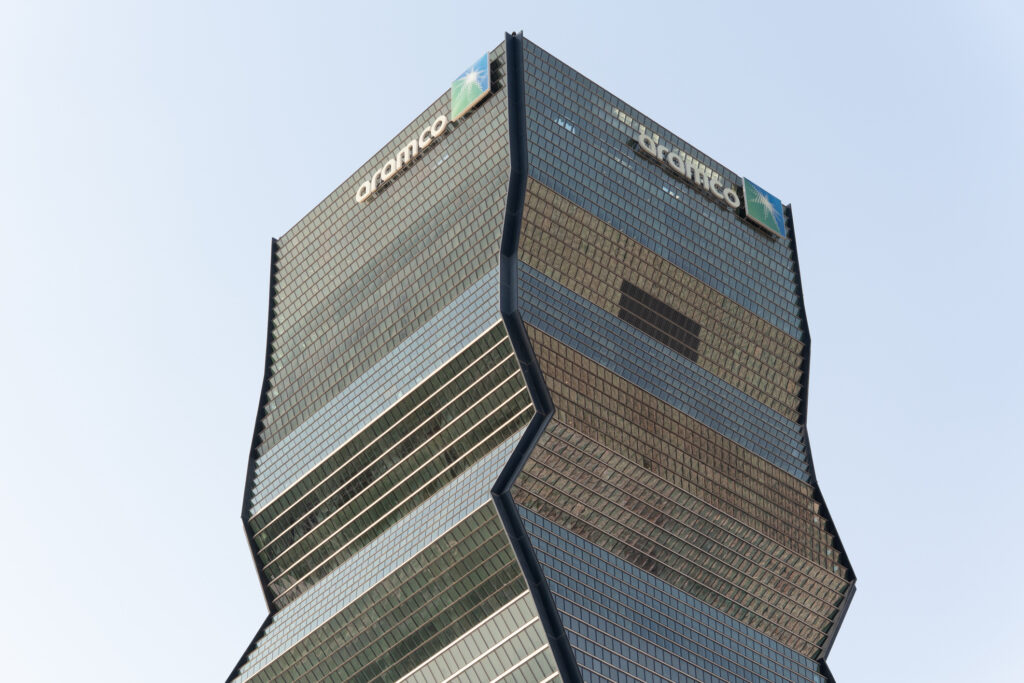
Aramco’s recent operational milestones at the Jafurah unconventional gas field and the Tanajib Gas Plant mark a pivotal moment for both the company and the global energy landscape. These developments are not merely capacity expansions; they represent a strategic reorientation, cementing natural gas as a cornerstone of Saudi Arabia’s long-term energy strategy and Aramco’s growth trajectory. For investors, this dual inauguration signals a robust commitment to diversifying revenue streams and enhancing energy security in an increasingly volatile global market, positioning the company to capitalize on burgeoning demand for cleaner-burning fuels.
A Strategic Pivot Amidst Volatile Crude Markets
The commencement of unconventional gas production at Jafurah in December 2025 and the commissioning of the Tanajib Gas Plant underscore Aramco’s ambitious drive to significantly boost Saudi Arabia’s gas production capacity. Jafurah, spanning approximately 17,000 square kilometers, is touted as the Middle East’s largest liquids-rich unconventional gas development, holding an estimated 229 Tscf of raw gas and 75 Bbbl of condensate and liquids. By 2030, this colossal project is expected to deliver up to 2 Bscfd of sales gas, 420 MMscfd of ethane, and roughly 630,000 bpd of high-value liquids. This expansion targets an 80% increase in sales gas production capacity by 2030 compared to 2021 levels, with total gas and associated liquids projected to reach approximately 6 MMboed under the plan.
This aggressive push into gas comes at a crucial time for the energy markets. As of today, Brent crude trades at $93.52, reflecting a modest daily gain of 0.3%, while WTI sits at $90.25, up 0.65%. This relative stability, however, follows a period of significant volatility; Brent crude saw a nearly 20% decline over the last two weeks, plummeting from $118.35 on March 31st to $94.86 by April 20th. Such sharp swings in crude prices highlight the strategic imperative for integrated energy giants like Aramco to diversify. Investing heavily in natural gas offers a hedge against crude price fluctuations, provides a more stable revenue stream, and aligns with global energy transition trends favoring lower-carbon fuels for power generation and industrial use.
Jafurah and Tanajib: Bolstering Capacity and Cash Flow
The synchronized start of Jafurah and Tanajib in December 2025 is a testament to Aramco’s integrated approach. While Jafurah unlocks vast unconventional resources, the Tanajib Gas Plant, expected to reach a raw gas processing capacity of 2.6 Bscfd in 2026, plays a critical role in processing associated gas from the offshore Marjan and Zuluf fields. This plant’s operation coincided with the start-up of the Marjan crude oil increment project, demonstrating a synergistic strategy to maximize value from both oil and gas assets. This integrated framework not only expands Aramco’s processing capabilities but also directly supports the Kingdom’s broader objectives: diversifying its energy mix, displacing liquid fuels in domestic power generation, and enhancing overall energy security.
From a financial perspective, Aramco estimates that these incremental gas volumes could generate between $12 billion and $15 billion in additional operating cash flow annually by 2030, subject to prevailing market conditions. This substantial increase in cash flow underscores the economic rationale behind the gas expansion. For investors, this translates into potentially enhanced shareholder returns and greater financial resilience for Aramco, especially as the global energy landscape continues to evolve towards lower-emission sources. The focus on high-value liquids from Jafurah further sweetens the deal, offering diversified product streams beyond just sales gas.
Investor Sentiment and Forward-Looking Analysis
The strategic shifts at Aramco resonate deeply with the questions currently occupying investors’ minds. Our proprietary intent data reveals that many are grappling with fundamental uncertainties, asking questions like “what do you predict the price of oil per barrel will be by end of 2026?” and “is WTI going up or down?” Aramco’s aggressive gas strategy directly addresses these concerns by offering a growth vector that is somewhat decoupled from the immediate volatility of crude benchmarks. For investors seeking long-term value, Aramco’s gas pivot offers exposure to a sector with robust demand fundamentals driven by industrial growth, power generation, and petrochemical feedstock needs, potentially providing a more predictable investment thesis than pure crude plays.
This diversification positions Aramco as a more resilient and adaptable energy company. While oil remains critical, the move into gas provides a strategic hedge against potential peak oil demand scenarios and strengthens Saudi Arabia’s role as a comprehensive energy supplier. Investors are increasingly scrutinizing companies’ long-term sustainability and their ability to navigate energy transitions. Aramco’s gas strategy, by displacing liquid fuels domestically and expanding export potential, aligns with these broader investment criteria, making it an attractive proposition for those looking beyond the daily crude price swings.
Key Catalysts on the Horizon: Shaping Near-Term Dynamics
Looking ahead, several critical events could shape the near-term energy landscape and influence investor decisions surrounding integrated players like Aramco. The upcoming OPEC+ JMMC Meeting on April 21st is a significant date, as any decisions on production quotas will directly impact global crude supply and prices, indirectly affecting the economic context for Aramco’s gas ventures. Following this, the EIA Weekly Petroleum Status Reports on April 22nd and April 29th will provide crucial insights into U.S. crude and product inventories, offering a snapshot of demand and supply balances.
Further clarity on market activity will come from the Baker Hughes Rig Count reports on April 24th and May 1st, which signal drilling activity and future production trends. Perhaps most relevant for long-term strategic analysis, the EIA Short-Term Energy Outlook on May 2nd will offer updated forecasts for global oil, gas, and product markets. These forward-looking data points, combined with Aramco’s substantial investment in gas, will help investors refine their outlook on the company’s ability to achieve its ambitious 2030 targets and navigate the evolving dynamics between crude and natural gas markets. Aramco’s proactive gas expansion could be seen as a strategic pre-emption against potential future headwinds in the oil market.