Decoding Apple’s Software Evolution: Signals for Global Energy Demand
In the dynamic realm of oil and gas investing, astute observers understand that seemingly disparate sectors often hold critical clues for future energy demand. While Apple’s latest software unveilings might appear far removed from crude oil barrels or natural gas futures, a closer examination reveals subtle yet significant implications for global electricity consumption and, by extension, the primary energy sources that fuel it. As a financial journalist specializing in energy markets, our lens is always on the underlying drivers of demand, and tech giants like Apple, with their vast user bases and innovative roadmaps, are increasingly central to this analysis.
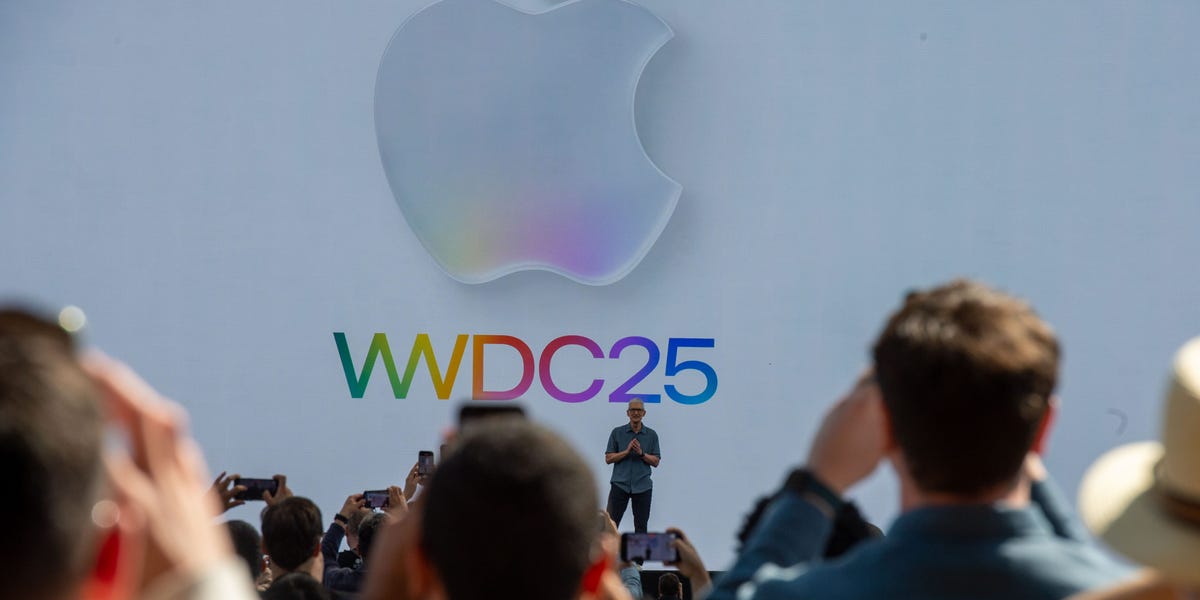
The recent Worldwide Developers Conference (WWDC) keynote, led by CEO Tim Cook, delivered what many analysts anticipated: a focus on refinement over revolutionary hardware. This “muted” approach, characterized by an absence of a groundbreaking new physical product, itself carries energy implications. Historically, new device launches stimulate industrial energy demand through manufacturing, logistics, and material extraction. A shift towards software-centric updates suggests a potential tempering of this specific energy vector, at least in the immediate term. However, the true energy story lies in the widespread rollout of the company’s most significant software redesign in over a decade.
“Liquid Glass”: A New Aesthetic, A New Energy Profile?
The centerpiece of Apple’s announcement was the expansive “Liquid Glass” software redesign, slated for release this fall across its ecosystem, including Mac, iPad, Apple Watch, and Apple TV. This aesthetic overhaul, bringing a translucent, glass-like quality to icons, switches, and sliders, represents a profound shift in user interface design. It echoes the scale of the polarizing iOS 7 redesign of 2013, which moved from a “skeuomorphic” to a “flatter” visual language. The critical question for energy investors is: how will this visually intensive new experience impact device power consumption and, more broadly, data center load?
Enhanced visual fidelity often translates to increased processing demands on devices. While modern chip architectures are highly efficient, a cumulative effect across billions of devices globally, running more sophisticated graphics, could lead to a marginal uptick in individual device energy draw. This might seem minor, but aggregate consumption from powering and charging countless iPhones, iPads, and MacBooks contributes significantly to residential and commercial electricity grids. Furthermore, the “Liquid Glass” design is reportedly inspired by the Vision Pro, hinting at a future where even more computationally intensive augmented reality (AR) experiences become mainstream. This long-term trend points towards sustained or even increased energy requirements for personal computing hardware.
Data Center Expansion: The Unseen Energy Sink of Software Innovation
Perhaps the most substantial energy implication of Apple’s software advancements, and indeed the broader tech industry, lies in the exponential growth of data centers. Every new software feature, every enhanced cloud service, and every AI capability relies heavily on vast server farms consuming colossal amounts of electricity. The “Liquid Glass” experience, while rendered client-side, is intrinsically linked to cloud services for updates, synchronization, and potentially future AI-driven customizations. This necessitates continuous investment in data center infrastructure, which is a major driver of electricity demand globally.
Consider the broader context: the energy intensity of data centers is projected to grow significantly. Industry estimates suggest data centers could account for upwards of 4-8% of global electricity demand by the end of the decade, up from roughly 1% a few years ago, driven largely by the proliferation of cloud computing and AI. Apple, as a leading provider of cloud services (iCloud, Apple Music, App Store), is a key contributor to this trend. Therefore, any move that encourages deeper engagement with its software ecosystem indirectly fuels this insatiable demand for processing power and, consequently, electricity.
AI Delays and Market Reactions: A Timing Adjustment for Energy Demand?
The keynote also saw a notable moment that directly impacted investor sentiment: Apple’s stock briefly tanked over 2.5% within six minutes of the presentation after software chief Craig Federighi indicated that efforts to integrate more personal AI features into Siri would require “more time.” This immediate market reaction underscores the immense investor focus on AI capabilities and their potential. For energy investors, this delay is particularly insightful.
The widespread integration of advanced AI, particularly generative AI, is poised to be a monumental driver of data center energy consumption. Training and running large language models (LLMs) are incredibly energy-intensive processes. A delay in Apple’s AI rollout, while perhaps disappointing to some tech investors, could be interpreted as a slight deferral in a certain segment of future AI-driven electricity demand. It doesn’t negate the eventual demand but rather adjusts its timeline. Energy companies and utilities planning for future load growth must factor in these shifts in AI deployment schedules, understanding that the underlying trend towards greater AI processing remains robust, even if its acceleration fluctuates.
Investor Takeaway: Long-Term Signals from Cupertino
For investors in the oil and gas sector, particularly those with exposure to natural gas for power generation, or utilities operating vast electricity grids, Apple’s strategic choices offer critical long-term signals. The shift towards sophisticated software, even when hardware releases are “muted,” implies an increasing reliance on a robust and ever-expanding digital infrastructure. This infrastructure is a voracious consumer of electricity, indirectly supporting demand for primary energy sources, including natural gas and, increasingly, renewables.
Monitoring the evolution of tech giants like Apple provides a forward-looking indicator for energy demand. A software-first strategy, driving deeper user engagement and requiring extensive cloud support, ensures that the digital economy continues to be a significant, and growing, energy consumer. While the immediate impact on crude oil prices might be negligible, the sustained and escalating demand for electricity from data centers represents a foundational trend that oil and gas investors, especially those focused on power generation and utility infrastructure, simply cannot afford to overlook. The future of energy demand is being shaped not just in oil fields and gas terminals, but also in the design studios and server farms of Silicon Valley.


