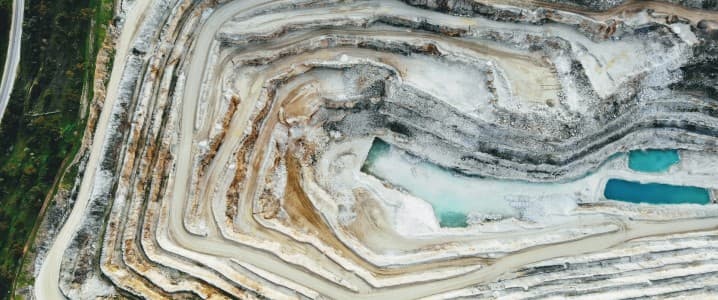
Angola’s state-owned oil giant, Sonangol, is charting an ambitious new course, strategically pivoting towards critical minerals to capitalize on the burgeoning demands of the global energy transition. This move represents a significant evolution for one of Africa’s top crude producers, signaling a proactive effort to diversify revenue streams and secure a future beyond the traditional oil and gas landscape. While simultaneously working to reinvigorate its core oil production, Sonangol’s foray into minerals like lithium, uranium, and quartz positions the company at the forefront of a dual-pronged strategy designed to navigate both immediate market dynamics and long-term global energy shifts. For investors, this diversification offers a compelling narrative of resilience and forward-thinking adaptation in a rapidly changing energy ecosystem.
Sonangol’s Strategic Mineral Bet: A Future-Proofing Initiative
Sonangol’s chief executive, Sebastiao Gaspar Martins, has articulated a clear vision for the company: establishing a substantial footprint in critical mineral development within Angola. The company has already secured seven concessions for the exploration of key elements such as lithium, uranium, and quartz – minerals indispensable for battery technology, nuclear energy, and various high-tech applications critical to the energy transition. This strategic pivot comes on the heels of Sonangol reporting a slightly lower net profit for 2025 compared to the previous year, underscoring the imperative for new growth vectors beyond conventional hydrocarbon exploration and production. By acquiring stakes and actively participating in the development of these minerals, Sonangol aims to leverage Angola’s rich geological endowments and align its long-term strategy with global decarbonization trends, creating a more diversified and robust asset base for the future.
Angola itself boasts a vast array of mineral resources, from manganese and copper to gold, phosphates, and granite, as detailed by international trade bodies. This natural wealth provides a strong foundation for Sonangol’s ambitions. The government, through its Minerals and Petroleum Minister Diamantino Azevedo, has actively called for an acceleration of permitting for new mining projects, signaling a concerted national effort to attract greater investment into this sector. A tangible example of this national push is the Tetelo copper mine, which commenced production in October 2025. This project, a $305 million investment, is expected to yield approximately 25,000 metric tons of copper concentrate annually in its initial phase, demonstrating the country’s capability and commitment to developing its critical mineral potential. Sonangol’s direct involvement further amplifies this commitment, transforming a national strategic objective into a core corporate growth pillar.
Navigating Volatility: Current Market Realities Driving Diversification
The urgency behind Sonangol’s diversification strategy is further underscored by the prevailing dynamics in the global crude oil market. As of today, April 21st, Brent crude trades at $93.52 per barrel, reflecting a modest +0.3% gain within a narrow day range of $93.52 to $93.72. WTI crude also saw an uptick, reaching $90.25, up +0.65%, while gasoline remains at $3.12. While these daily movements appear stable, they mask significant volatility that has characterized the market recently. Our proprietary data shows Brent crude experienced a substantial drawdown over the past two weeks, shedding nearly 20% of its value, plummeting from $118.35 on March 31st to $94.86 just yesterday, April 20th. This sharp correction highlights the inherent unpredictability and geopolitical sensitivities that continue to influence oil prices, making sustained reliance on hydrocarbon revenues a precarious long-term strategy.
The broader energy landscape, including gasoline prices, reflects an environment where demand is constantly re-evaluated against supply, regulatory pressures, and the accelerating shift towards cleaner energy sources. For a state-owned enterprise like Sonangol, such market fluctuations directly impact national revenue and investment capacity. By actively pursuing critical minerals, Sonangol is effectively hedging against the long-term risks associated with peak oil demand scenarios and price instability, positioning itself for growth in sectors with projected exponential demand increases due to electrification and the green energy transition. This prudent strategic shift aims to build a more resilient financial foundation, mitigating the impact of future oil market headwinds and ensuring sustained economic contribution to Angola.
Upcoming Catalysts and the Road Ahead for Sonangol
The next few weeks present a series of critical events that will shape the global energy narrative, indirectly influencing Sonangol’s dual strategy in oil and minerals. Today, April 21st, the OPEC+ JMMC Meeting is underway, with its outcome potentially setting the tone for crude supply policies. Any decisions regarding production levels will directly impact oil prices, affecting Sonangol’s traditional revenue streams and, by extension, its capital allocation for mineral projects. Following this, the EIA Weekly Petroleum Status Reports on April 22nd and April 29th, alongside the Baker Hughes Rig Counts on April 24th and May 1st, will provide granular insights into U.S. supply, demand, and drilling activity. These reports are crucial for gauging short-term market sentiment and supply-side pressures.
Further out, the EIA Short-Term Energy Outlook on May 2nd will offer updated forecasts for global oil demand and prices, providing a vital analytical backdrop for Sonangol’s long-term planning. While these events primarily focus on hydrocarbons, their cumulative impact on the financial health and strategic direction of major oil producers like Sonangol is undeniable. A robust oil market could provide the necessary capital injection for accelerated mineral exploration and development, while prolonged weakness might compel an even faster pivot. Concurrently, the Angolan government’s commitment to expedite mineral project permitting acts as a powerful domestic catalyst, promising a more streamlined investment environment for Sonangol and potential foreign partners as they expand their critical minerals portfolio.
Investor Insights: Balancing Traditional Energy with Future Growth
Our proprietary reader intent data reveals a keen investor focus on immediate market direction, with queries ranging from “is WTI going up or down” to “what do you predict the price of oil per barrel will be by end of 2026?” This short-term perspective is natural in volatile markets. However, Sonangol’s strategic diversification into critical minerals speaks to a longer-term investment thesis that transcends daily price fluctuations. While investors are rightly concerned with the immediate outlook for oil, Sonangol’s move is a calculated response to the inexorable shift in global energy demand, aiming to capitalize on the multi-decade growth trajectory of critical minerals essential for decarbonization.
For investors considering exposure to Angola’s energy sector, Sonangol’s dual strategy presents both opportunities and considerations. On the oil side, the company aims to reinvigorate production, which has stagnated due to a lack of investment in recent years. Success here could provide stable cash flows to fund the mineral ventures. On the critical minerals front, while the long-term demand picture is robust, operational execution, regulatory clarity, and attracting necessary foreign investment will be key. The Angolan government’s proactive stance on accelerating project approvals is a positive signal for reducing investment friction. Ultimately, Sonangol’s path represents a complex but potentially rewarding balancing act: maintaining its position in traditional energy while aggressively building a new foundation in the materials that will power the next industrial revolution. This forward-looking stance makes Sonangol a compelling case study for investors tracking the evolution of national oil companies in the era of energy transition.


