

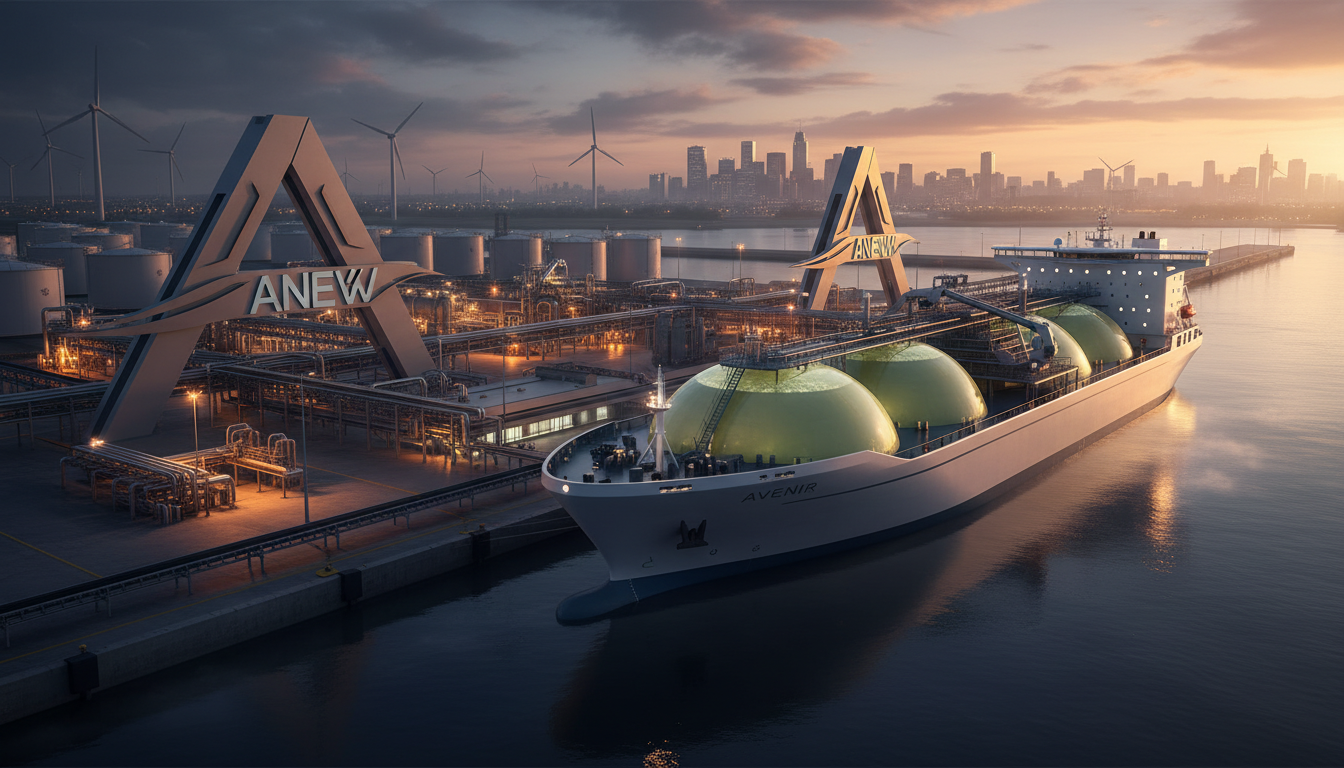
Navigating the Green Wave: Europe’s First Joint Bio LNG Bunkering Charts New Course for Maritime Decarbonization
The European maritime sector has reached a pivotal moment in its energy transition, marked by the successful completion of the continent’s inaugural joint Bio LNG bunkering operation. This landmark event, a collaboration between Anew Climate and Avenir, not only establishes a scalable, low-carbon fuel pathway but also signals a concrete shift towards meeting stringent regulatory mandates like FuelEU Maritime and RED III. For investors and industry executives, this development underscores the immediate commercial viability and strategic importance of certified biomethane as shipping navigates the evolving landscape of EU Emissions Trading System (EU ETS) and International Maritime Organization (IMO) requirements.
Establishing a Robust Cross-Border Green Fuel Network
The pioneering operation unfolded at the Port of Klaipėda’s LNG terminal in Lithuania, where certified waste-based Bio LNG was successfully delivered. This fuel is now actively supporting the decarbonization efforts of passenger ferries operating across the Baltic Sea. Anew Climate, a leading provider of climate solutions, supplied the certified Bio LNG to an Avenir-operated vessel, which then transported the sustainable fuel to Sweden. There, it will be utilized by vessels belonging to Destination Gotland, a key regional ferry operator.
This seamless transaction exemplifies how advanced biomethane can be integrated into existing LNG infrastructure, efficiently bridging the gap between fuel production and consumption across diverse European markets. The underlying infrastructure proves resilient, avoiding the need for costly new systems. Avenir’s dedicated fleet, including the Avenir Ascension, plays a critical role in this network. These specialized LNG bunker and supply vessels execute over 200 operations annually, ensuring a consistent supply of both conventional LNG and Bio LNG to a broad spectrum of marine and industrial clients, particularly within the bustling Baltic region.
For Anew Climate, this operation represents a significant expansion of its Bio LNG bunkering initiatives into Europe, building upon prior successful deployments in North America. The move reflects a broader strategic imperative within the industry to construct robust global supply chains capable of underpinning maritime decarbonization at a substantial scale, addressing the increasing demand for sustainable shipping solutions.
A Practical Pathway to Regulatory Compliance and Reduced Emissions
The Bio LNG deployed in this operation, sourced from Anew’s extensive biomethane portfolio, is engineered to deliver a remarkably low, or even negative, lifecycle carbon intensity. Crucially, it fully adheres to pivotal European regulatory frameworks, including FuelEU Maritime and RED III. This compliance offers shipowners a significant advantage, enabling them to dramatically reduce their carbon footprint without requiring any modifications to their existing vessels or bunkering systems. This “drop-in” compatibility offers a lower-risk investment path for fleet operators.
The compatibility of Bio LNG with current infrastructure and vessels is becoming increasingly vital as maritime operators face mounting regulatory pressures. The expanded scope of the EU ETS now includes shipping emissions, placing a direct financial burden on operators for their carbon output. Furthermore, the International Maritime Organization (IMO) continues to develop and tighten its global emissions frameworks, making the adoption of alternative marine fuels like Bio LNG a strategic imperative for long-term operational viability.
John Cosmo Dwelle, Managing Director for Anew Climate Europe, emphasized that decarbonizing maritime transport is an immediate reality, not a future goal. He stated that the synergy between Anew’s growing renewable gas network and Avenir’s established maritime infrastructure allows them to provide resilient, certified Bio LNG supply chains that are both pragmatic and compliant with regulations. Dwelle expressed pride in launching this initial collaboration with Avenir as the company broadens its global Bio LNG offerings, underscoring the shift from conceptual planning to active implementation in sustainable shipping.
Accelerated Commercial Momentum Meets Policy Imperatives
The strategic alliance between fuel suppliers, logistics providers, and vessel operators highlights a rapidly accelerating timeline for maritime decarbonization. Bio LNG is quickly emerging as a highly effective, near-term solution, empowering operators to achieve ambitious emissions targets while seamlessly maintaining their current operational models. This commercial momentum, driven by both environmental responsibility and financial incentives, positions Bio LNG as a cornerstone of the maritime energy transition.
Jonathan Quinn, Managing Director at Avenir, underscored the critical role Bio LNG plays in immediately reducing shipping emissions. He noted that this transaction with Anew strengthens Avenir’s capacity to deliver dependable and traceable Bio LNG solutions, thereby directly assisting their customers in their emissions reduction efforts and broader decarbonization journeys. This collaborative approach ensures that the supply chain is robust enough to meet rising demand.
Destination Gotland, a prominent Swedish ferry operator, exemplifies this strategic adoption. The company is actively increasing its consumption of Bio LNG as a core component of its compliance strategy for upcoming regulations. Henry Hammarström, senior energy and climate strategist and head of sales at Gotland Carbon Solutions, expressed satisfaction with the Bio LNG delivery to their vessels facilitated by Anew Climate and Avenir. He highlighted Destination Gotland’s planned increase in Bio LNG usage for 2026 to support FuelEU Maritime compliance, specifically by pooling greenhouse gas criteria for vessels requiring such support, demonstrating a proactive approach to regulatory demands.
Key Takeaways for Energy Investors and Maritime Executives
For discerning shipping executives and energy investors, this pioneering Bio LNG bunkering operation illuminates a critical industry shift: from abstract future planning to immediate, tangible implementation. The necessary infrastructure, rigorous certification processes, and robust supply chains are now fully aligned to facilitate substantial emissions reductions utilizing existing asset bases. This offers a compelling case for investment in the sustainable marine fuel sector.
Bio LNG presents a lower-risk investment pathway by eliminating the need for expensive vessel retrofits, while simultaneously ensuring compliance with increasingly stringent European climate regulations. This powerful combination is demonstrably accelerating its adoption, particularly within regions where policy enforcement is advancing at the fastest pace. For capital allocators, this means reduced uncertainty and a clearer path to return on investment in green shipping solutions.
The broader strategic implication is profound: companies that proactively secure access to certified low-carbon fuels today are inherently better positioned to effectively manage future regulatory exposure and mitigate escalating operational cost pressures. As global shipping standards continue their relentless evolution towards net-zero, early movers in the Bio LNG space will command a significant competitive advantage, safeguarding long-term profitability and demonstrating leadership in the global energy transition.
