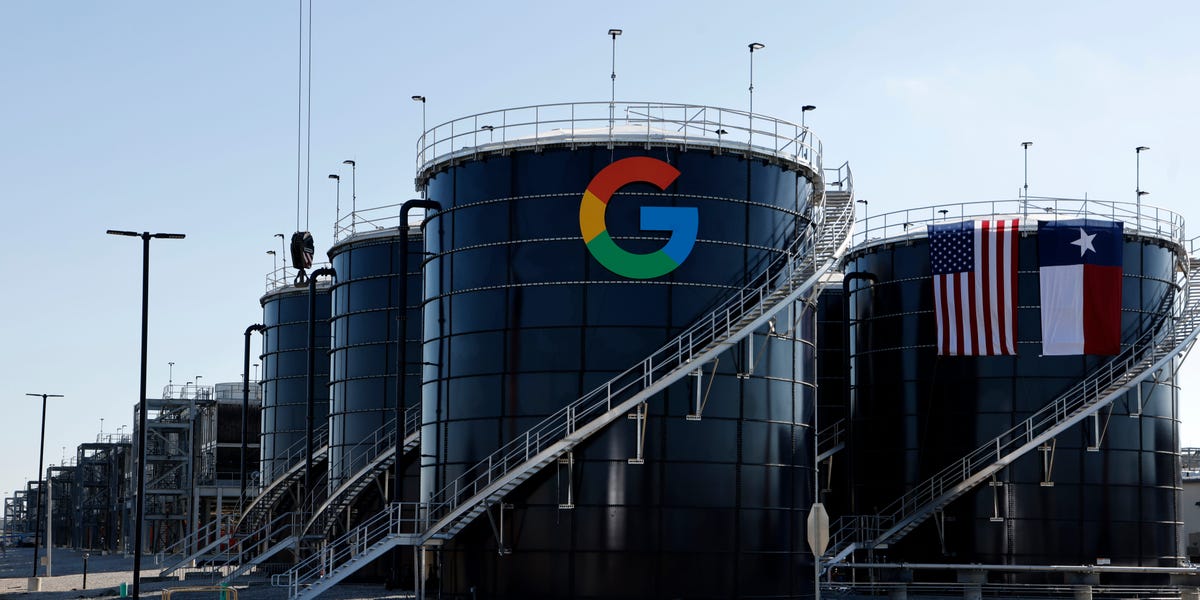
Alphabet’s recent $4.75 billion acquisition of Intersect, an energy and data center infrastructure developer, marks a significant inflection point for the global energy investment landscape. This isn’t merely a tech giant expanding its footprint; it’s a profound strategic move reflecting the escalating energy demands of artificial intelligence and the digital economy. For oil and gas investors, this transaction underscores a critical emerging trend: the burgeoning need for reliable, massive-scale power generation, which will inevitably draw upon a diversified energy mix, including hydrocarbons, for the foreseeable future. The implications ripple through upstream, midstream, and power generation sectors, signaling new opportunities and challenges as tech behemoths compete fiercely for power resources.
The AI Power Imperative and Deepening Grid Strain
Alphabet’s move to secure Intersect’s portfolio of gigawatts of energy and data center projects, including a co-located site in Haskell County, Texas, highlights a growing imperative for tech companies: direct control over energy supply. The $4.75 billion cash outlay demonstrates the premium placed on this integration. AI workloads are voracious energy consumers; data centers currently account for approximately 6% of US electricity, a figure Goldman Sachs projects could surge to 11% by 2030. This rapid expansion is already tightening power markets in key regions, including Texas, the Southeast, and the Mid-Atlantic, prompting warnings from grid regulators like the North American Electric Reliability Corporation about heightened blackout risks during peak demand periods. The strategic rationale for Alphabet is clear: accelerate project deployment and ensure a resilient power supply, effectively internalizing a critical component of their operational success. For energy investors, this signals a durable, accelerating demand vector for power generation assets, from natural gas-fired plants to large-scale renewables, and the transmission infrastructure required to deliver it.
Crude Market Dynamics Amid Shifting Energy Demand
While the AI revolution primarily impacts electricity demand, its ripple effects are felt across the entire energy complex, influencing investor sentiment and pricing in traditional commodity markets. As of today, Brent crude trades at $90.06, reflecting a 0.41% decline, having navigated a daily range between $93.87 and $95.69. Similarly, WTI crude sits at $86.5, a 1.05% decline, with its daily range spanning $85.5 to $87.47. This snapshot follows a notable trend over the past two weeks, where Brent crude softened from $118.35 on March 31st to $94.86 yesterday, representing a nearly 20% correction. Despite these recent movements, the broader context of increasing industrial electricity demand, exemplified by Alphabet’s massive investment, introduces a fascinating counter-narrative to purely macroeconomic or geopolitical influences on crude prices. While gasoline prices have shown relative stability at $3.03, the underlying competition for energy resources from the tech sector could indirectly support natural gas prices, which, in turn, can influence the demand for crude oil in certain industrial applications or as a marginal fuel for power generation in some regions. Investors must now weigh traditional supply-demand factors against this powerful, new source of industrial energy consumption.
Navigating Investor Sentiment: What the Market is Asking
Our proprietary intent data reveals that investors are grappling with significant uncertainties in the current energy market, directly impacting their strategic positioning. A leading question emerging from our AI assistant this week is a direct query on WTI’s trajectory: “is WTI going up or down?” This reflects immediate market volatility and the challenge of directional calls. Beyond short-term movements, there’s a strong focus on the medium-term outlook, with investors frequently asking, “what do you predict the price of oil per barrel will be by end of 2026?” These questions highlight a search for clarity amidst a confluence of factors: geopolitical tensions, OPEC+ policy, global economic health, and now, the accelerating, large-scale industrial demand from the AI sector. Alphabet’s $4.75 billion commitment to energy infrastructure directly feeds into this long-term view, suggesting a fundamental shift in demand dynamics for power generation fuels, which often includes natural gas. Investors are rightly questioning how these new, significant demand centers will recalibrate traditional supply-demand models for energy commodities, potentially providing a new floor for prices or, at minimum, creating sustained demand for gas in power generation.
Upcoming Events and Forward Outlook for Energy Markets
The coming weeks are packed with pivotal events that will further shape the energy market outlook, providing crucial data points for investors assessing the implications of trends like Alphabet’s Intersect acquisition. Tomorrow, April 21st, 2026, the OPEC+ Joint Ministerial Monitoring Committee (JMMC) Meeting looms large, with potential announcements on production policy that could significantly impact crude prices. Following this, the EIA Weekly Petroleum Status Reports on April 22nd and April 29th will offer critical insights into US crude oil, gasoline, and distillate inventory levels, providing a real-time pulse check on domestic supply and demand. The Baker Hughes Rig Count, scheduled for April 24th and May 1st, will offer a vital indicator of upstream activity and future production trends. Perhaps most significant for the broader strategic outlook will be the EIA Short-Term Energy Outlook on May 2nd, which will provide updated forecasts for supply, demand, and prices across various energy commodities, likely incorporating early assessments of burgeoning industrial electricity needs. These events, taken together, will provide the context within which investors can evaluate opportunities in energy infrastructure, power generation (including natural gas assets), and the upstream sector, as the tech industry’s energy appetite continues to expand.
Investment Implications: Beyond the Barrel
Alphabet’s bold move underscores a crucial reality for oil and gas investors: the energy transition is not a simple shift away from hydrocarbons, but rather a complex evolution of energy demand and supply. While AI data centers will increasingly rely on renewables, the sheer scale and reliability requirements mean that natural gas, with its flexibility and lower emissions profile compared to coal, will remain a cornerstone of power generation for decades. This acquisition highlights significant investment opportunities in natural gas exploration and production, midstream infrastructure (pipelines, storage), and gas-fired power plant development. Furthermore, the intensified competition for power sites, as evidenced by other tech giants’ challenges in securing large-scale projects, signals a premium on integrated energy solutions and developers with expertise in both power generation and data center construction. Investors should look for companies with strong positions in grid modernization, energy storage, and flexible power generation assets that can adapt to the dynamic demands of the digital economy. The energy market is being reshaped by digital innovation, presenting complex but compelling investment avenues for those with a keen eye on the intersection of technology and traditional energy.


