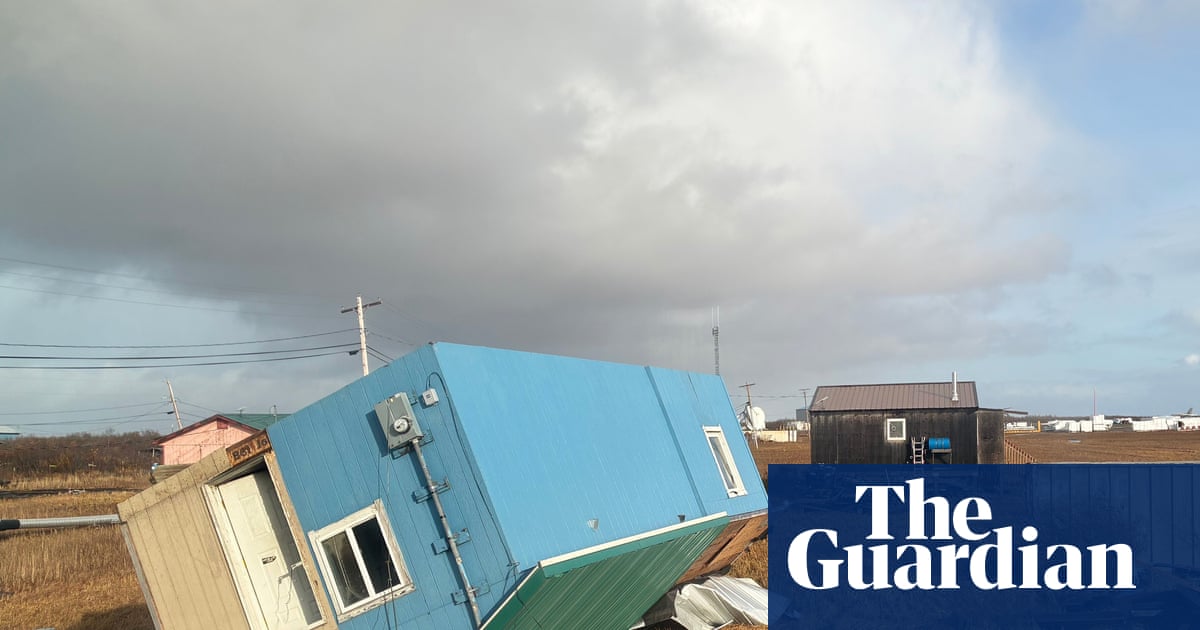
The recent typhoon remnants that battered Alaska’s Yukon-Kuskokwim Delta have left a trail of devastation, displacing over 1,500 people and decimating remote communities like Kipnuk and Kwigillingok. Homes have floated away, vital infrastructure is compromised, and the human toll is profound, with one confirmed death and two individuals still missing. While the immediate focus remains on humanitarian aid and finding shelter for hundreds in facilities like the National Guard armory in Bethel, investors in the oil and gas sector are evaluating what, if any, implications such extreme weather events in Alaska might hold for their portfolios. This analysis dives into the market’s current response, investor sentiment, and forward-looking risks, utilizing proprietary market data and reader insights to cut through the noise.
Localized Catastrophe vs. Global Market Dynamics
The images emerging from Kipnuk, where emergency management officials describe the situation as “catastrophic,” paint a stark picture. Residents like Brea Paul recount seeing approximately 20 homes drift away in the moonlight, a truly heartbreaking scene for communities reachable only by water or air this time of year. Yet, despite the severity of this localized event, the broader oil market has shown no direct price reaction. As of today, Brent Crude trades at $90.38, reflecting a significant 9.07% decline in the last 24 hours, with a day range between $86.08 and $98.97. Similarly, WTI Crude stands at $82.59, down 9.41% within a day range of $78.97 to $90.34. Gasoline prices are also under pressure, currently at $2.93, a 5.18% drop. This substantial downturn, part of a wider trend that has seen Brent fall from $112.78 just weeks ago, indicates that macro-economic headwinds, global supply-demand imbalances, and geopolitical tensions are the predominant forces at play. The affected villages, while part of Alaska, are geographically distant from major oil production hubs and transportation routes, mitigating any immediate supply disruption concerns for the market.
Investor Sentiment: Beyond the Immediate Headlines
Our proprietary reader intent data reveals that investors are primarily focused on the larger picture of global energy supply and demand, rather than localized weather phenomena in non-producing regions. Common inquiries this week include “What do you predict the price of oil per barrel will be by end of 2026?” and “What are OPEC+ current production quotas?”. These questions underscore a strategic, long-term outlook centered on fundamental market drivers and policy decisions. While Alaska is a critical region for U.S. domestic energy supply and holds significant future potential, particularly in the North Slope, the communities impacted by Typhoon Halong’s remnants are not on the immediate radar for their contribution to existing production or export capabilities. Investors understand that while the humanitarian crisis is dire, its direct impact on the global supply-demand balance, and thus on crude futures or the valuations of major energy companies operating in Alaska, is currently negligible. Their attention remains fixed on global production strategies and economic indicators that truly move the needle.
Upcoming Events to Watch: The Real Market Movers
Looking ahead, the energy market’s calendar is packed with events that will undoubtedly exert far greater influence on prices and investor strategies than the Alaskan typhoon aftermath. Our proprietary event pipeline highlights several critical dates in the coming fortnight. Investors should mark their calendars for the OPEC+ JMMC Meeting on Sunday, April 19th, swiftly followed by the pivotal OPEC+ Ministerial Meeting on Monday, April 20th. These gatherings will provide crucial clarity on future production quotas and overall supply policy, directly addressing investor concerns about global crude availability. Domestically, the API Weekly Crude Inventory report on Tuesday, April 21st, and the EIA Weekly Petroleum Status Report on Wednesday, April 22nd, will offer fresh insights into U.S. supply, demand, and inventory levels. Further guidance on drilling activity will come from the Baker Hughes Rig Count on Friday, April 24th. These scheduled economic and policy announcements are the real catalysts for market movement, shaping investment decisions for the near term and beyond, and they underscore why the localized Alaskan event, while tragic, is not a primary market driver.
Long-Term Risk and Investment Outlook
While the immediate market impact of the Alaskan typhoon is minimal, this event serves as a stark reminder of the increasing frequency and intensity of extreme weather phenomena globally. For investors, this translates into a heightened awareness of climate-related risks, especially for energy infrastructure in remote, environmentally sensitive, or coastal regions. Though the affected communities are not oil and gas production centers, the incident does raise questions about the long-term resilience and operational continuity of future Alaskan energy projects, particularly those in the planning stages or located in challenging environments. Companies operating in the Arctic are already accustomed to extreme conditions, but a perceived increase in the severity of storms could lead to higher insurance costs, more stringent environmental regulations, and increased capital expenditures for robust infrastructure. For now, however, the investment thesis for Alaskan oil and gas remains driven by its vast resource potential, geopolitical considerations, and the economics of specific projects, rather than the localized devastation witnessed in Kipnuk and Kwigillingok. Investors should continue to prioritize global macroeconomic trends and the outcomes of upcoming OPEC+ decisions when positioning their portfolios.