The Strategic Imperative of Methane Monitoring in a Volatile Energy Market
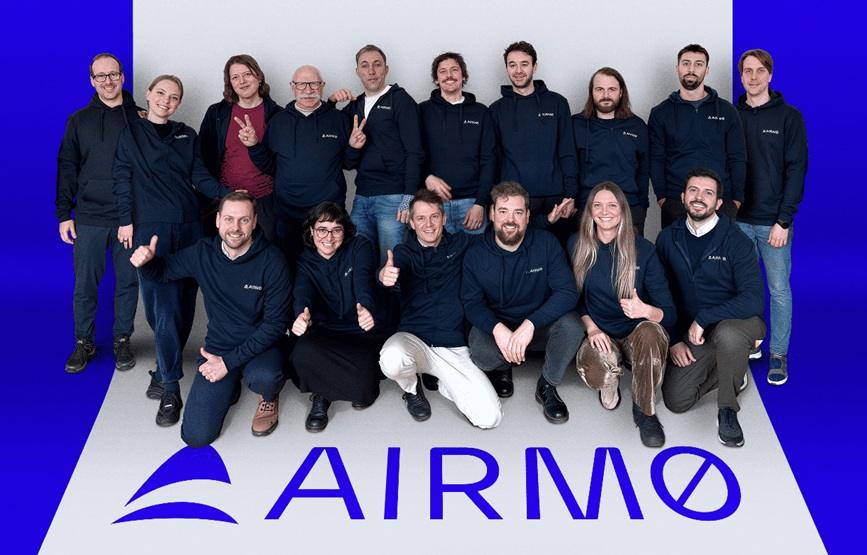
The global energy sector, particularly oil and gas, is navigating a complex landscape defined by shifting geopolitical dynamics, evolving demand patterns, and an undeniable push towards greater environmental responsibility. In this environment, solutions that promise both operational efficiency and enhanced sustainability are not just desirable, but increasingly essential for long-term investor value. The recent seed funding round for AIRMO, a space tech startup focused on high-precision greenhouse gas monitoring, underscores this convergence. Raising €5 million, the company is poised to launch its first satellite mission by 2027, promising a game-changer in methane emission detection. For investors, this isn’t merely a tech story; it’s a critical development in how energy companies manage risk, optimize operations, and secure their social license to operate in the coming decades.
Methane Mitigation: A Clear Financial and Environmental Win
Methane, a greenhouse gas with a warming potential 80 times greater than CO2 over a 20-year period, presents a dual challenge for the oil and gas industry: significant environmental impact and substantial economic loss. Estimates suggest methane leaks cost the industry as much as $100 billion annually. This staggering figure highlights not just an environmental liability, but a massive opportunity for operational savings and increased profitability for companies that can effectively identify and mitigate these emissions. AIRMO’s technology, which combines a SWIR imager with micro-LIDAR, boasts accuracy twice that of existing systems, capable of detecting a car-sized methane leak from 500 kilometers in space. This precision is already being deployed in commercial operations across Europe, Central Asia, and MENA, with notable energy players like Uniper, Total, and ESCE leveraging their airborne monitoring systems. For investors, backing companies that adopt such advanced solutions means investing in a more resilient and financially sound energy future, where resource waste is minimized, and environmental stewardship is maximized.
Market Realities and the ESG Premium in Today’s Volatility
The current energy market snapshot provides a crucial backdrop for understanding the heightened appeal of technologies like AIRMO’s. As of today, Brent crude trades at $92.76, reflecting a 0.51% dip, with WTI crude similarly down 0.48% at $89.24. This daily fluctuation is part of a broader trend; Brent has seen a notable decline of 7% over the past 14 days, moving from $101.16 on April 1st to $94.09 yesterday. Such market volatility, alongside gasoline prices currently at $3.11, down 0.64%, emphasizes the critical need for energy companies to enhance operational efficiencies and reduce avoidable losses. In this environment, the $100 billion annual cost of methane leaks becomes even more glaring. Companies that proactively invest in superior monitoring and mitigation technologies can not only reduce these direct financial losses but also build an ESG premium that may insulate them from some market pressures. Strong ESG performance, particularly in tangible metrics like methane abatement, is increasingly valued by institutional investors and can translate into lower cost of capital and improved valuations, offering a hedge against the unpredictability of commodity prices.
Upcoming Catalysts and Investor Outlook
Looking ahead, a series of scheduled energy events will continue to shape the investment landscape, further emphasizing the strategic importance of methane monitoring. The upcoming EIA Weekly Petroleum Status Reports on April 22nd, April 29th, and May 6th, alongside the Baker Hughes Rig Count on April 24th and May 1st, will provide fresh insights into supply, demand, and drilling activity. Any indications of tightening supply or increased drilling could amplify the focus on optimizing existing operations and minimizing environmental footprint. Furthermore, the EIA Short-Term Energy Outlook on May 2nd will offer broader forecasts that could influence long-term investment strategies. While AIRMO’s satellite launch is set for 2027, these near-term data releases will continually highlight the ongoing challenges and opportunities in energy production. For investors keenly watching these reports, the ability of companies to demonstrate control over their emissions profile, supported by verifiable data from advanced systems, will become an increasingly powerful differentiator. It’s a forward-looking strategy that aligns with evolving global climate policies and positions companies favorably for future regulatory landscapes.
Addressing Investor Questions: Value Beyond the Barrel Price
Our proprietary reader intent data reveals a keen focus on market direction, with questions like “is wti going up or down” and “what do you predict the price of oil per barrel will be by end of 2026?” dominating investor queries. While the daily and yearly price trajectory of crude oil remains a central concern, the investment thesis for technologies like AIRMO’s transcends mere commodity price speculation. For the astute energy investor, the focus shifts to long-term value creation and risk mitigation. Integrating advanced methane monitoring into operations offers a clear pathway to reducing the $100 billion annual loss from leaks, effectively boosting the bottom line irrespective of daily crude price swings. Moreover, it strengthens a company’s ESG credentials, which is crucial for attracting and retaining capital from a growing pool of sustainability-focused funds. The involvement of strategic investors like EQT Partners and impact investors such as Ananda Impact Ventures in AIRMO’s funding round speaks volumes. They recognize that investing in solutions that address urgent climate challenges while simultaneously improving operational economics offers a compelling return profile. This approach safeguards against future regulatory risks, enhances corporate reputation, and ultimately contributes to a more sustainable, and thus more valuable, energy enterprise over the long haul.


