The AI Disinformation Deluge: A New Geopolitical Risk for Energy Investors
The proliferation of hyperrealistic AI-generated content in the political sphere is no longer a fringe concern; it’s a mainstream reality that poses a significant, evolving threat to global stability. From fabricated videos depicting public figures in compromising situations to AI-crafted narratives designed to sway public opinion, the line between truth and fiction is rapidly blurring. For energy investors, this isn’t merely a societal issue; it’s a potent new layer of geopolitical risk that demands immediate attention. Political instability, whether domestically or internationally driven by AI disinformation, can directly impact supply chains, regulatory environments, demand forecasts, and ultimately, crude prices. Understanding and anticipating this ‘AI risk premium’ will be crucial for navigating the energy markets in the coming years.
Navigating Market Volatility Amidst AI-Induced Uncertainty
The energy market is no stranger to volatility, but the emergence of AI as a geopolitical accelerant introduces a complex, unpredictable variable. As of today, Brent crude trades at $90.38 per barrel, reflecting a notable -9.07% decline from its opening, having ranged between $86.08 and $98.97. Similarly, WTI crude is priced at $82.59, down -9.41% for the day, with its trading range spanning $78.97 to $90.34. This recent downward pressure, while potentially influenced by broader demand concerns or inventory adjustments, underscores a market susceptible to sudden shifts. Looking at the 14-day trend, Brent has tumbled from $112.78 on March 30th to its current $90.38, a steep 19.9% drop. While traditional factors often drive such movements, the underlying threat of AI-fueled disinformation campaigns could exacerbate investor uncertainty, adding an unseen risk premium to commodity prices. The potential for AI-generated political content to trigger social unrest, disrupt diplomatic relations, or even incite direct conflict could introduce sudden, unpredictable supply shocks or demand destruction, making traditional risk models less effective.
Geopolitical Flashpoints and the AI Multiplier Effect
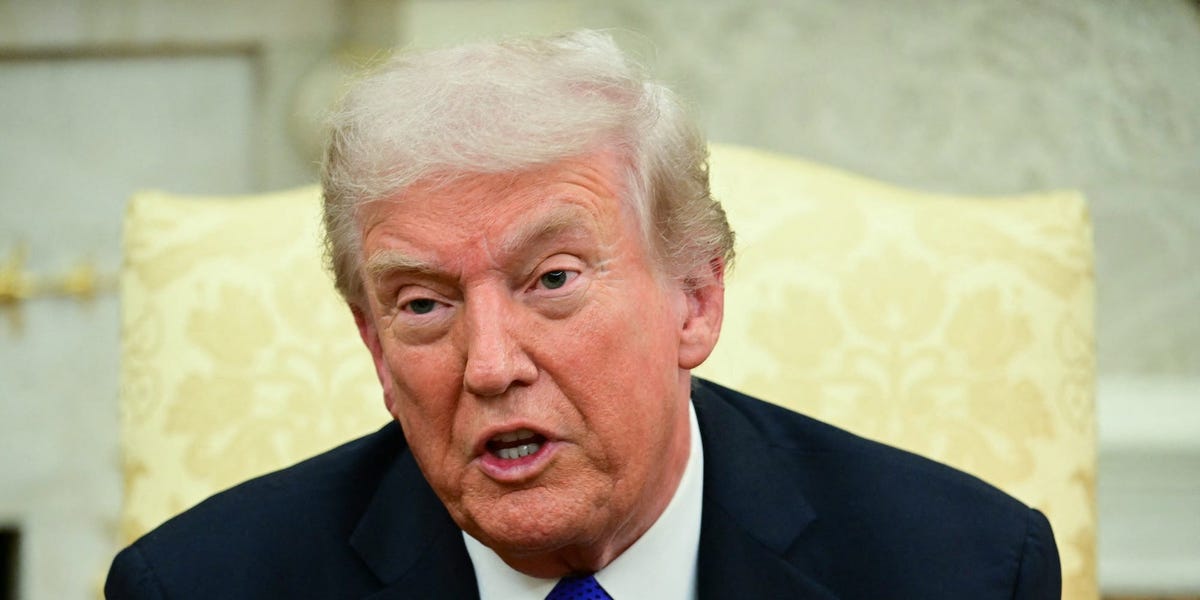
The impact of AI-generated content extends far beyond domestic political debates. Examples of prominent political figures, from former President Trump to Governor Newsom and former Governor Cuomo, leveraging AI-generated visuals and videos demonstrate the technology’s widespread adoption. While these instances might appear contained, the global implications are profound. Imagine state actors employing sophisticated AI to destabilize rival nations, manipulate public sentiment in energy-producing regions, or even fabricate events to justify military action or economic sanctions. Such scenarios could directly threaten critical energy infrastructure, disrupt vital shipping lanes, or trigger sudden shifts in oil and gas policy from major producers or consumers. Our proprietary data indicates that investors are keenly focused on understanding the fundamentals, with questions such as “What are OPEC+ current production quotas?” frequently arising. However, these quotas are set against a backdrop of global stability that AI-driven disinformation could rapidly erode. The upcoming OPEC+ Joint Ministerial Monitoring Committee (JMMC) Meeting on April 19th and the subsequent Ministerial Meeting on April 20th are pivotal events where production decisions will be made. While the agenda typically focuses on supply-demand balances, the broader geopolitical climate – increasingly susceptible to AI-induced volatility – could subtly influence the risk perceptions and strategic calculus of member nations, potentially leading to more cautious or even disruptive output decisions.
Investor Sentiment and the Quest for Verifiable Information
In an environment where reality itself can be digitally manufactured, investor confidence hinges on access to reliable, verifiable information. Our first-party intent data reveals that OilMarketCap.com readers are grappling with this uncertainty, actively seeking clarity on future market movements. Common inquiries include “How well do you think Repsol will end in April 2026” and “what do you predict the price of oil per barrel will be by end of 2026?” These questions underscore a fundamental need for predictive insights in a market increasingly influenced by non-traditional risks. The challenge posed by AI disinformation is that it can directly undermine the foundational data upon which such predictions are built, making earnings forecasts for major players like Repsol, or long-term price targets for crude, significantly more complex. Furthermore, the explicit demand from our readers, asking “What data sources does EnerGPT use? What APIs or feeds power your market data?”, highlights a growing skepticism and an intensified desire for transparent and trustworthy data sources. Investors are not just seeking answers; they are scrutinizing the very integrity of the information ecosystem. Companies in the energy sector, and the analysts covering them, must adapt by prioritizing robust data verification, investing in cybersecurity to protect against AI-driven attacks, and developing sophisticated political risk assessment frameworks that explicitly account for this new dimension of disinformation.
Adapting Investment Strategies for an AI-Altered Landscape
For savvy energy investors, recognizing and adapting to the AI disinformation threat is paramount. This isn’t a distant future problem; it’s a present-day reality that demands recalibrated risk assessments. Companies with diversified asset portfolios, strong balance sheets capable of weathering periods of heightened volatility, and robust governance structures will likely prove more resilient. Furthermore, identifying firms that are actively investing in their own cybersecurity defenses and intelligence gathering capabilities to counter AI-driven threats could offer a competitive advantage. The Baker Hughes Rig Count reports, scheduled for April 24th and May 1st, offer snapshots of upstream activity, but even these fundamental indicators must be interpreted within a potentially more volatile geopolitical context. The weekly API and EIA petroleum status reports on April 21st/28th and April 22nd/29th respectively will provide critical inventory and demand data, but these too could be swiftly overshadowed by an AI-orchestrated political event. As the digital landscape continues to evolve, the energy sector must integrate this new vector of political risk into every facet of its strategic planning and investment decisions, ensuring resilience in an increasingly unpredictable world.


