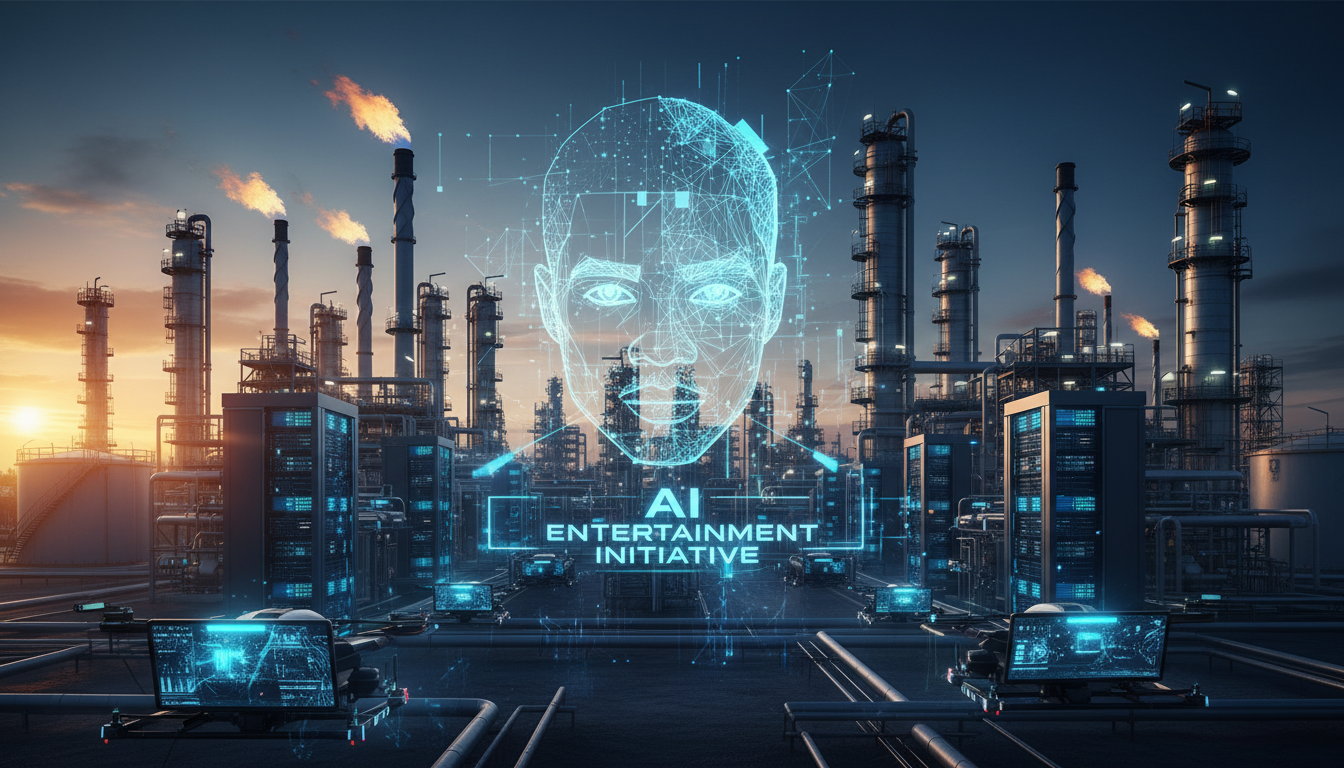
The energy landscape is constantly evolving, driven by geopolitical shifts, supply adjustments, and emerging technological advancements. While traditional demand drivers like industrial output and transportation remain central, astute oil and gas investors must increasingly look beyond conventional metrics to identify new catalysts. One such often-overlooked area is the burgeoning artificial intelligence sector, particularly its rapid expansion into the entertainment industry. The energy footprint required to power this digital transformation is substantial and growing, signaling a fresh, albeit indirect, demand vector for oil and gas markets. This analysis delves into how the rise of “AI-native” entertainment, exemplified by major content creators, is setting the stage for increased energy consumption and what this means for your portfolio.
The AI Entertainment Revolution: A New Demand Vector
The entertainment industry is on the cusp of a profound transformation, with artificial intelligence moving from a mere tool to the very foundation of content creation. This shift is dramatically illustrated by figures like Jimmy Donaldson, known globally as MrBeast, YouTube’s most subscribed creator with an astounding 479 million followers. His company, Beast Industries, is actively seeking a leader to spearhead “AI-native” productions, aiming to conceive, produce, and scale content with AI at its core, rather than simply augmenting existing processes. This isn’t an isolated experiment; fellow superstar creator Steven Bartlett has been producing fully AI-animated shows since last year, demonstrating the viability and appeal of this approach.
The implications for content generation are immense. AI-driven productions promise to solve critical challenges for creators like Donaldson, who is renowned for his high-budget, viral challenge videos but is also keen on tightening spending. The ability to use automation to create more content, faster, directly addresses efficiency concerns and the continuous demand for fresh material. This paradigm shift extends beyond individual creators; production studios across Hollywood are integrating AI into marketing, visual effects, and core production. Startups are raising significant capital, such as Beijing-based StoReel’s recent $34 million funding round, specifically to develop AI micro-dramas. Apps like TikTok’s Pine Drama and Vigloo already feature AI-generated, character-driven dramas, with these accounting for 10% of Vigloo’s library. The sheer scale of user engagement and the capital flowing into this sector underscore a burgeoning industry poised for exponential growth, each new AI-generated frame consuming computational power.
The Power Behind the Pixels: Energy Implications
This explosive growth in AI-native entertainment, from training sophisticated models to rendering AI-generated content at scale, translates directly into a massive surge in demand for computational resources. These resources are housed in data centers, which are voracious consumers of electricity. While the industry often touts commitments to renewable energy, the sheer pace and scale of AI development mean that the incremental demand will inevitably draw from a diversified energy mix, including significant contributions from natural gas and, indirectly, crude oil products used in infrastructure and logistics.
Consider the current energy market context: as of today, Brent Crude trades at $112.77 per barrel, reflecting a robust 2.11% gain on the day, with a range between $110.26 and $114.66. WTI Crude stands at $108.67, up 1.67%, traversing a daily range of $106.45 to $110.93. This strength is not just a daily fluctuation; Brent has seen a significant upward trend over the past two weeks, climbing from $95.2 on April 10th to $111.65 by April 29th, a substantial increase of $16.45 or 17.3%. Gasoline prices are also firm at $3.62 per gallon. These figures illustrate an already tight and upward-trending global energy market. The added, significant demand from the AI sector, particularly for electricity to power data centers, will only exacerbate these trends over the medium to long term, providing an additional, structural tailwind for energy prices.
Investor Focus: Navigating New Demand Drivers Amidst Existing Volatility
Investors are keenly focused on understanding crude oil’s trajectory, evident in frequent inquiries about the 2026 weekly trend for crude oil and requests for base-case Brent price forecasts for the next quarter. While the immediate concerns often revolve around supply-side dynamics, such as which OPEC+ members are over-producing this month, the emerging energy demand from AI cannot be overlooked in any comprehensive long-term forecast. This new demand vector, driven by an expanding digital economy and the energy-intensive nature of AI computation, adds a layer of complexity to traditional supply-demand analyses.
Looking ahead, several key events on the energy calendar will provide crucial data points for investors. The upcoming EIA Short-Term Energy Outlook on May 2nd and the IEA Oil Market Report on May 12th will offer critical insights into global supply and demand balances. While these reports may not yet explicitly quantify AI’s energy impact, discerning investors should look for any upward revisions in electricity demand projections or industrial consumption that could indirectly reflect this trend. Weekly releases, such as the Baker Hughes Rig Count (May 1st and May 8th), API Weekly Crude Inventory (May 5th and May 12th), and EIA Weekly Petroleum Status Report (May 6th and May 13th), will continue to inform immediate market sentiment. However, it is within the longer-term outlooks, like those from the EIA and IEA, that the foundational energy implications of AI’s exponential growth will eventually begin to manifest, shaping future price expectations and investment strategies.
Strategic Implications for Oil & Gas Portfolios
For oil and gas investors, the rise of AI-native entertainment represents more than just a cultural phenomenon; it signifies a tangible, scalable increase in global energy demand. This isn’t merely about powering servers; it’s about the entire ecosystem supporting digital infrastructure, from manufacturing components to cooling data centers and expanding grid capacity. While the direct consumption of crude oil may not be immediately obvious, the vast majority of electricity generation still relies on fossil fuels, particularly natural gas for power plants, and oil for backup generation, transportation, and industrial lubricants required by heavy machinery involved in infrastructure build-out.
Therefore, strategic positioning suggests a broader lens on energy investments. Portfolios should consider companies involved in natural gas production and distribution, given its pivotal role in electricity generation. Furthermore, investments in energy infrastructure providers, specialized equipment manufacturers, and even certain segments of the petrochemical industry that supply materials for data center construction could indirectly benefit. As AI permeates every facet of the digital economy, its insatiable hunger for energy will become an increasingly significant, and perhaps underestimated, factor in the long-term fundamentals of the global oil and gas markets.


