

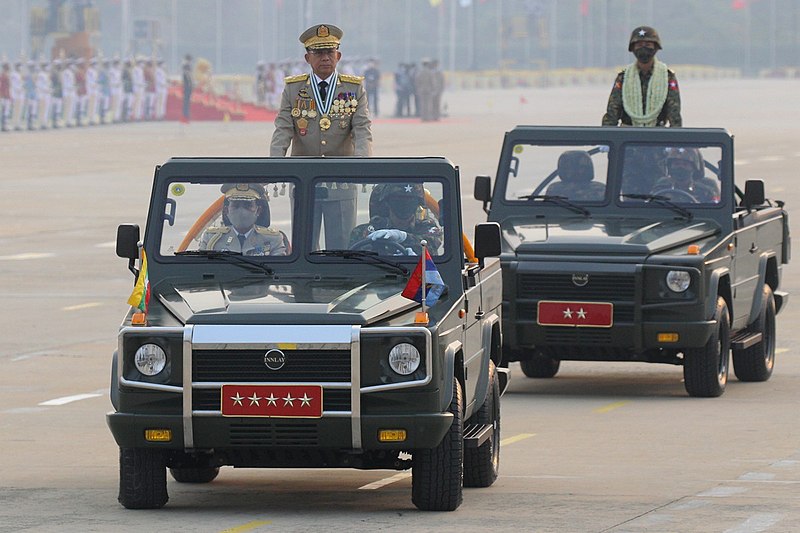
While elections are slated to begin in late December, the results in Myanmar are seemingly a foregone conclusion. The military junta, which seized power in 2021 after toppling the civilian-led government, is expected to tighten its grip on the Southeast Asian country. In the lead up to voting, authorities in Naypyidaw have employed a variety of tactics aimed at suppressing opposition to their continued rule. Measures have been enacted to restrict the flow of information in both online and offline spaces. Meanwhile, electoral reforms have also been implemented to dilute the voting power of those against the current system. Through these methods, the regime has all but ensured the upcoming elections will be neither free nor fair, securing the dictatorship’s place for the foreseeable future.
This “campaign” has magnified how artificial intelligence (AI) has enhanced the junta’s ability to stymie the resistance in Myanmar. Tools powered by AI have been used to identify, track and silence dissidents. In public spaces, facial recognition technologies upgraded with AI capabilities make political demonstrations a risky proposition for activists. Additionally, across online forums, AI solutions enable the authorities to monitor and decode private messages with relative ease. These applications underline how AI has proven to be an asset to the junta in their campaign to solidify control over the country, a takeaway which may inspire other repressive regimes. Democracy advocates must take action to prevent the misuse of AI in ways that undermine human rights in Myanmar and beyond.
Suppressing Offline Protest
The junta has argued that their decision to deploy AI-enhanced facial recognition systems across the country was motivated by a desire to crack down on crime. In reality, these solutions have allowed the regime to significantly upgrade its capacities for surveillance in public spaces. Human Rights Watch noted that this technology has been invaluable for identifying and tracking individuals in densely populated areas. Systems scan the faces of people on the street automatically, notifying law enforcement if there are any profile matches in criminal databases. They can also collect data on the movements and behaviors of people throughout a city, all without their knowledge or consent. Amassing this information at scale, the regime can target individuals deemed suspect without much hassle, compromising their privacy in the name of upholding security.
For activists based in cities, the junta’s AI-powered dragnet can be difficult to evade. Crucially, their ability to protest in the streets without fear of detection has been jeopardized. Access Now, a global non-profit focused on defending digital rights, highlighted how these technologies make public demonstrations more dangerous. Authorities can use biometric data captured by these systems to quickly locate protestors, stopping protests before they can begin. In cases where activists are able to successfully mobilize, they may find that facial recognition technologies enable the regime to stay one step ahead of their plans. Facial scans can be used to follow protestors as they disappear into crowds, raising the risk that demonstrators eventually face retaliation. As surveillance of public spaces becomes supercharged, activists must grapple with the fact that their margin for error grows increasingly slim.
Silencing Online Speech
Officials have also treated AI as a tool for undermining the opposition in the digital realm. Specifically, the technology has been used to analyze the contents of messages intercepted by authorities, flagging words or phrases that could indicate criticism of the regime. The Myanmar Internet Project, an advocacy coalition that documents developments in the country’s digital environment, drew attention to how law enforcement has leveraged AI for keyword recognition. This technology flags terms, such as “protest” or “revolution,” mentioned in communications like phone calls or text messages. These alerts can then be cited by law enforcements when building out lists of individuals suspected of defying the regime. The use of AI in this context may prompt advocates to think twice about how they express themselves online.
At this juncture, activists must contend with the fact that AI tools for deciphering their communications are growing in sophistication. Case in point, the junta has adopted solutions which can purportedly decrypt messages that use indirect or veiled language. Civil society organization Human Rights Myanmar shed light on how law enforcement has integrated these advanced AI models to perform deeper analyses on intercepted messages. Beyond identifying keywords, these solutions can allegedly decode the attitudes, emotions and opinions found within messages. Advocates looking to cover their tracks when coordinating online may be forced to update their methods, especially when considering that these technologies can supposedly “learn” over time. Navigating an increasingly restrictive speech environment, activists may find that their calls for change become (literally) lost in translation.
Defying Digital Dictatorships
Authoritarians across the international community may view Myanmar as a laboratory for AI-driven repression. Many will endeavor to replicate the junta’s tactics for silencing speech and quashing dissent. Looking at the country, the evidence suggests that AI has been a powerful asset in limiting the impact of democratic movements. Systems for facial recognition enhanced by this technology, for example, can stop protestors in their tracks, allowing the regime to reassert its authority in the streets. Meanwhile, AI solutions have been useful in disrupting activists’ communication networks, making it exceedingly difficult to effectively and covertly mobilize. Taken together, these use cases provide a blueprint for anti-democratic governments interested in reinventing themselves as “digital dictatorships.” Regimes determined to nip resistance in the bud are likely to build on this foundation.
A future where AI fuels oppression is not inevitable. Steps can be taken to prevent this innovation from further eroding freedoms in Myanmar and elsewhere. Policymakers could restrict the transfer of technologies the junta may use to punish dissidents. Given how foreign companies, including those in the European Union, have found clients in the regime, shutting down these deals is paramount. At the macro-level, AI governance frameworks should better reflect the lived experiences of grassroots leaders. Understanding the challenges facing activists and even journalists in Myanmar could aid policymakers fighting repression in other contexts. These actions could not only undermine the junta’s attempts to control online and offline life in Myanmar, but also sabotage other authoritarians who see AI as another weapon in their arsenal.
[Image credit: Mil.ru, CC BY 4.0, via Wikimedia Commons]
The views and opinions expressed in this article are those of the author.

Aaron Spitler is a researcher whose work lies at the intersection of emerging technologies and human rights. He has worked at numerous technology policy organizations, such as the International Telecommunication Union (ITU) and the Internet Society. He received his master’s degree from Tufts University’s Fletcher School of Law and Diplomacy.
