

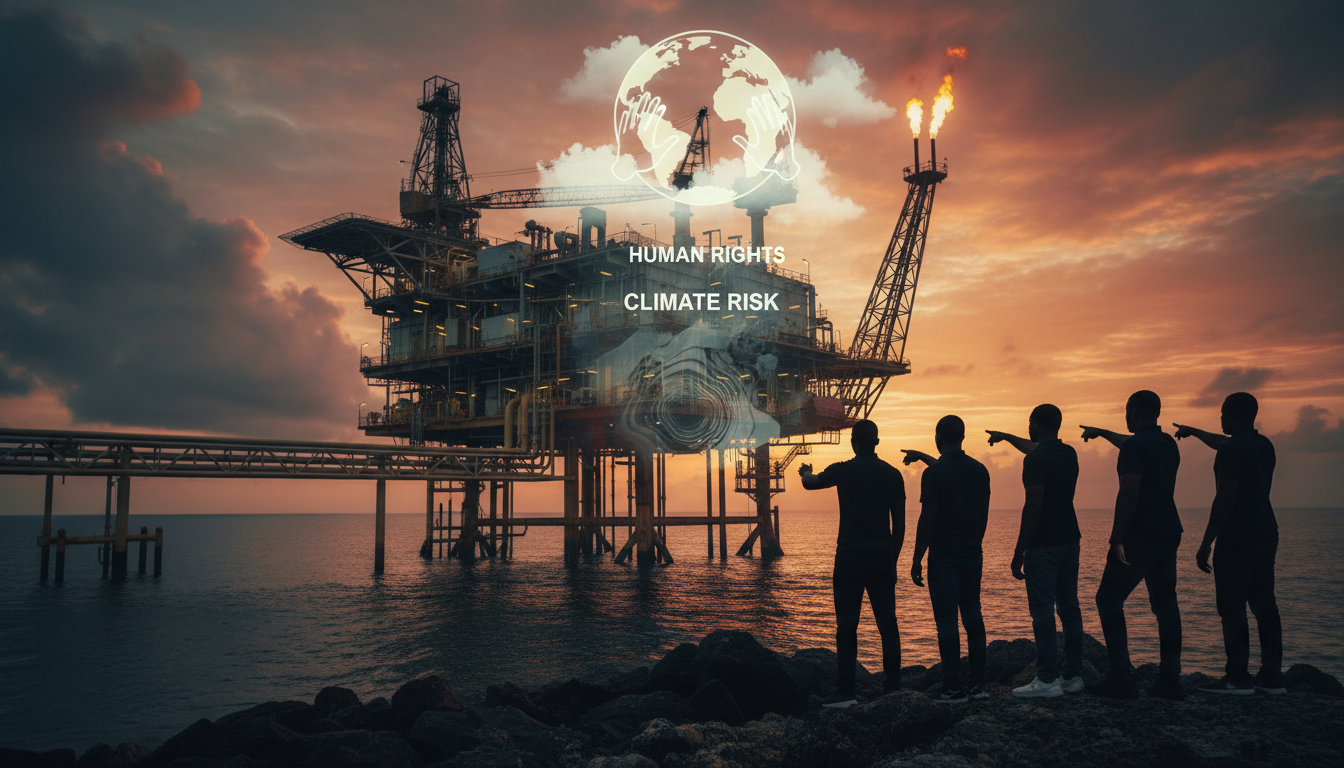
African Court Case Puts Oil & Gas Investment Under Scrutiny
A groundbreaking legal challenge is unfolding before the African Court on Human and Peoples’ Rights, one that could fundamentally reshape the operating environment for oil and gas investors across the continent. Greenpeace Africa has submitted a critical amicus curiae brief, urging the Court to formally acknowledge climate destruction as a direct violation of fundamental human rights for communities throughout Africa. This move signals a profound shift, reframing the climate crisis not as a distant environmental concern, but as an immediate and actionable legal issue with significant financial ramifications for extractive industries.
The submission meticulously connects escalating climate impacts – from severe droughts to devastating floods – with infringements upon basic human necessities, including access to clean water, sufficient food, adequate health services, and a safe, stable living environment. For energy companies and their investors, this legal interpretation introduces a complex layer of risk, linking operational impacts directly to potential human rights liabilities.
Governance Failures: A New Lens for Climate Harm
Central to Greenpeace Africa’s argument is the assertion that various African governments are failing to uphold their legal obligations under the African Charter on Human and Peoples’ Rights. The organization contends that states are legally bound to prevent environmental degradation, rigorously regulate corporate activities, and ensure that local communities are genuinely involved in decisions that directly impact their land and livelihoods. For oil and gas exploration and production ventures, this implies an elevated standard for permitting, environmental impact assessments, and community engagement protocols.
According to Eugene Perumal, a Governance and Legal Advisor at Greenpeace Africa, this case is fundamentally about delivering justice to frontline communities who disproportionately bear the burden of a climate crisis they did little to create. Perumal highlighted that communities across the continent are already grappling with the consequences of decisions made without their explicit consent. He emphasized that the Court is being asked to affirm governmental responsibility to protect its citizens and establish a definitive boundary against ongoing corporate impunity. This sentiment suggests that the era of unfettered resource extraction without robust oversight may be drawing to a close, a critical consideration for those evaluating long-term asset values in African energy markets.
The filing further situates climate damage within a broader pattern of extractive economic activities, encompassing not just fossil fuel development, but also extensive mining operations, widespread deforestation, and large-scale industrial agriculture. These sectors, the organization argues, have expanded without sufficient safeguards, exerting immense pressure on already vulnerable populations. For oil and gas firms, this means that their operations, from initial exploration to final production, will be viewed through an intensified human rights and environmental lens, impacting everything from license acquisition to social license to operate.
Corporate Expansion and Regulatory Scrutiny on the Rise
A significant portion of the brief focuses on the crucial role of multinational corporations and the imperative for governments to regulate them effectively. Greenpeace Africa argues that permitting large-scale industrial projects, including significant energy infrastructure, without proper environmental assessments or meaningful public consultation constitutes a clear breach of state duty. This legal stance could significantly raise the bar for due diligence processes undertaken by international oil companies and their financial backers.
While the brief cites the planned $2.5 billion expansion by global meat company JBS into Nigeria as an example of concerning international agribusiness expansion, the underlying principle is highly transferable to the oil and gas sector. The concerns raised – including environmental impact, lack of transparency, and long-term consequences for local economies and food systems – are equally pertinent to major fossil fuel projects. By invoking provisions within the African Charter that address foreign economic exploitation, the organization argues that governments must adopt more decisive measures to prevent harmful corporate practices, ensuring that economic development does not come at the expense of fundamental human rights. This places a direct onus on energy companies to demonstrate tangible benefits and minimal harm to local populations.
Building on Established Legal Precedent for Energy Projects
The legal framework for this brief draws heavily on the landmark SERAC v. Nigeria case. That pivotal ruling established that governments bear a clear duty to regulate corporate conduct, conduct thorough environmental impact assessments (EIAs), and ensure active community participation before approving major projects. Greenpeace Africa is now seeking to significantly expand this principle, requesting the Court to recognize climate destruction itself as a human rights violation. Such a decision would elevate environmental protection to a more enforceable legal standard across all African jurisdictions, directly influencing the regulatory landscape for new oil and gas developments.
Elizabeth Atieno, a Food Campaigner at Greenpeace Africa, underscored the long-term stakes involved, stating that the projects approved today will determine who controls Africa’s land, its food systems, and the health of the planet for future generations. She expressed hope that the Court would issue a powerful advisory opinion, solidifying the rights of African communities to reject extractive practices and sending an unambiguous message to corporate entities that their period of operating with impunity on the continent has concluded. This statement resonates strongly within the energy sector, signaling a potential new era of heightened accountability for drilling, refining, and pipeline projects.
Profound Implications for Oil & Gas Businesses and Investors
For oil and gas executives and their investors, this evolving legal landscape introduces a potent new dimension of legal and reputational risk directly linked to their operations in Africa. Should the African Court align with Greenpeace Africa’s position, energy companies could face substantially stricter expectations regarding environmental due diligence, operational transparency, and meaningful community engagement throughout the lifecycle of their projects.
Future oil and gas projects lacking clear, comprehensive consultation processes or robust environmental safeguards could face significant delays, protracted legal challenges, and intensified scrutiny from national regulators and international financiers. Investment strategies will increasingly need to account for human rights exposure directly tied to both climate and broader environmental impacts. This means a re-evaluation of project valuations, increased capital expenditure for compliance, and potentially higher costs of capital for ventures perceived as high-risk under these new standards.
More broadly, this case reflects a fundamental shift in global ESG (Environmental, Social, and Governance) dynamics. Climate risk is no longer solely an environmental or financial consideration; it is rapidly being framed as a matter of enforceable human rights. Consequently, courts are emerging as a central battleground for defining corporate and governmental responsibilities in this critical area. The African Court’s decision holds the potential to set a continent-wide precedent, dictating how economic development, resource extraction – especially fossil fuel development – and environmental protection are balanced. For any energy company or financial institution with interests in Africa, the direction of this ruling will carry profound and enduring implications for their balance sheets and long-term viability.
