ADNOC’s recent Final Investment Decision (FID) for the SARB Deep Gas Development within the Ghasha Concession marks a pivotal moment for Abu Dhabi’s long-term energy strategy and presents a compelling narrative for global oil and gas investors. This move underscores a resolute commitment to unlocking substantial deep gas resources, bolstering the UAE’s energy self-sufficiency, and solidifying its position as a reliable international gas exporter. As global energy markets continue to navigate volatility and evolving demand dynamics, ADNOC’s strategic pivot towards complex, high-value gas projects warrants close attention from those looking to understand future supply trends and investment opportunities.
Unlocking Abu Dhabi’s High-Pressure Deep Gas Potential
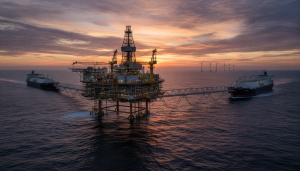
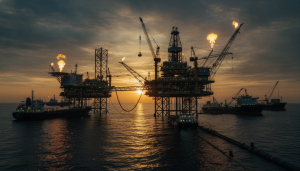
The SARB Deep Gas Development is a cornerstone of ADNOC’s ambitious offshore strategy, targeting 200 MMscfd of production from four wells located approximately 120 km off the coast. This output will be crucial in supporting the broader objective of the Ghasha Concession, which aims for an impressive 1.8 Bscfd of total gas output by 2050 from the Hail and Ghasha fields. The project presents significant technical challenges, as gas is found at depths exceeding 4,500 meters in high-temperature, high-pressure rock formations. Overcoming these conditions necessitates specialized drilling and completion techniques, including the use of erosion-resistant bits, intelligent completions, and stringent pressure management throughout the drilling process.
ADNOC’s approach to this development is both innovative and cost-efficient. The gas will be routed to existing Das and Das Island facilities for treatment, seamlessly integrating with ADNOC Gas operations. This leverages spare capacity in the current offshore pipeline network, strategically avoiding the construction of standalone processing equipment at the new platform and optimizing costs within a mature infrastructure framework. Furthermore, the platform is designed for remote operation from Arzanah Island, a testament to the industry’s shift towards digitalized offshore control rooms and longer tie-back wells, which are key levers for reducing well time and mitigating unplanned events. Musabbeh Al Kaabi, ADNOC Upstream CEO, succinctly articulated that this decision “reinforces the progress we are making to fully unlock Abu Dhabi’s world-class gas resources.”
Strategic Imperatives Amidst Crude Market Volatility
ADNOC’s commitment to the SARB Deep Gas Development emerges against a backdrop of considerable fluctuation in global crude prices, a dynamic that profoundly influences investment sentiment across the energy sector. As of today, Brent Crude trades at $90.57, reflecting a modest daily gain of 0.15%, yet its intraday range has seen prices fluctuate between $93.87 and $95.69. Similarly, WTI Crude stands at $87.38, down 0.05% on the day, with its range spanning $85.5 to $87.63. These figures, however, mask a more significant shift over the past two weeks. Our proprietary market analysis reveals Brent Crude experienced a notable decline of 19.8% from $118.35 on March 31st to $94.86 by April 20th.
This substantial price correction in crude markets underscores the strategic foresight behind ADNOC’s long-term gas investment. While investors are keenly focused on immediate price movements, frequently asking questions like “is WTI going up or down” or “what do you predict the price of oil per barrel will be by end of 2026?”, ADNOC’s FID signals a diversification strategy. Investing in gas provides a degree of insulation from the often-volatile crude market, offering a more stable and predictable revenue stream, especially for national energy companies prioritizing energy security and reliable export capabilities. The SARB Deep Gas project, with its multi-decade production horizon, positions ADNOC to capitalize on sustained global demand for natural gas, irrespective of short-term gyrations in oil prices.
Forward Outlook: Key Events Shaping the Energy Landscape
For investors tracking ADNOC’s strategic direction and the broader energy market, several upcoming events will provide critical context and potential catalysts. The timing of this FID, just ahead of key industry meetings and reports, is noteworthy. Tomorrow, April 21st, the OPEC+ JMMC Meeting is scheduled, which could influence crude supply narratives and indirectly impact the broader energy investment climate. Following this, the EIA Weekly Petroleum Status Report on April 22nd and again on April 29th will offer crucial insights into U.S. crude and product inventories, providing a snapshot of immediate demand trends. The Baker Hughes Rig Count on April 24th and May 1st will indicate drilling activity, a proxy for future supply, while API Weekly Crude Inventory reports on April 28th and May 5th will offer further inventory clues.
Perhaps most relevant for long-term gas projects like SARB Deep Gas is the EIA Short-Term Energy Outlook (STEO) due on May 2nd. This report provides comprehensive forecasts for energy supply, demand, and prices, and its projections for natural gas will be particularly scrutinized. A bullish outlook on global gas demand or sustained high prices could further validate ADNOC’s multi-billion-dollar investment, reinforcing its strategic importance. Monitoring these events will allow investors to gauge the evolving supply-demand balance and assess the macroeconomic environment in which ADNOC’s gas assets will operate, offering valuable insights into the project’s long-term financial viability and contribution to the company’s overall portfolio.
Investor Focus: Long-Term Value in Gas Amidst Geopolitical Shifts
Our analysis of reader intent data reveals a strong investor focus on understanding future price trajectories and evaluating the long-term performance of key energy players, as evidenced by questions such as “How well do you think Repsol will end in April 2026” and the persistent queries about future oil prices. ADNOC’s decision to greenlight the SARB Deep Gas Development directly addresses these underlying investor concerns by demonstrating a clear, long-term growth strategy rooted in a foundational energy commodity.
This FID not only underpins the UAE’s journey towards gas self-sufficiency but also strengthens its credentials as a reliable exporter to international markets. Such strategic investments in gas infrastructure provide a hedge against the geopolitical uncertainties that often plague crude markets, offering a more stable and predictable asset class. Moreover, securing the final investment decision for SARB Deep Gas provides ADNOC with a more robust permitting position, potentially clearing the path for further licensing and exploration within the Ghasha Concession. However, investors should remain cognizant of potential challenges, such as “Kemp-style conflicts” where fishery concerns and environmental considerations may still shape the opening of new offshore areas. Despite these complexities, the strategic importance of unlocking ultra-deep, high-pressure gas resources, coupled with ADNOC’s technological prowess, signals a robust long-term value proposition for those seeking to invest in the evolving global energy landscape.