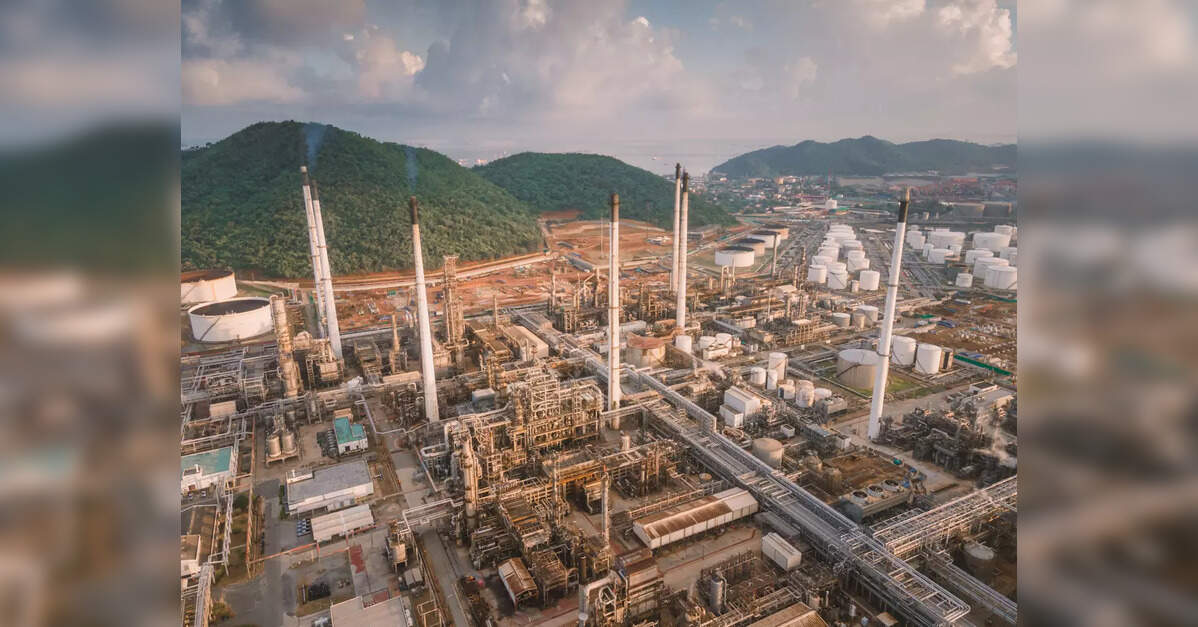
Gautam Adani’s conglomerate is making a decisive move into India’s petrochemicals sector, with plans to establish a 1 million tonne per annum (MTPA) Polyvinyl Chloride (PVC) manufacturing plant in Mundra, Gujarat. This strategic foray marks a direct challenge to Reliance Industries Ltd, the incumbent behemoth in the Indian petrochemical landscape, setting the stage for a compelling new rivalry. For oil and gas investors, this isn’t just a story about plastic; it’s a significant play on India’s burgeoning industrial demand, energy market dynamics, and the competitive strategies of two of the nation’s most powerful conglomerates.
India’s Growing PVC Appetite: A Strategic Opportunity
India presents a highly attractive market for PVC, a versatile synthetic polymer essential for everything from pipes and construction materials to consumer goods. The nation’s annual PVC demand currently hovers around 4 million tonnes, yet domestic production capacity stands at a mere 1.59 million tonnes. This significant supply-demand imbalance creates a robust opportunity for new entrants like Adani, positioning the Mundra project as a crucial step towards reducing India’s reliance on imports. Projections indicate PVC demand is set to grow at a Compound Annual Growth Rate (CAGR) of 8-10%, fueled by key sectors such as agriculture (driven by increased irrigation), infrastructure development (water supply, sanitation), housing, and the expanding pharmaceutical and packaging industries. Adani’s planned 1 MTPA facility, slated for commissioning by fiscal year 2028 (April 2027 to March 2028), is designed to directly address this gap, integrating capabilities for chlor-alkali, calcium carbide, and acetylene units, which are vital precursors for its chosen production process.
The Battle for Petrochemical Supremacy: Adani vs. Reliance
For years, the Adani Group and Mukesh Ambani’s Reliance Industries largely operated in distinct business spheres. However, the clean energy transition first, and now petrochemicals, are increasingly becoming arenas of direct competition. Reliance currently dominates India’s PVC production with an estimated capacity of 750,000 tonnes per annum across its Hazira, Dahej, and Vadodara plants, and has aggressive plans to double its capacity by 2027. Adani’s new 1 MTPA plant, with potential for future expansion to 2 MTPA based on demand, will immediately make it a formidable challenger. This head-to-head competition is likely to intensify, potentially impacting market share and pricing strategies for both players. Investors should closely monitor the capacity expansion timelines and technological efficiencies of both groups, as the scale and cost-effectiveness of production will be critical differentiators in this high-stakes rivalry.
Navigating Energy Market Volatility and Project Economics
The economics of a large-scale petrochemical project like Adani’s PVC plant are inextricably linked to the broader energy market. As of today, Brent Crude trades at $90.38 per barrel, representing a significant daily decline of 9.07% from its opening, with a day range between $86.08 and $98.97. This sharp downturn is part of a broader trend, with Brent having shed $20.91, or 18.5%, over the past 14 days, falling from $112.78 on March 30th to $91.87 yesterday. Such volatility in crude prices directly impacts feedstock costs for petrochemical production. Adani’s project utilizes an acetylene and carbide-based PVC production process, which can be energy-intensive and sensitive to the price of natural gas or coal, indirectly influenced by crude movements. Despite this backdrop, the Adani Group has demonstrated resilience, having resumed the project last year after an initial halt in March 2023 due to financial uncertainties. The group has since raised over $5 billion in equity and additional debt, fully repaying share-backed financing, with the project now backed by an SBI-led consortium. Their confidence in sourcing feedstock, leveraging their portfolio companies’ expertise in domestic and international trading, suggests a robust strategy to mitigate supply chain risks.
Forward Outlook: Upcoming Catalysts and Investor Insights
Looking ahead, the investment landscape for energy and petrochemicals remains dynamic, with several upcoming events poised to influence market conditions and, by extension, the operational environment for projects like Adani’s PVC plant. Investors are keenly asking about future price movements, with a common question being: “what do you predict the price of oil per barrel will be by end of 2026?” This reflects a recognition that long-term project viability depends heavily on sustained energy market stability. Critical upcoming events include the OPEC+ Joint Ministerial Monitoring Committee (JMMC) meeting today, April 18th, followed by the full Ministerial meeting tomorrow, April 19th. These gatherings could result in production quota adjustments, directly impacting global supply and crude prices. Further insights into supply-demand dynamics will come from the API Weekly Crude Inventory reports on April 21st and 28th, and the EIA Weekly Petroleum Status Reports on April 22nd and 29th. These data releases offer vital clues into inventory levels and refining activity, which ripple through the entire energy value chain, including petrochemical feedstock costs. For Adani’s project, successful commissioning by FY2028 will rely on a confluence of factors: stable energy costs, sustained demand growth in India, and effective management of the competitive pressures from Reliance. Investors should consider these external market forces alongside the project’s internal execution and financial health when assessing its long-term potential.


