

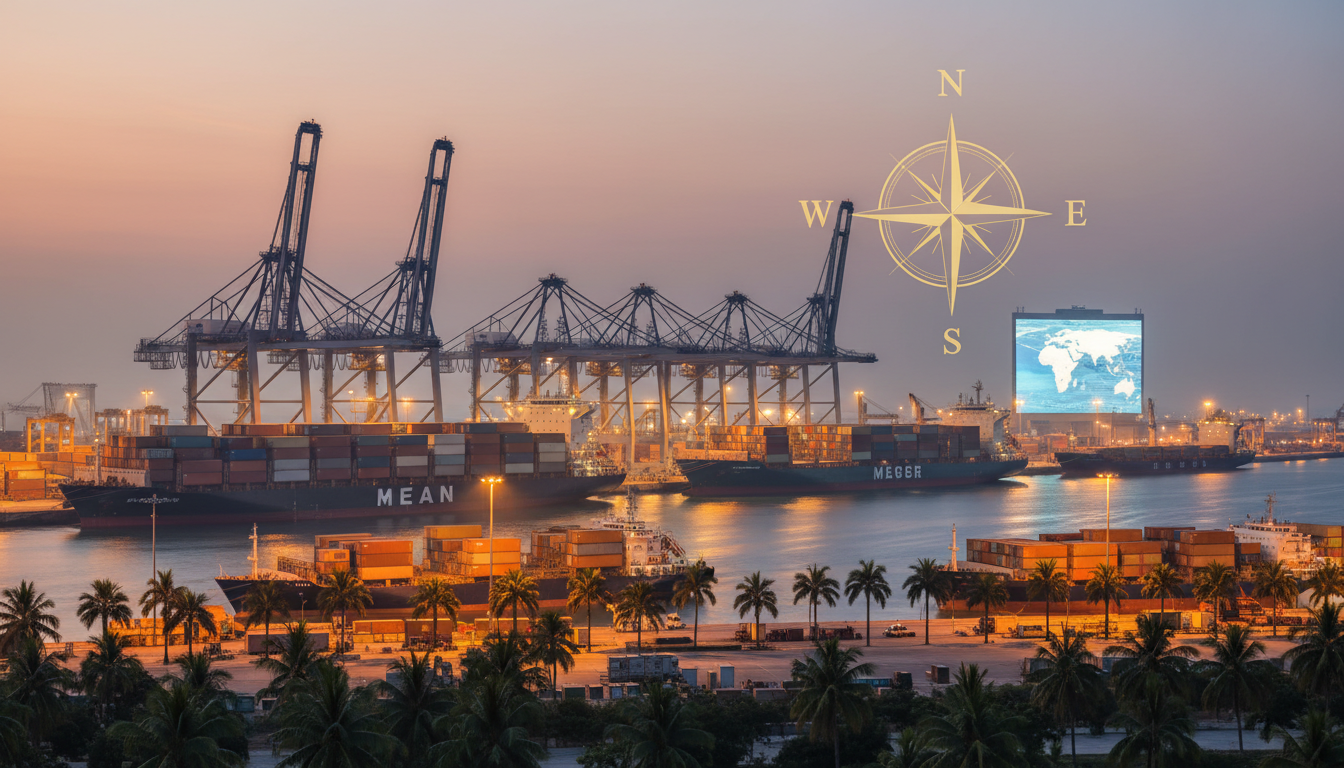
Indian Port Offers Critical Lifeline Amidst Middle East Trade Turbulence, Impacting Global Supply Chains
Mundra Port, operated by Adani Ports and Special Economic Zone Ltd. and recognized as India’s premier commercial port by handled cargo volumes, has taken proactive steps to mitigate the financial burden on Indian exporters. In response to the persistent geopolitical disruptions in West Asia, which have severely impacted established trade routes, the port has announced a comprehensive package of waivers and rebates for containerized cargo destined for the Middle East. This strategic intervention underscores the critical role of robust maritime logistics in maintaining global trade flows and has significant implications for investors monitoring energy and commodity supply chain resilience.
The core of Mundra Port’s relief initiative centers on providing substantial financial flexibility to shippers. Exporters utilizing Mundra for Middle East-bound consignments will benefit from 15 days of complimentary storage for their export-laden containers. This provision applies to containers already situated within port terminals as of February 28, or those gated in up until 0700 hours on March 8. Such measures are crucial for shippers grappling with unpredictable vessel schedules and extended transit times resulting from diversions around the Cape of Good Hope.
Detailed Financial Relief for Exporters
Beyond free storage, the port’s trade notice, publicized on March 26, 2026, outlines specific waivers designed to ease operational costs. For refrigerated containers (reefers), which are essential for perishable goods and often carry high-value cargo, Mundra Port will implement an 80 percent waiver on reefer plug-in charges for a period of 15 days. This significant concession targets the same cohort of Middle East-bound export-laden containers, providing direct financial relief in a segment where operational costs can escalate rapidly due to delays.
Furthermore, the relief package extends to “back-to-town” containers—cargo that, for various reasons, must be withdrawn from the port and returned to the inland origin. For these specific movements, Mundra Port will waive lift-on/lift-off, shut-out, and transportation charges. An additional 15 days of free storage will also be granted for these containers, offering a much-needed buffer for logistics planners managing unforeseen complications in the export process. These combined efforts signal a clear commitment from Mundra Port to support its customers through a period of elevated market volatility.
Navigating Geopolitical Instability and Maritime Logistics
The rationale behind Mundra’s generous concessions is rooted in the ongoing geopolitical instability in the Red Sea region. Attacks on commercial shipping vessels by Houthi militants have compelled many major shipping lines to reroute their services, bypassing the Suez Canal and opting for the longer, more expensive journey around Southern Africa. This strategic shift has not only inflated bunker fuel costs and insurance premiums for carriers but has also introduced significant delays, disrupting shipping schedules and increasing lead times for goods traversing between Asia and Europe, including critical energy shipments and manufactured goods.
For investors focused on the energy sector, these maritime disruptions have a multifaceted impact. Extended transit times translate to higher demand for bunker fuel, potentially firming up marine fuel prices. Moreover, the increased uncertainty in delivery schedules affects global crude oil and refined product flows, impacting inventory levels and commodity market pricing. The actions by Mundra Port, therefore, represent a stabilization effort, aiming to cushion Indian exporters from the direct financial fallout of these global supply chain dislocations and preserve the integrity of trade corridors essential for both energy import and export.
Mundra’s Strategic Response and Broader Industry Trends
As India’s largest commercial port, Mundra’s leadership in offering such relief is particularly noteworthy. It sets a precedent and underscores the adaptability required from critical infrastructure providers during periods of global economic stress. This move also aligns Mundra with other government-owned ports across India that have similarly extended support to exporters affected by the West Asian conflict. Such coordinated industry efforts are crucial for maintaining the competitiveness of Indian exports and preventing broader economic slowdowns.
For investors in port infrastructure and logistics, Mundra Port’s proactive stance highlights the strategic importance of resilient and responsive port operations. Adani Ports and Special Economic Zone Ltd.’s commitment to its customer base, even amidst challenging operating environments, can bolster its long-term market position and investor confidence. The ability to adapt quickly to geopolitical shocks, offering tangible support to stakeholders, demonstrates a robust operational framework and a keen understanding of global trade dynamics. This resilience is a key factor when evaluating long-term investment opportunities in the maritime and energy logistics sectors.
Investment Implications for Energy and Global Trade
The broader implications for oil and gas investing are substantial. Stable and predictable supply chains are paramount for energy markets, ensuring the timely delivery of crude, refined products, and liquefied natural gas (LNG). When maritime routes face disruptions, it introduces volatility and necessitates alternative logistical strategies. Initiatives like those from Mundra Port help to absorb some of the shocks, preventing a complete breakdown of trade which could otherwise lead to severe energy shortages or price spikes in certain regions.
Furthermore, the emphasis on containerized cargo, including reefers, highlights the interconnectedness of energy, food, and manufacturing supply chains. While oil and gas are often transported in bulk, the efficiency of general cargo movement reflects the overall health of the global economy and, by extension, energy demand. Investors should view these port relief measures not just as a local intervention but as a vital component in a larger effort to sustain global economic activity and mitigate risks in an increasingly complex and interconnected world. Maintaining fluid trade between India and the Middle East remains critical for India’s energy security and economic prosperity, underscoring the long-term value of stable port operations.
