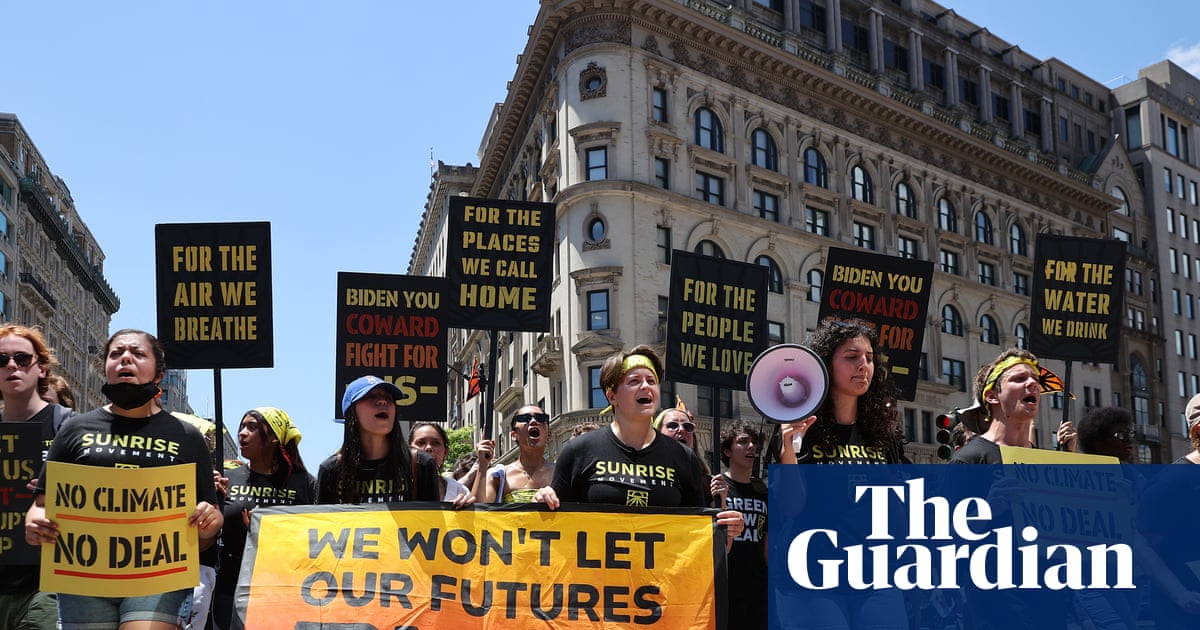
The landscape for oil and gas investors is constantly evolving, driven by market dynamics, geopolitical shifts, and, increasingly, the expanding influence of activist movements. While environmental and climate-focused groups have long been a factor in energy investment considerations, a significant new front is opening. Organizations like the youth-led Sunrise Movement, previously synonymous with advocating for a Green New Deal, are now explicitly broadening their mission to confront what they describe as authoritarianism and threats to democratic principles. This pivot, while not directly focused on fossil fuels, introduces a new, complex layer of political and social risk that O&G investors must actively integrate into their strategic assessments.
Activism’s Broadened Scope: A New Political Front for Energy
The Sunrise Movement’s executive leadership, including Aru Shiney-Ajay, has articulated a clear expansion of their organizational mandate. Their recent communications highlight a shift from solely climate-centric advocacy to a broader fight against perceived governmental overreach and the erosion of democratic rights. Co-founder Stevie O’Hanlon emphasizes that while the immediate focus may not be climate change, these efforts are crucial for creating a societal framework where climate action remains viable. This includes significant initiatives such as campus organizing to counter attempts at controlling curricula and suppressing dissent, rapid response to federal deployments in cities, and comprehensive training for young activists in non-violent resistance against authoritarian tendencies.
Examples of this broadened scope are already evident. The group recently supported student walkouts at four Washington D.C. universities protesting national guard deployments and alleged intimidation. They also staged a demonstration outside ABC’s New York headquarters following a temporary suspension of a late-night show. Locally, chapters like the one at Duke University have championed causes such as protecting an immigrant bus driver whose protected status was revoked, leading to job loss. These actions, while seemingly disparate from traditional climate protests, are intrinsically linked by the activists’ stated goal: to defeat “authoritarianism” as a prerequisite for achieving broader social, labor, racial, and climate justice. For oil and gas investors, this means that the political and social operating environment could become more volatile and unpredictable. The fight for “the right to dissent and protest” effectively strengthens the platform for *all* forms of activism, including future anti-fossil fuel campaigns, potentially increasing operational risks and project delays.
Market Volatility Amidst Rising Political Uncertainty
Against this backdrop of evolving activism, the crude oil markets are exhibiting significant volatility. As of today, Brent crude trades at $90.38 per barrel, marking a sharp 9.07% decline within the day, with WTI crude similarly down 9.41% at $82.59. This intraday movement reflects a broader trend; over the past two weeks alone, Brent has shed a substantial $22.40, falling from $112.78 on March 30th to its current level. Gasoline prices have also seen a notable drop today, trading at $2.93, a 5.18% decrease. While these price fluctuations are primarily driven by traditional supply and demand dynamics, geopolitical tensions, and macroeconomic indicators, the rising tide of politically broad-based activism adds an undercurrent of systemic risk.
Investors are increasingly factoring in non-traditional risks. The expansion of activist campaigns beyond specific environmental targets to fundamental challenges against governmental authority creates a less stable political climate. This heightened political uncertainty can manifest in various ways: increased regulatory scrutiny, potential for social unrest impacting logistics or project development, or even shifts in long-term energy policy as governments respond to broader public pressures. While not a direct cause of today’s price movements, a more politically charged domestic environment can exacerbate market jitters and influence investor confidence, especially for long-cycle capital-intensive projects in the energy sector.
Upcoming Energy Events and the Shadow of Expanded Activism
Looking ahead, the next two weeks are packed with critical energy events that could be subtly influenced by this evolving activist landscape. The OPEC+ Ministerial Meeting on April 19th will be a focal point for global crude supply decisions. Subsequently, we have the API Weekly Crude Inventory reports on April 21st and 28th, followed by the EIA Weekly Petroleum Status Reports on April 22nd and 29th, and the Baker Hughes Rig Counts on April 24th and May 1st. These events typically drive short-term market movements based on supply-demand balances and production signals.
However, the broader political struggle championed by groups like the Sunrise Movement, focusing on issues like free speech and challenging governmental authority, could have longer-term, indirect implications. For instance, if these groups successfully advocate for stronger protections for protestors or challenge governmental actions that limit dissent, it could empower future direct action against oil and gas infrastructure projects. Project developers might face increased risks of delays, higher security costs, or even outright cancellation due to sustained public opposition, even if the initial protests aren’t explicitly climate-focused but rather leverage a broadened definition of “justice.” While the immediate outcomes of an OPEC+ meeting or an inventory report won’t directly reflect activist pressure, the underlying political will and regulatory environment that shapes future production, exploration, and infrastructure development could certainly be influenced by a society increasingly grappling with “authoritarianism” and “the right to protest.”
Addressing Investor Concerns: Beyond Supply and Demand
Our proprietary reader intent data reveals that investors are keenly focused on fundamental questions, particularly regarding future oil prices and OPEC+ production strategies. Many are asking about the predicted price of oil per barrel by the end of 2026 and seeking clarity on current OPEC+ production quotas. These are valid and perennial concerns for energy investors, typically addressed through supply-demand models, geopolitical risk assessment, and economic forecasts.
However, the broadening scope of activist movements introduces a new variable that complicates these predictions. The fight against “authoritarianism” and for “dissent” can indirectly impact energy markets by shaping future regulatory frameworks, influencing public sentiment, and potentially destabilizing political environments crucial for long-term energy investment. A strengthened activist base, even if its immediate focus isn’t climate, could exert greater pressure on governments to adopt more stringent environmental policies or to slow down fossil fuel development as part of a broader progressive agenda. This adds an additional layer of complexity to projecting future crude oil prices or the stability of OPEC+ agreements, which often rely on a predictable geopolitical landscape. Investors must now consider how this expanded political activism could influence the social license to operate for O&G companies, potentially leading to unforeseen policy shifts that affect demand, supply, and ultimately, asset valuations. This necessitates a more holistic risk assessment that extends beyond traditional market fundamentals to encompass evolving social and political dynamics.


