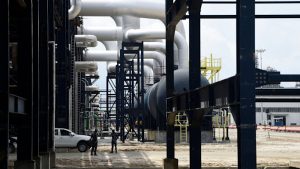
The energy investment landscape is witnessing a significant shift in corporate governance, highlighted by activist investor Elliott Management’s successful campaign to secure two board seats at oil refiner Phillips 66 (PSX). This victory, capping one of the most contentious proxy battles in recent memory, signals a clear mandate from a segment of shareholders for strategic transformation at the $46 billion market cap company. For investors tracking the refining sector, this development is not merely a corporate headline; it represents a potent catalyst for operational changes, asset portfolio re-evaluation, and a renewed focus on shareholder value, all against a backdrop of dynamic crude and product markets.
Elliott’s Unwavering Push for Core Competency and Value Creation
Elliott Management initiated its campaign by significantly increasing its stake in Phillips 66 to $2.5 billion, making it one of the largest proxy battles waged by the activist fund. The core of Elliott’s demands centered on a multi-pronged strategy: divestiture of non-core assets, specifically the company’s midstream business and chemicals joint venture, a comprehensive overhaul of corporate governance, and a sharpened focus on the fundamental strength of its oil refining operations. This strategic blueprint was articulated through extensive shareholder communications, including slide decks and podcasts, aimed at agitating Phillips 66’s diverse investor base, which includes a substantial retail component.
Unlike previous engagements with major US corporations, where Elliott often settled at the eleventh hour, the Phillips 66 campaign went the distance to a shareholder vote. A crucial turning point in Elliott’s favor came with the endorsements from influential proxy advisory firms, Glass Lewis and Institutional Shareholder Services, who recommended shareholders back Elliott’s slate of directors. The election of former ConocoPhillips executive Sigmund Cornelius and ex-Targa Resources executive Michael Heim to the Phillips 66 board, despite opposition from major institutional investors like BlackRock, State Street, Vanguard Group, and T Rowe Price, underscores the power of a well-executed activist campaign in compelling change within the energy sector.
Navigating Market Volatility: Refining Margins and Investor Concerns
The immediate market reaction to Elliott’s win saw Phillips 66 shares trade down 6.7% on Wednesday morning in New York, extending a 21% decline over the past year. This initial dip, despite the perceived positive long-term implications of activist intervention, could reflect market uncertainty regarding the implementation of new strategies or the complexity of integrating new board perspectives. The broader market context for refiners remains fluid. As of today, Brent crude trades at $95.57, reflecting a modest daily gain of 0.82%, though the broader 14-day trend indicates an 8.8% decline from its March 25 peak of $102.22 to $93.22 yesterday. This recent softening in crude prices, coupled with gasoline prices around $2.98, sets a dynamic backdrop for refining operations, directly impacting feedstock costs and product margins for companies like Phillips 66.
Our proprietary reader intent data reveals a keen investor focus on refining sector dynamics. Queries such as “How are Chinese tea-pot refineries running this quarter?” and requests for “a base-case Brent price forecast for next quarter” frequently appear in our AI assistant’s interactions. This underscores the market’s emphasis on global refining capacity, utilization rates, and crude price stability – precisely the operational efficiencies and strategic clarity Elliott is pushing for at Phillips 66. The new board members will undoubtedly face pressure to demonstrate how their operational improvements can translate into superior performance amidst these market realities, effectively addressing investor concerns about the fundamental drivers of refining profitability.
Forward Outlook: Strategic Shifts and Key Energy Catalysts
With two Elliott-backed directors now on the board, Phillips 66 is poised for a strategic reassessment. Elliott’s statement emphasizes collaboration with incumbent directors to “improve operational execution and share price performance, enhance corporate governance and help set a strategic course that can unlock Phillips 66’s full value-creation potential.” This suggests a concerted effort to streamline operations and potentially accelerate asset divestments that have been central to the activist’s thesis. The immediate focus will likely be on how the new board composition influences decisions regarding the midstream and chemicals joint venture segments, and whether these assets are indeed monetized to focus capital on the core refining business.
Looking ahead, the next two weeks are packed with critical energy market catalysts that will shape the operating environment for Phillips 66 and the broader refining industry. The upcoming OPEC+ Joint Ministerial Monitoring Committee (JMMC) meeting on April 18, followed by the full Ministerial meeting on April 20, will be closely watched for any shifts in production policy that could impact global crude supply and pricing. Any decision to alter production quotas directly influences feedstock costs for refiners. Simultaneously, the EIA Weekly Petroleum Status Reports on April 22 and April 29 will offer granular insights into US refinery utilization rates, crude and product inventory levels, and demand trends, providing crucial data points against which the market will measure Phillips 66’s strategic progress. The new board’s ability to navigate these external market dynamics while driving internal transformation will be a key determinant of Phillips 66’s future performance.
Implications for PSX and the Broader Energy Sector
The Elliott victory at Phillips 66 serves as a powerful reminder of the increasing influence of activist investors in compelling change within large, established energy corporations. While the immediate share price reaction might reflect initial uncertainty, the long-term objective is clear: to unlock latent value through operational excellence and strategic focus. For Phillips 66, this means a likely acceleration of efforts to optimize its refining footprint, potentially shedding non-core assets to reallocate capital more efficiently. The experience and stated goals of the newly elected directors, Sigmund Cornelius and Michael Heim, who bring deep industry expertise, suggest a hands-on approach to improving operational execution, a critical factor for refiners.
This outcome also sends a signal across the broader energy sector. Companies with diverse asset portfolios and perceived underperformance relative to peers could find themselves under similar scrutiny. The success of Elliott’s campaign, even in the face of opposition from significant institutional shareholders, demonstrates that a well-articulated strategy for value creation can resonate with a sufficient portion of the shareholder base. Investors in the refining space and integrated energy companies should closely monitor Phillips 66’s progress, as it may provide a blueprint for future activist engagements and strategic realignments across the industry, particularly as the energy transition continues to pressure traditional business models and demand greater capital discipline.